Acoustic Leak Detection
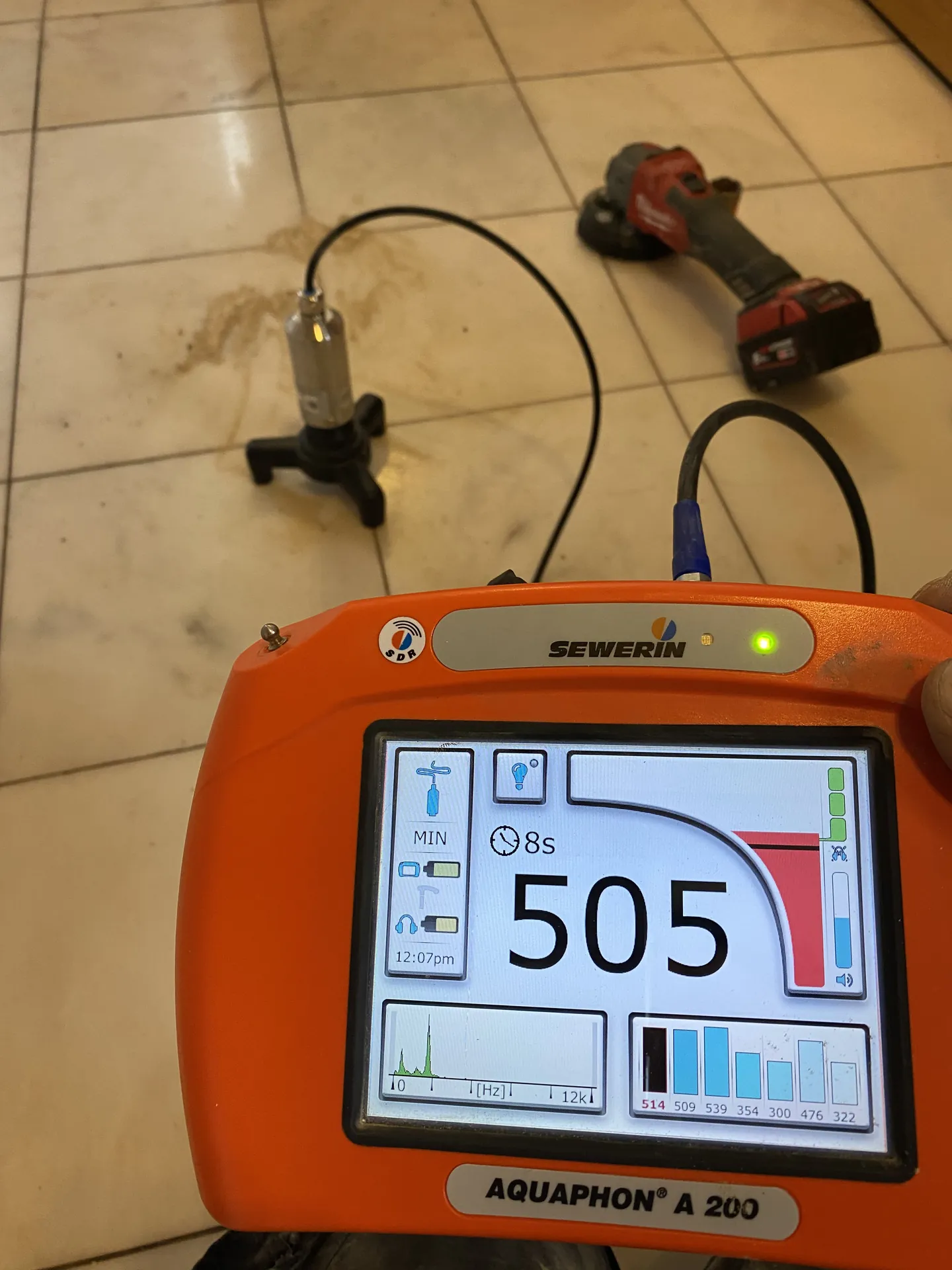
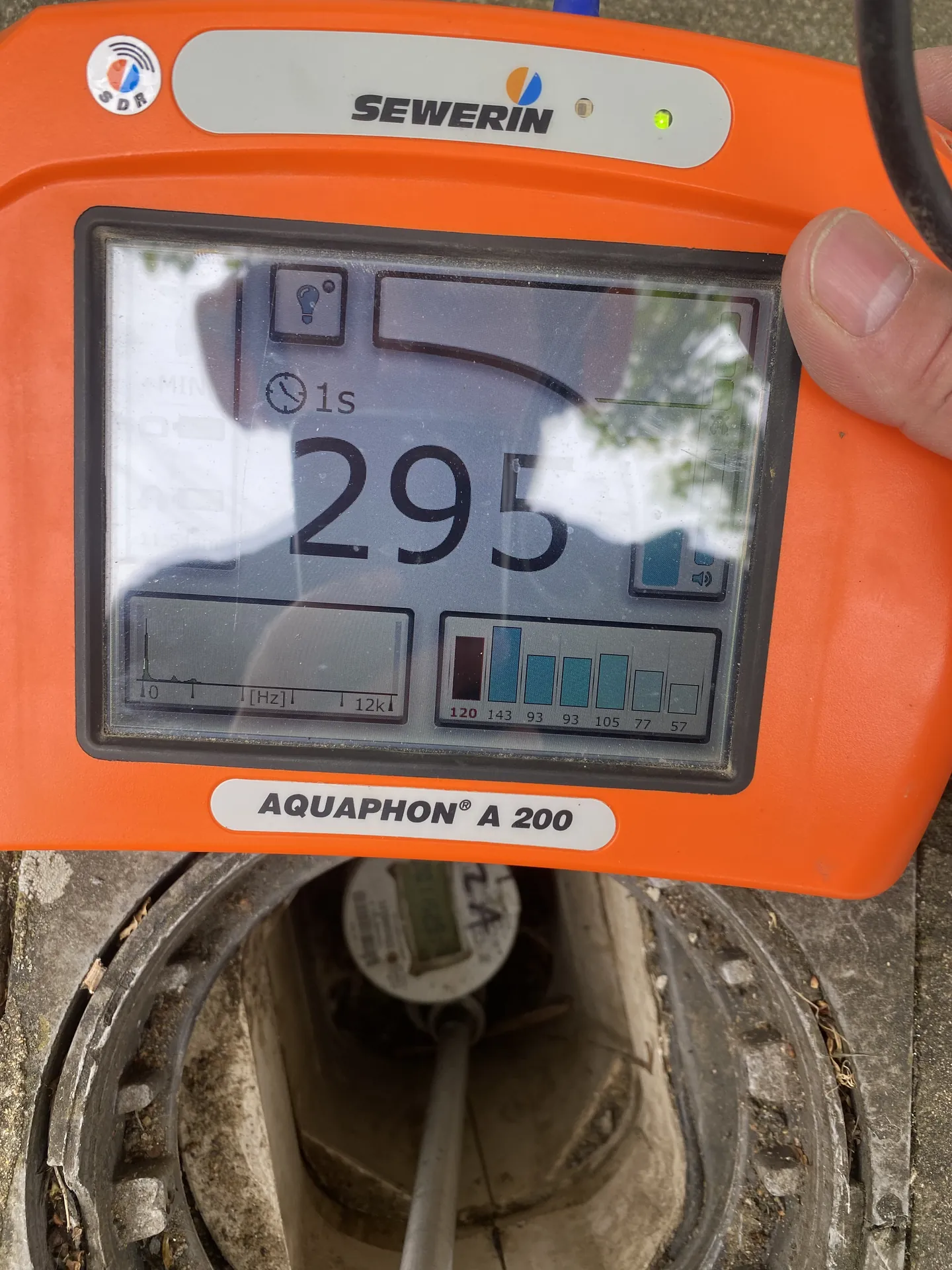
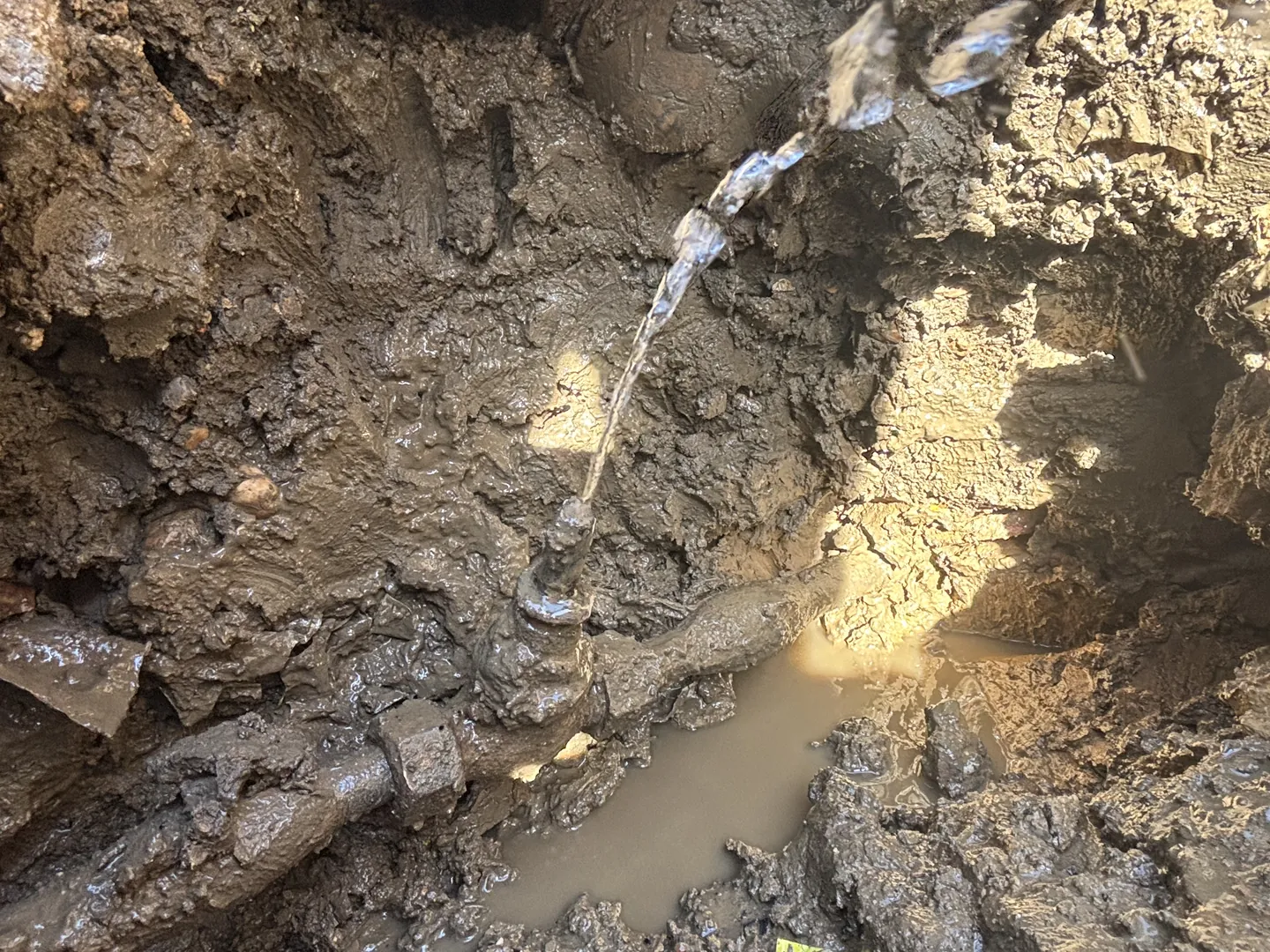
Water escaping from a pressurised pipe makes a noise, even when it is buried. An acoustic ground microphone picks up that sound through tiles, concrete and block paving, and the reading tells us where it is loudest.
Acoustic leak detection, step by step
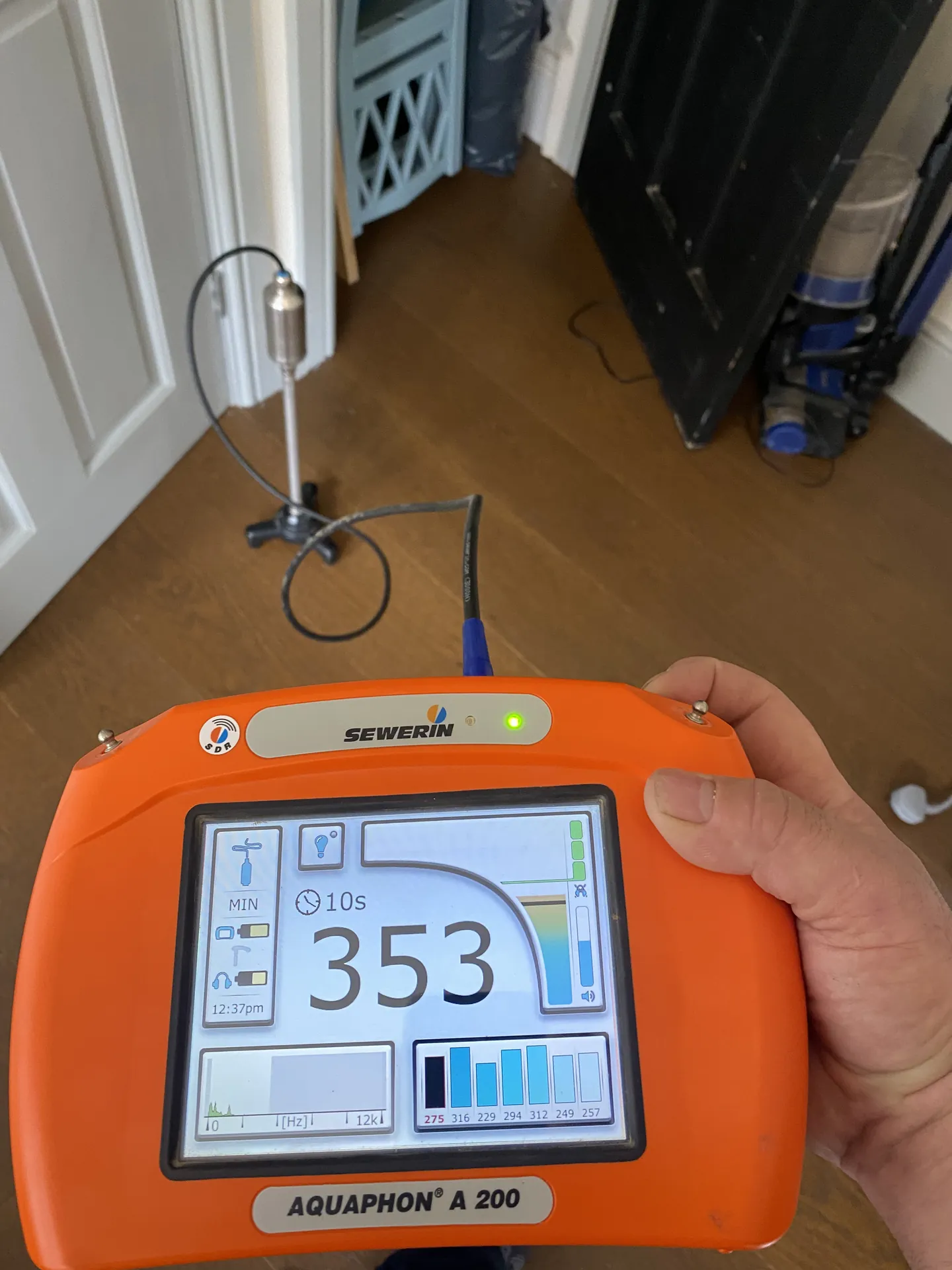
A leak on a mains-pressure pipe forces water out through a small opening at speed, and that creates a hiss that travels through the pipe and the material around it. The ground microphone is placed on the floor or ground along the route of the pipe and the amplifier filters out traffic, wind and household noise. As the microphone moves towards the leak the reading rises; the highest reading marks the spot.
It is quick, needs no draining and works on live systems, which makes it the first tool out of the van for cold mains and supply pipe leaks under floors, driveways and gardens. On an indoor tiled floor the leak can often be marked within the hour.
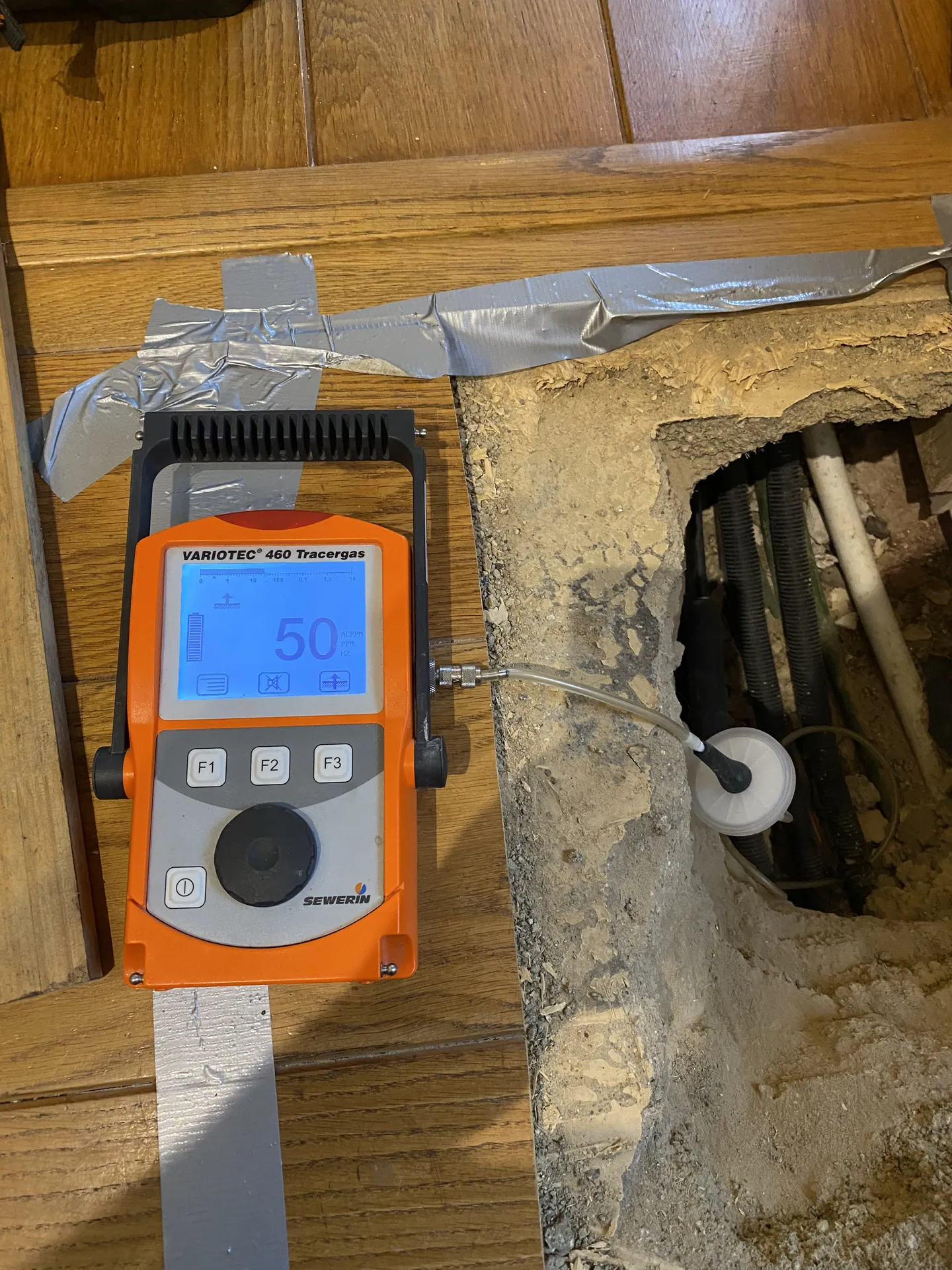
Acoustic detection depends on pressure and on the pipe making a sound. Very slow leaks, leaks on low-pressure heating pipes and leaks on plastic pipe can be too quiet, which is where tracer gas takes over. We use whichever combination gives a definite answer, and the readings are recorded in the report.
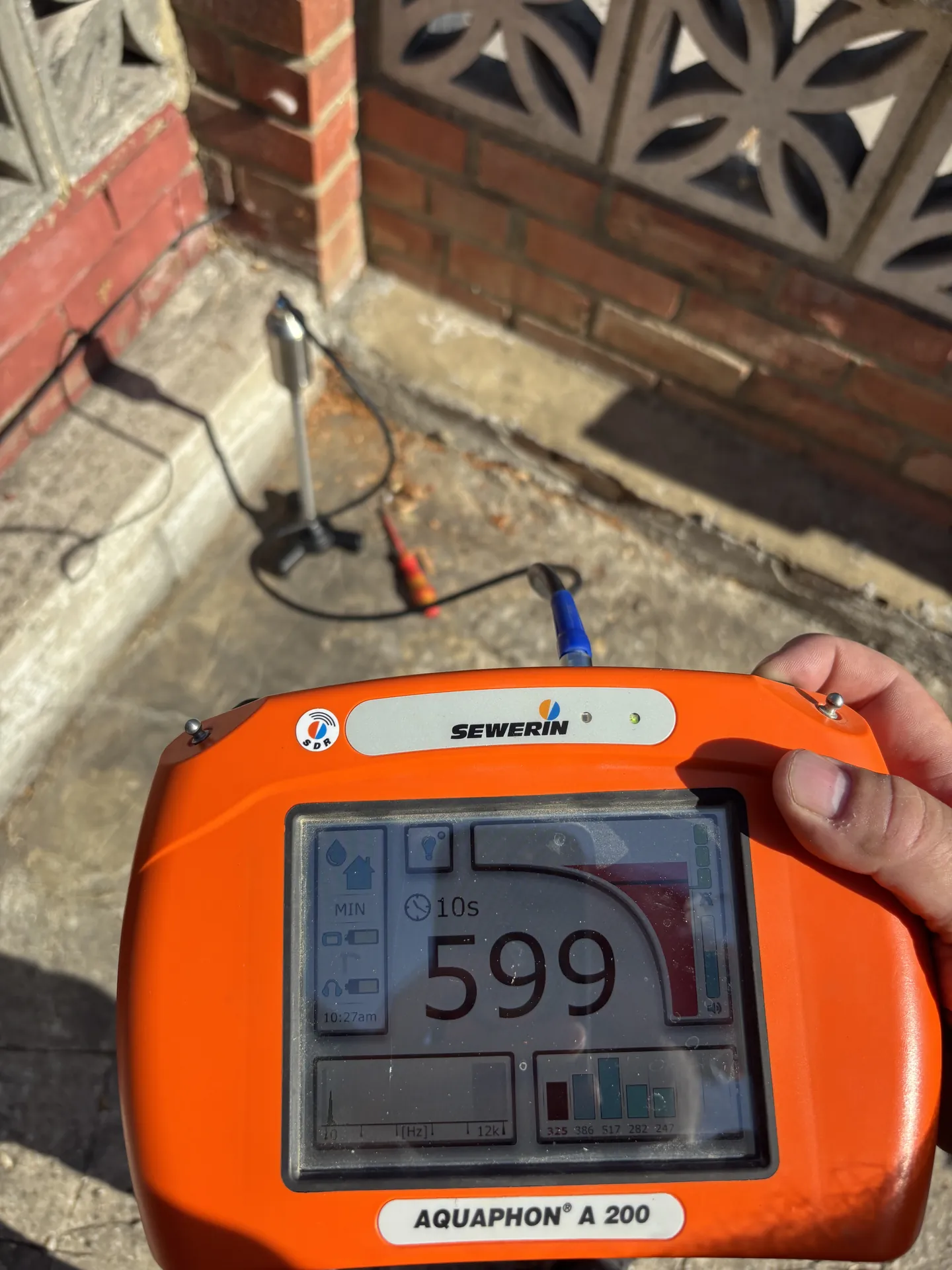
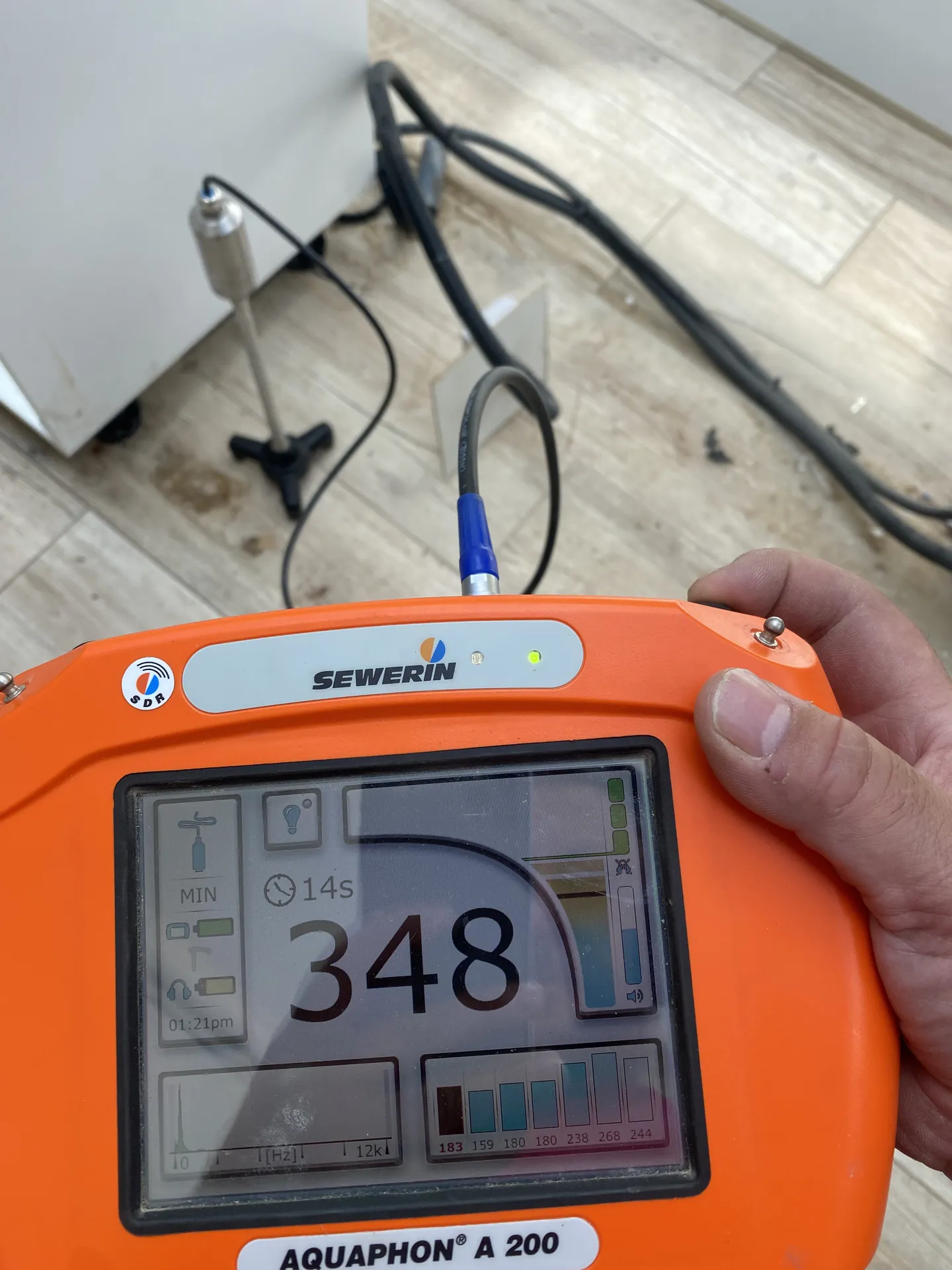
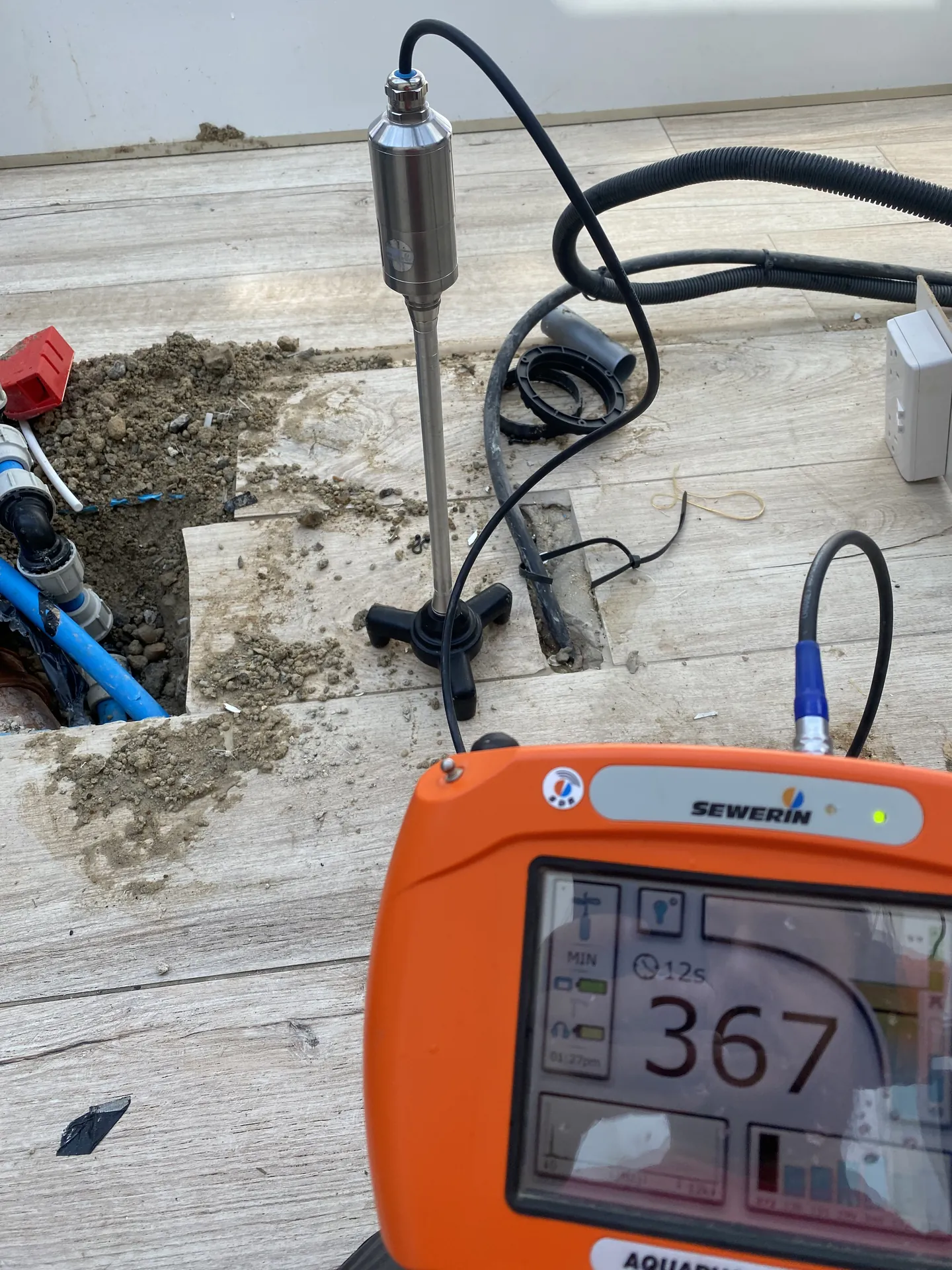
Acoustic in our own photos
From your first call to a leak you can see in the report
Call or WhatsApp with a few photos and a line about the symptoms. We ask a handful of questions, agree a fixed price and book the survey, usually for the same or the next day.
On arrival we pressure test the mains, hot water and heating, check the meter and test the escaping water, so we know what we are looking for before the detection starts.
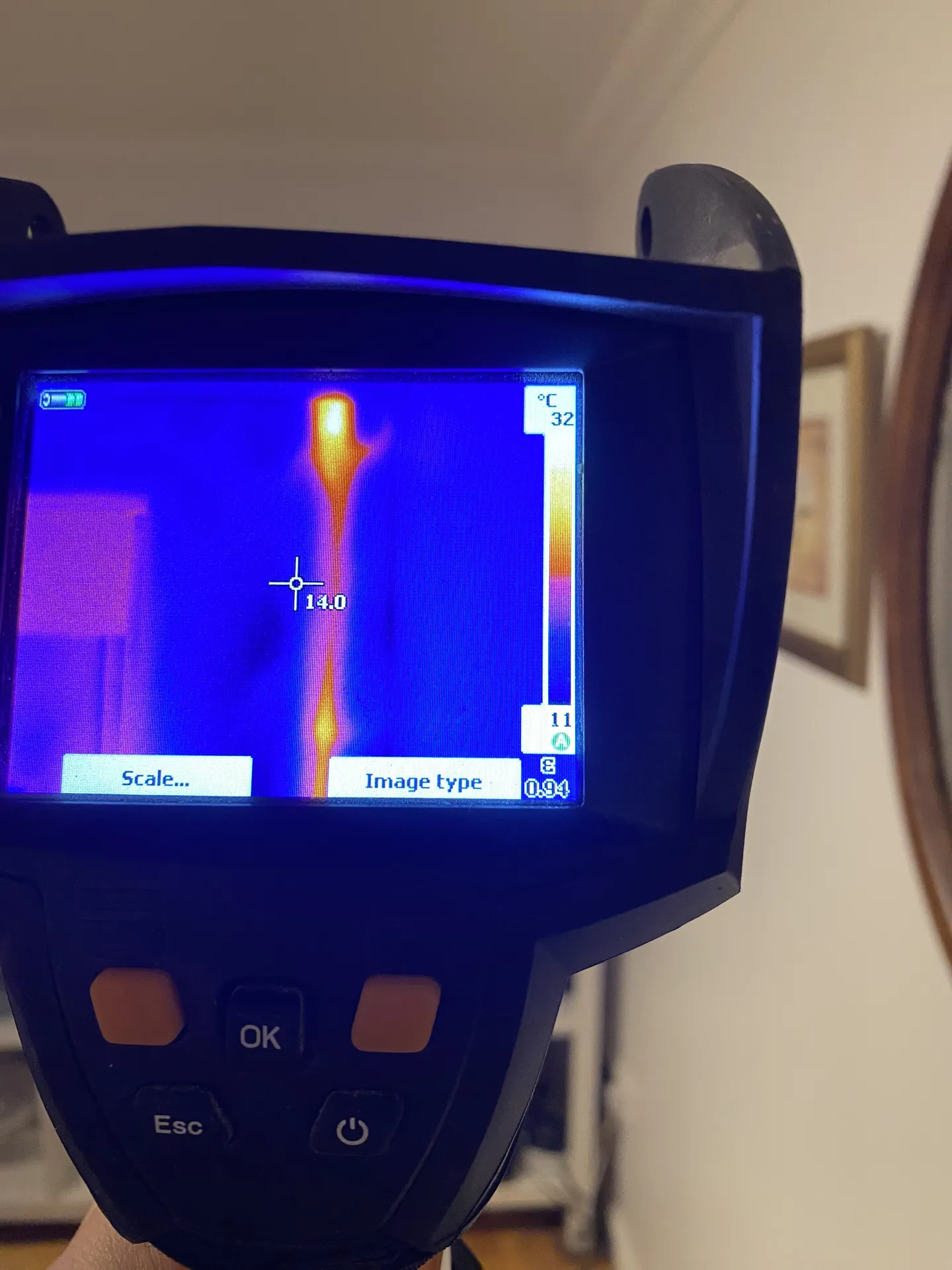
Thermal imaging, the acoustic ground microphone and tracer gas are used as the pipework dictates until the leak is marked on the floor or wall.
You get a written report with readings, thermal images and photographs, ready for a trace and access claim. If you want the leak fixed, we open that one spot and repair it.
A report your insurer can act on
Most buildings insurance policies include trace and access cover for finding a hidden leak and making good the way in. Our report is written for that claim: what we tested, what we found, where it is, with photographs, thermal images and readings.
- Turn off the stop tap or the heating and stop topping up
- Photograph the damage, the boiler gauge and the meter
- Tell your insurer a leak is suspected and detection is being arranged
- Trace and access pays to find the leak and make good the access
Acoustic: questions answered
What does the number on the acoustic detector mean?
It is the strength of the leak noise the microphone is picking up. The number on its own is not the answer; it is the change along the pipe route that matters. The reading climbs towards the leak and peaks directly over it.
Can acoustic detection find a leak under a concrete floor?
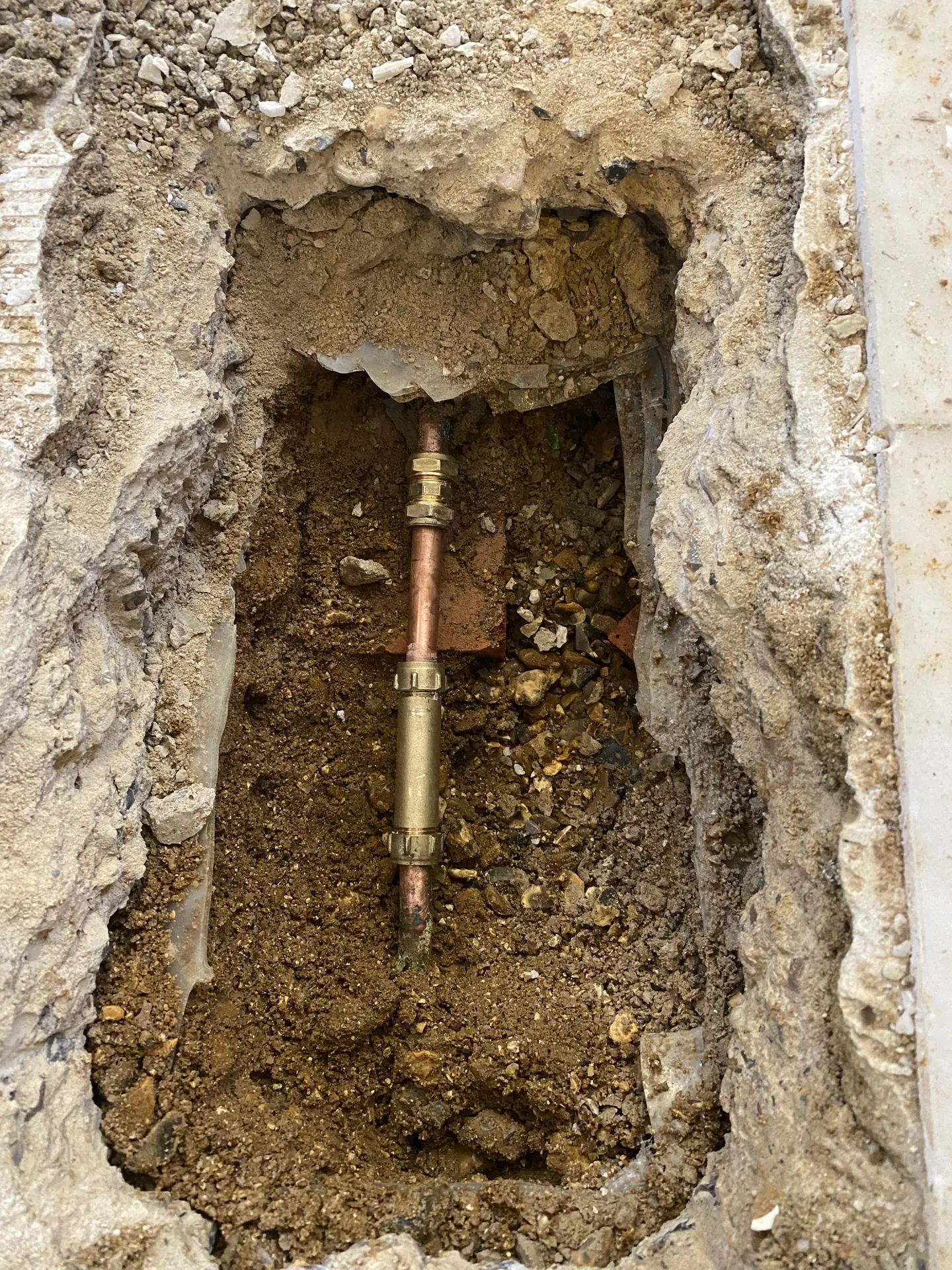
Yes. Concrete carries sound well, so a mains-pressure leak under a slab is often easier to hear than one under floorboards. We mark the peak and open the slab in that one place.
Does it work on heating pipes?
Sometimes, but heating systems run at low pressure and the leak is quieter. For heating leaks we rely more on thermal imaging and tracer gas, and use the microphone to confirm.
Do you need to turn my water off?
No. Acoustic detection works with the system live and under pressure, which is what makes the noise. Tracer gas is the method that needs the pipe drained.
How close does it get to the leak?
Close enough for one small excavation or opening. We mark the peak reading and cross-check with tracer gas where the pipe is plastic or the reading is unclear.
Related services
Think it is a acoustic problem?
Call now and we will tell you straight away whether it needs a same-day visit. Or send a photo of the stain, the meter or the boiler gauge on WhatsApp.
07516 755 680