Tracer Gas Leak Detection
Tracer gas is the method for leaks the other tools cannot reach: plastic pipe that makes no noise, pipes deep in a screed or buried in the garden, and slow leaks that never show a temperature difference.
Tracer gas leak detection, step by step
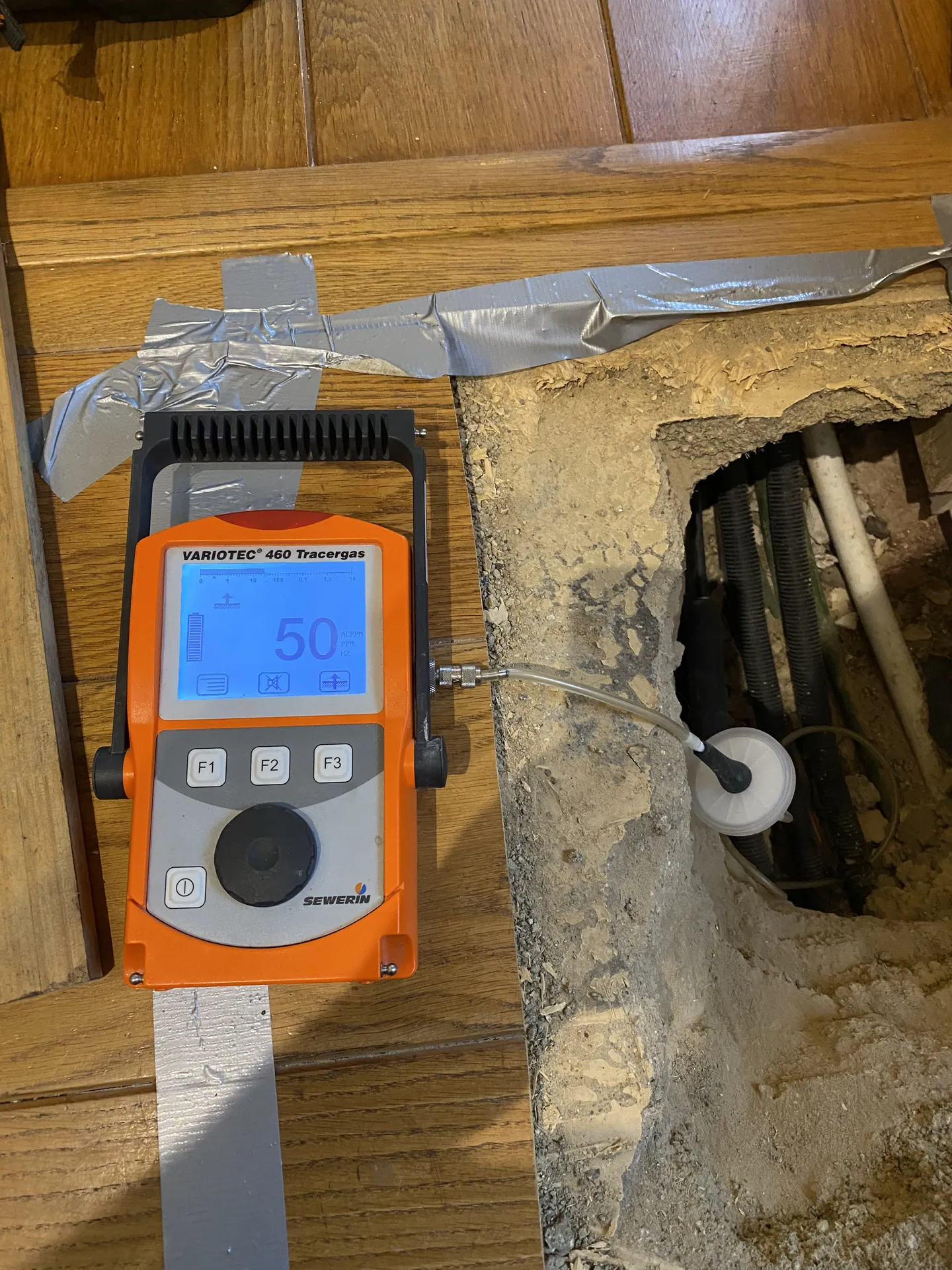
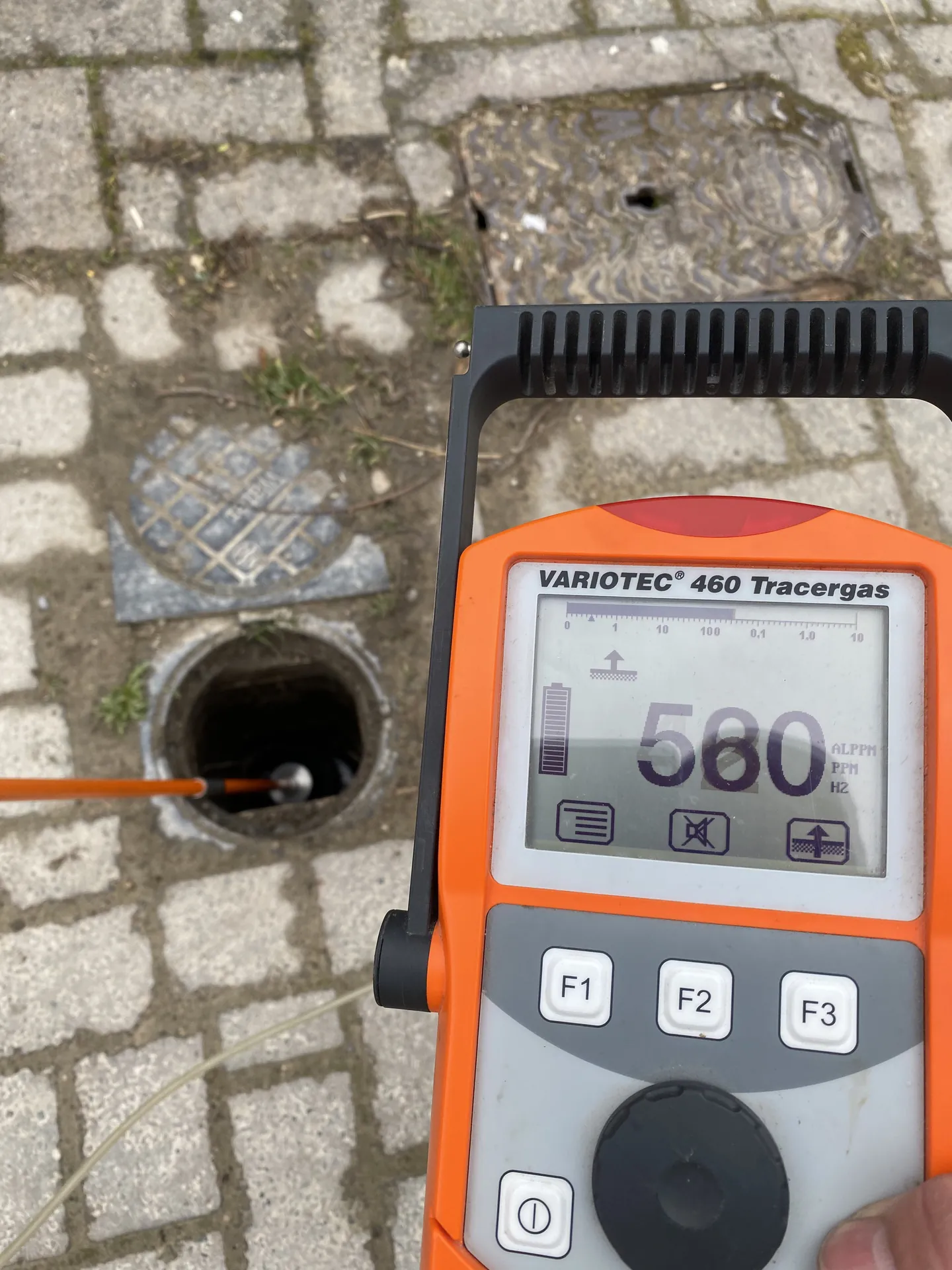
The pipe or circuit is drained and charged with a tracer gas, a mix of hydrogen and nitrogen that is safe to use indoors and leaves nothing behind. Hydrogen is the lightest gas there is, so it escapes through even a pinhole and rises straight up through screed, concrete, tiles, timber, soil and paving. On the surface, a highly sensitive detector is passed along the line of the pipe and the reading climbs as it approaches the leak and peaks directly above it.
It works on every kind of pipe: copper, plastic, barrier pipe, lead and steel, whether it is a cold main, a hot water run, a heating circuit or an underfloor heating loop. Because the gas is put into one system at a time, it also confirms which system is leaking when the symptoms are unclear.
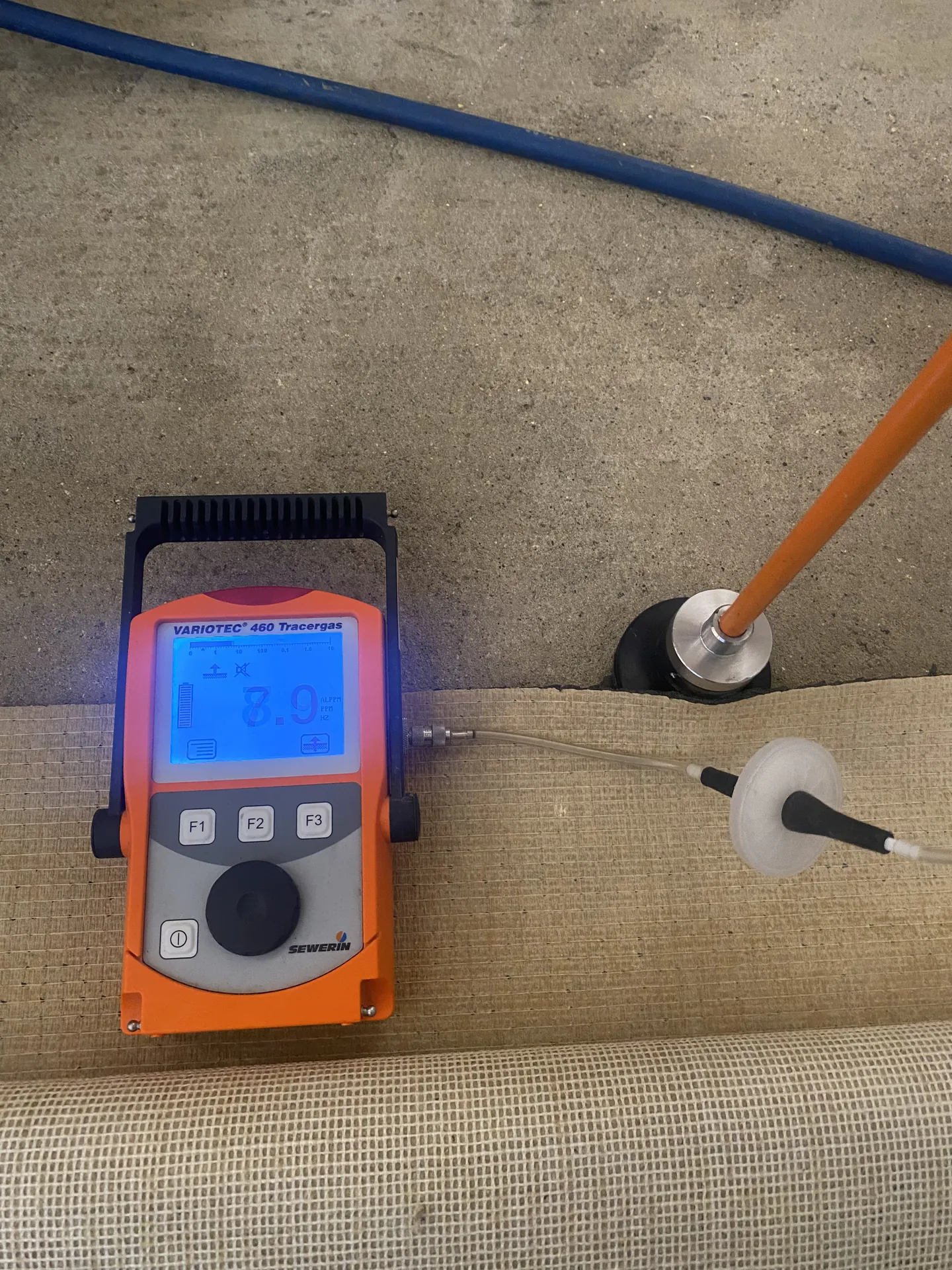
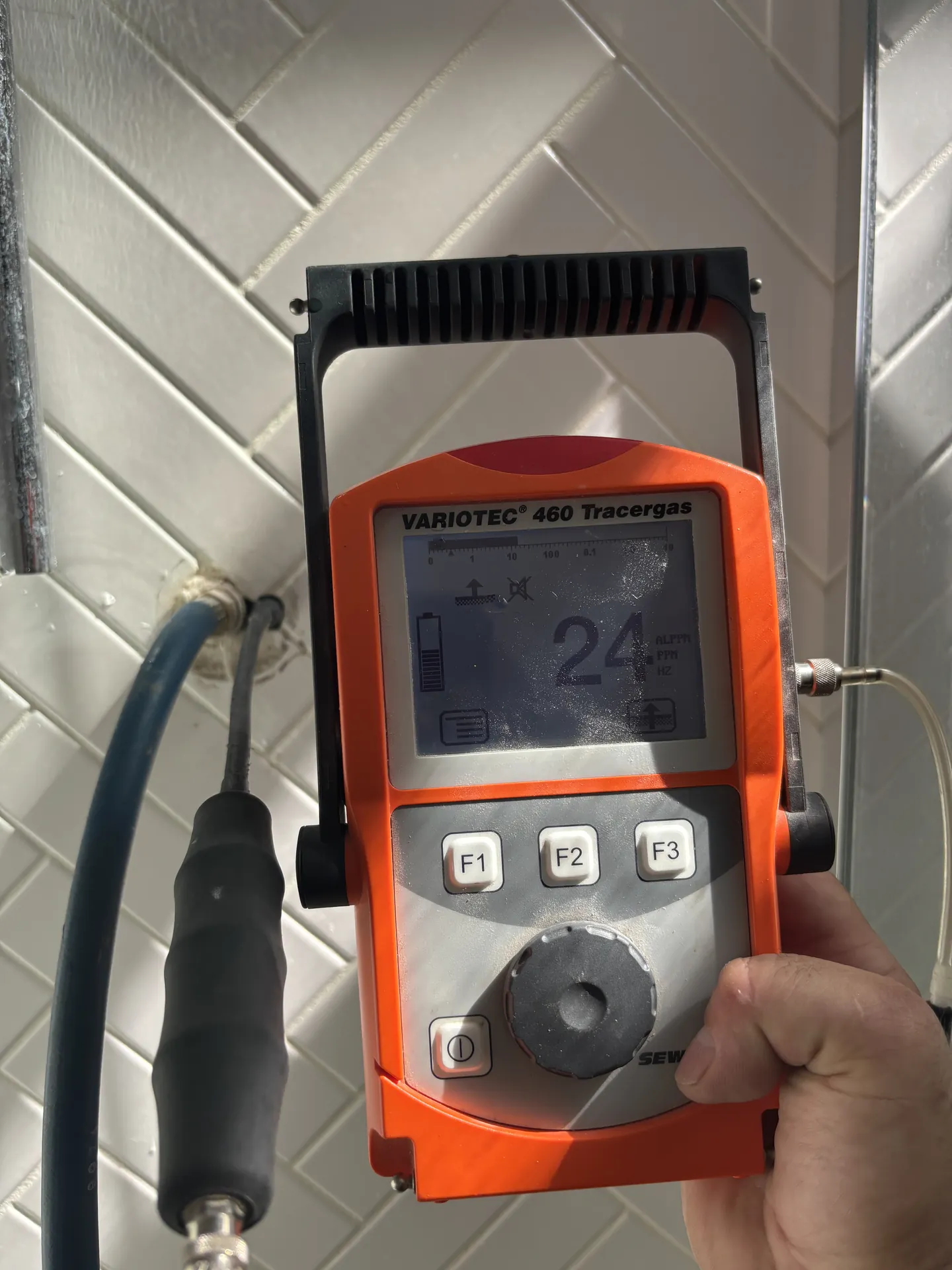
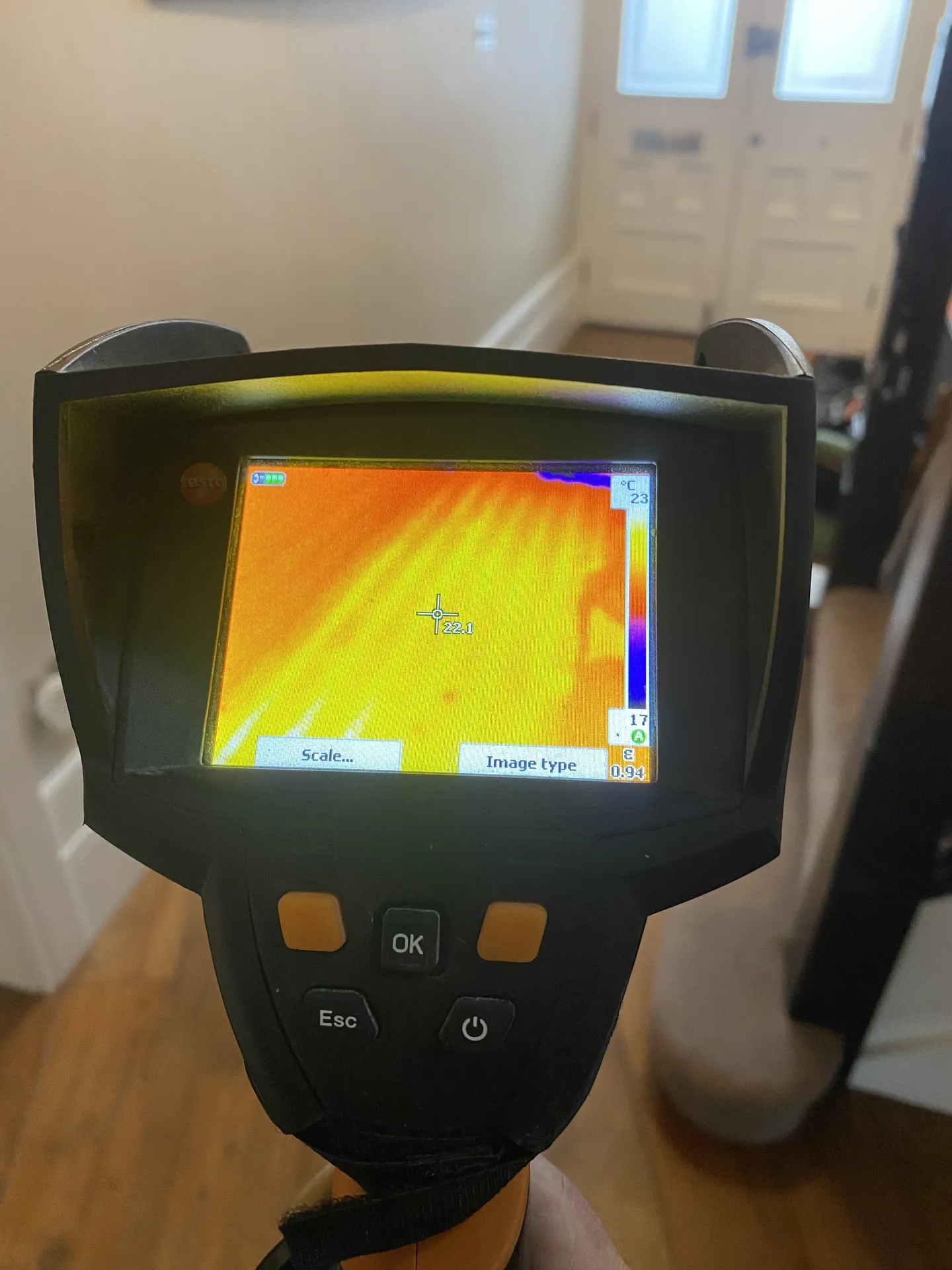
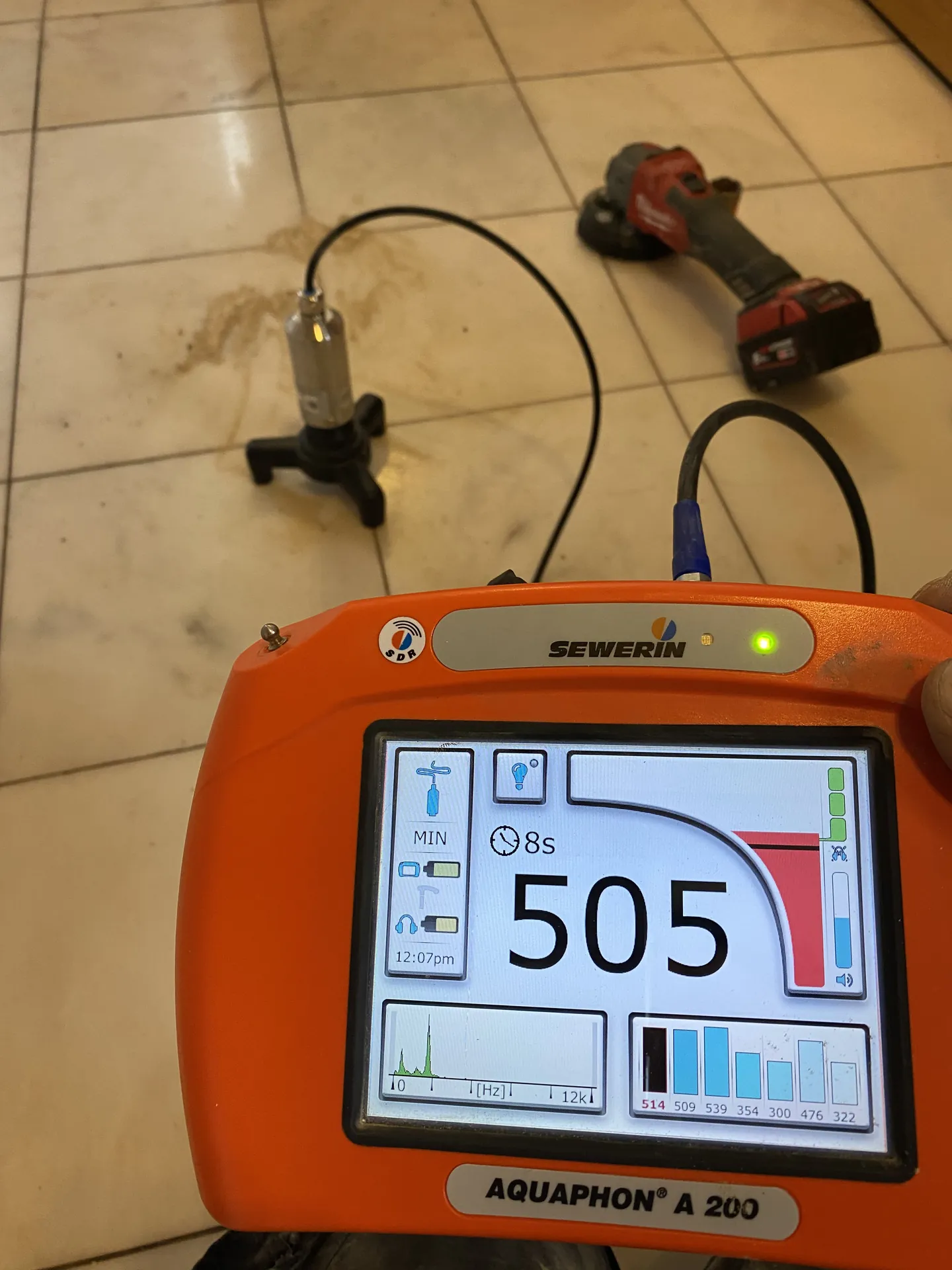
Tracer gas is slower than a thermal scan, so we use it where it earns its keep: after the thermal camera and acoustic microphone have narrowed the search, or from the start on buried and plastic pipework. The detector readings and the marked location go into your report.
Tracer gas in our own photos
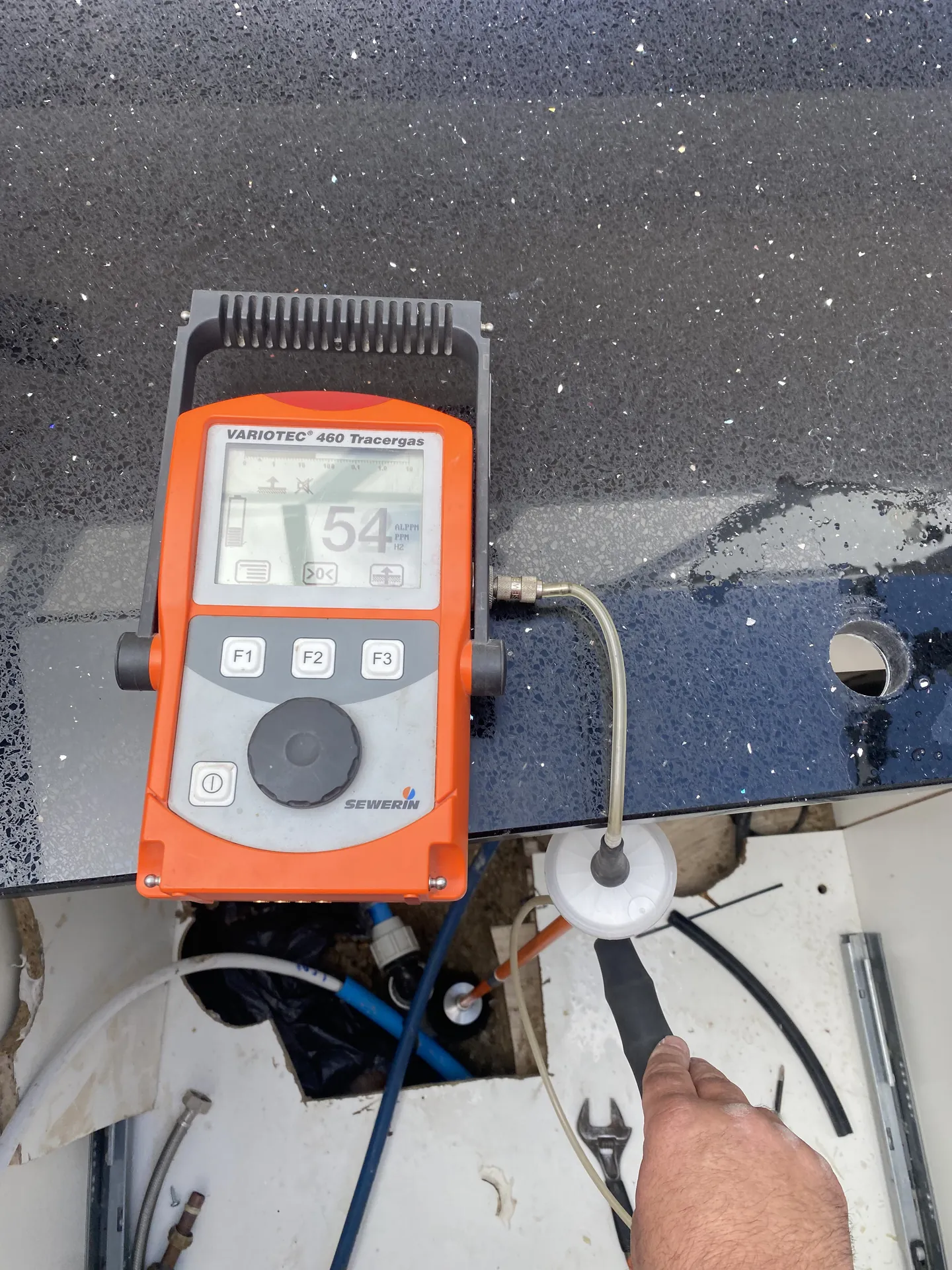
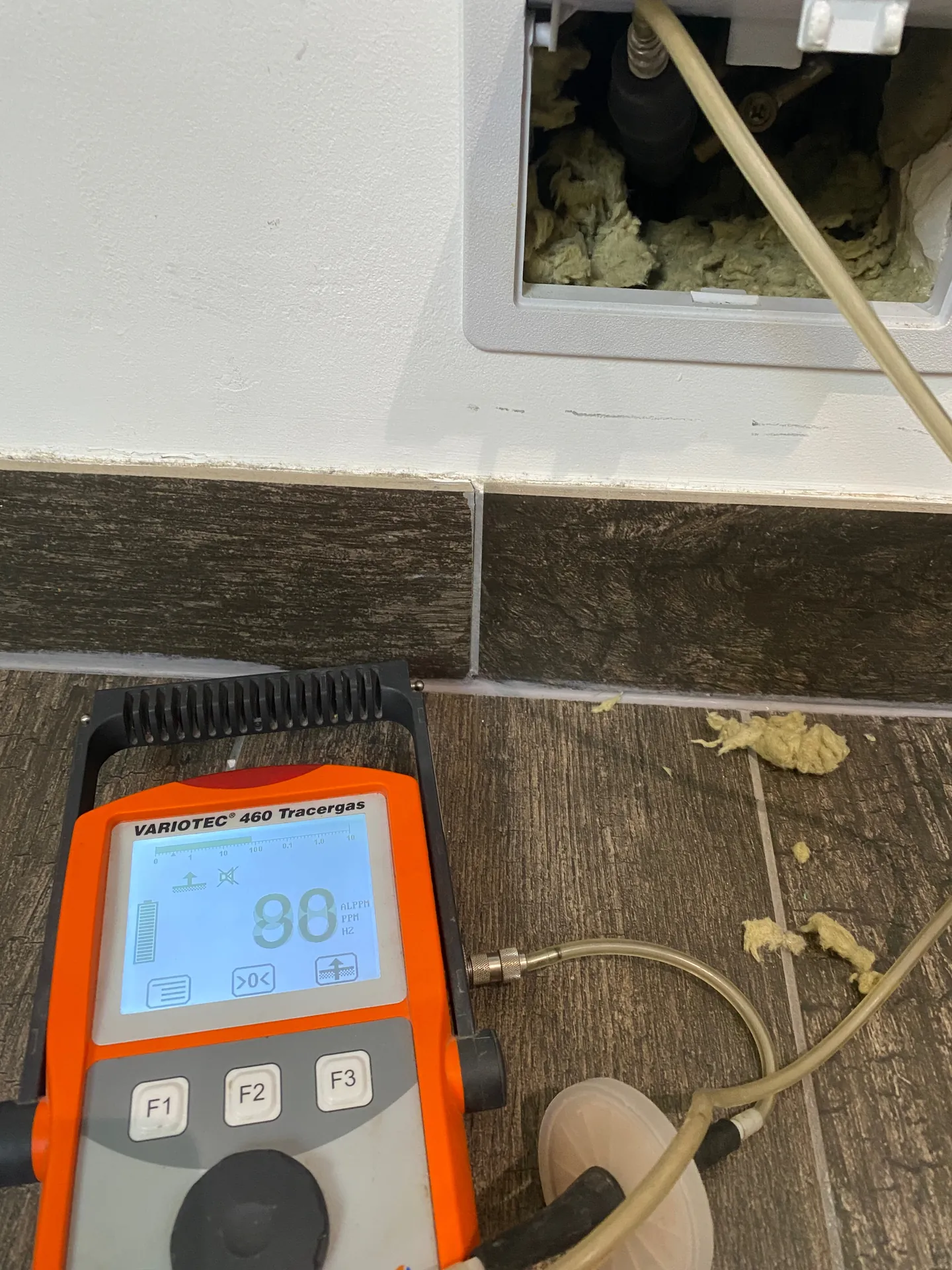
From your first call to a leak you can see in the report
Call or WhatsApp with a few photos and a line about the symptoms. We ask a handful of questions, agree a fixed price and book the survey, usually for the same or the next day.
On arrival we pressure test the mains, hot water and heating, check the meter and test the escaping water, so we know what we are looking for before the detection starts.
Thermal imaging, the acoustic ground microphone and tracer gas are used as the pipework dictates until the leak is marked on the floor or wall.
You get a written report with readings, thermal images and photographs, ready for a trace and access claim. If you want the leak fixed, we open that one spot and repair it.
A report your insurer can act on
Most buildings insurance policies include trace and access cover for finding a hidden leak and making good the way in. Our report is written for that claim: what we tested, what we found, where it is, with photographs, thermal images and readings.
- Turn off the stop tap or the heating and stop topping up
- Photograph the damage, the boiler gauge and the meter
- Tell your insurer a leak is suspected and detection is being arranged
- Trace and access pays to find the leak and make good the access
Tracer gas: questions answered
Is tracer gas safe to use in my home?
Yes. The mix is mostly nitrogen with a small proportion of hydrogen, well below the level at which hydrogen can burn, and it is approved for this purpose. It disperses harmlessly and nothing is left in the pipework.
Does tracer gas work on plastic pipes?
Yes, and it is the best method for them. Plastic pipe makes very little noise when it leaks, so acoustic detection struggles, but the gas escapes and rises through the floor just the same.
Can it find a leak through carpet or laminate?
Yes. The gas passes through carpet, underlay, laminate, tiles and floorboards. We sample along the pipe route without lifting the floor covering.
Does the pipe have to be drained?
Yes, the section being tested is drained and isolated so the gas can be put in under a little pressure. That is why we plan the survey around your water and heating being off for a short while.
How accurate is tracer gas leak detection?
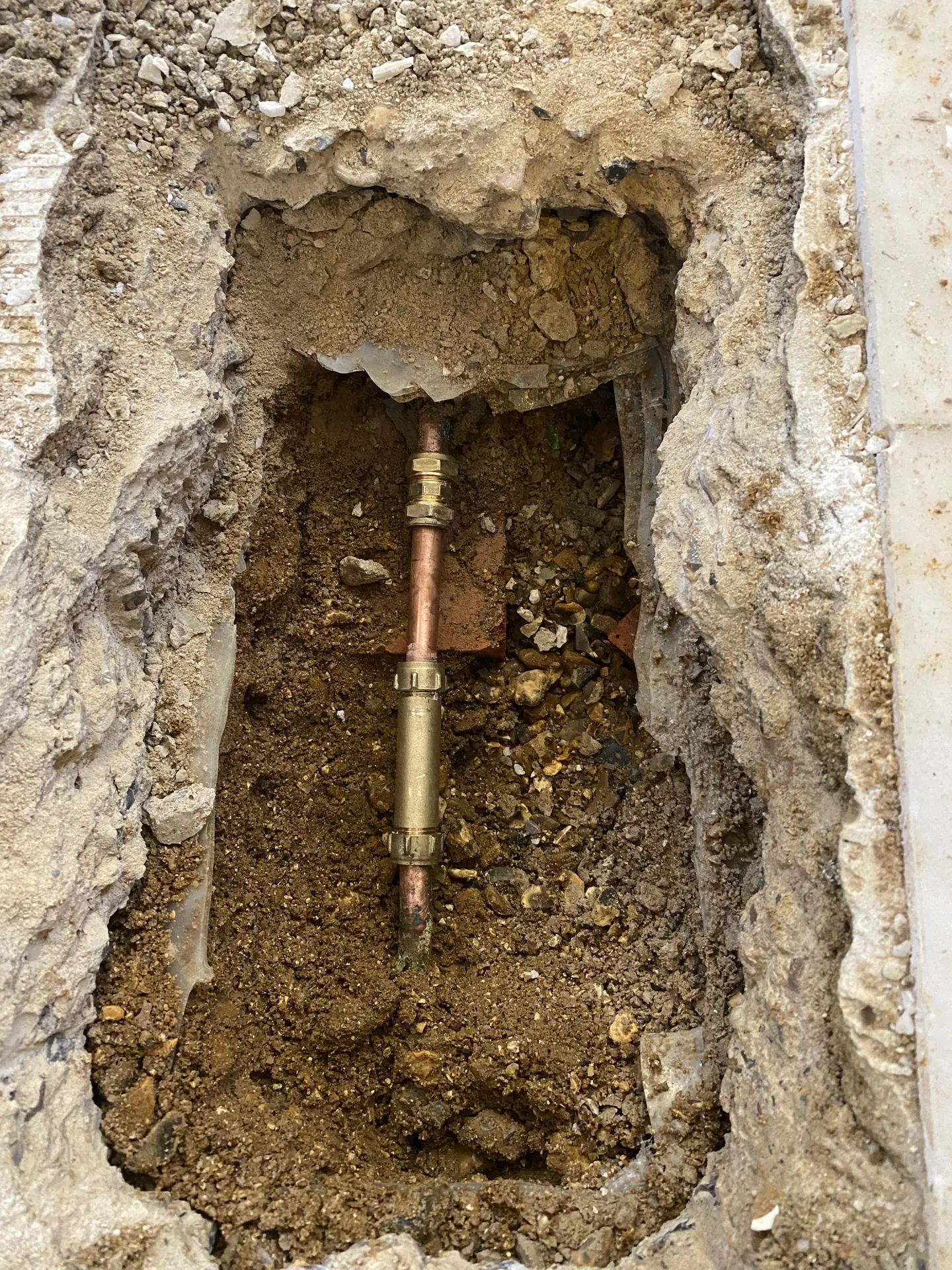
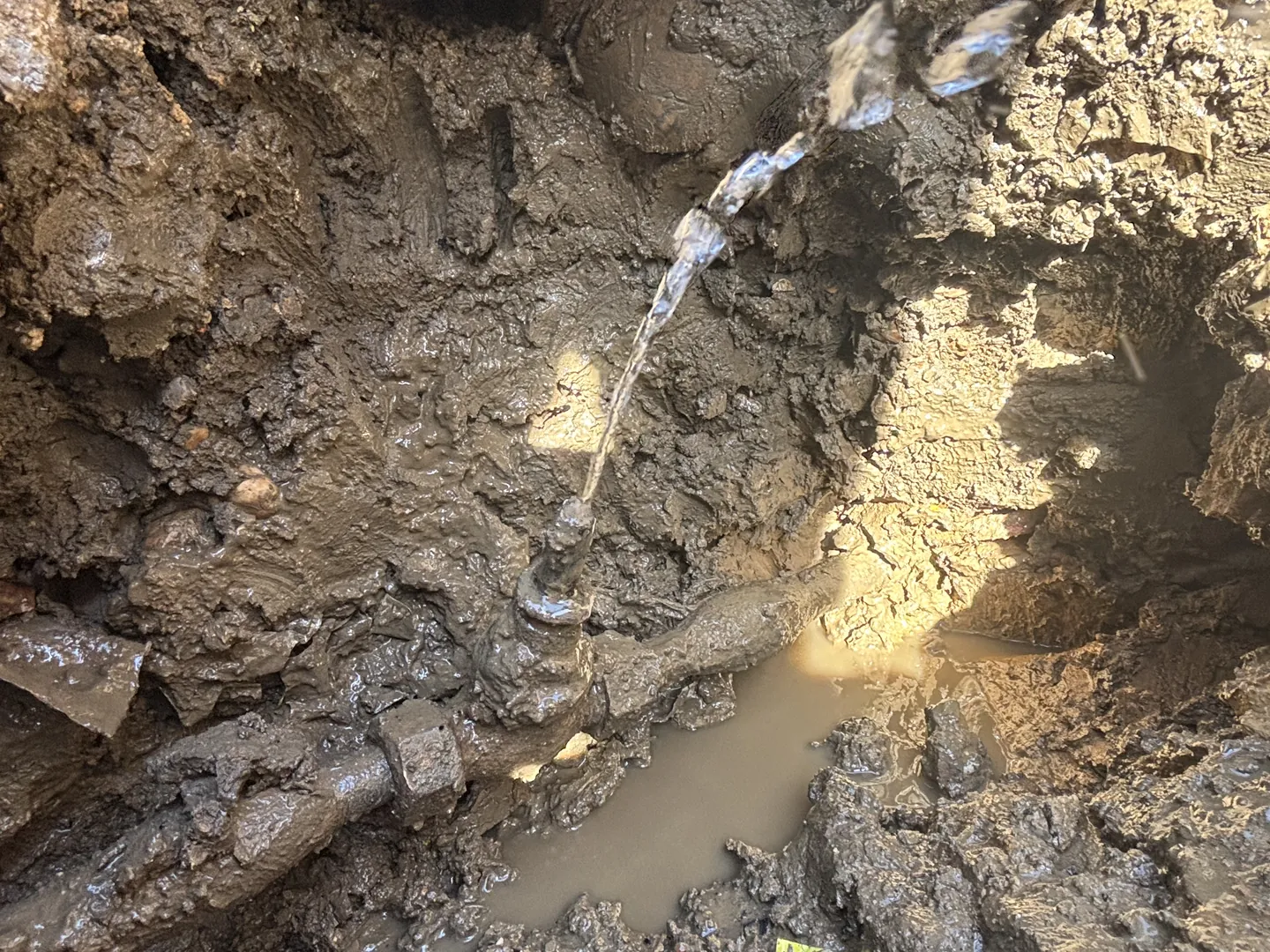
The detector peaks directly above the leak, and we cross-check with the thermal camera or acoustic microphone where we can. The aim is one small opening at the marked spot, not a search.
Related services
Think it is a tracer gas problem?
Call now and we will tell you straight away whether it needs a same-day visit. Or send a photo of the stain, the meter or the boiler gauge on WhatsApp.
07516 755 680