Thermal Imaging Leak Surveys
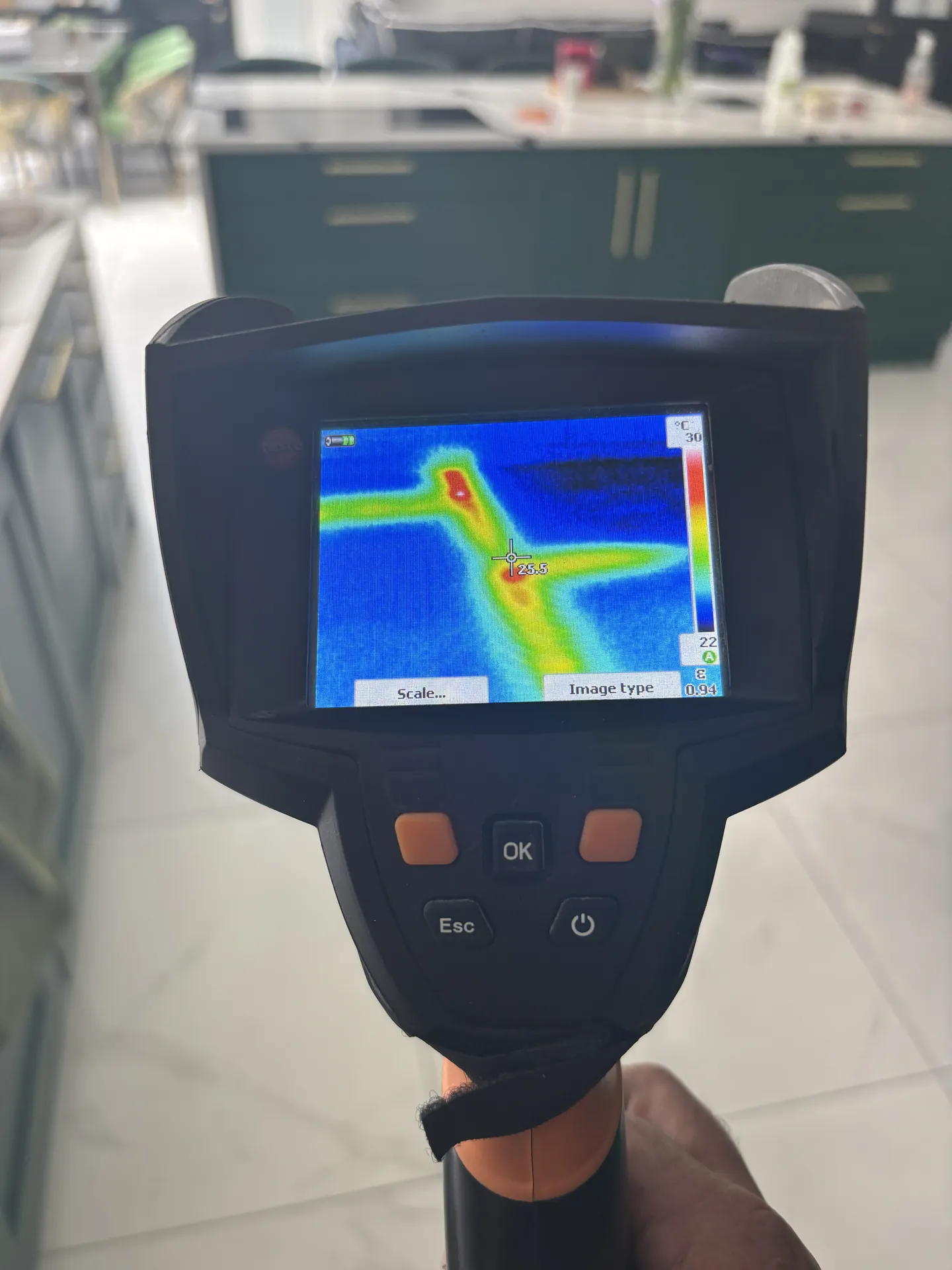
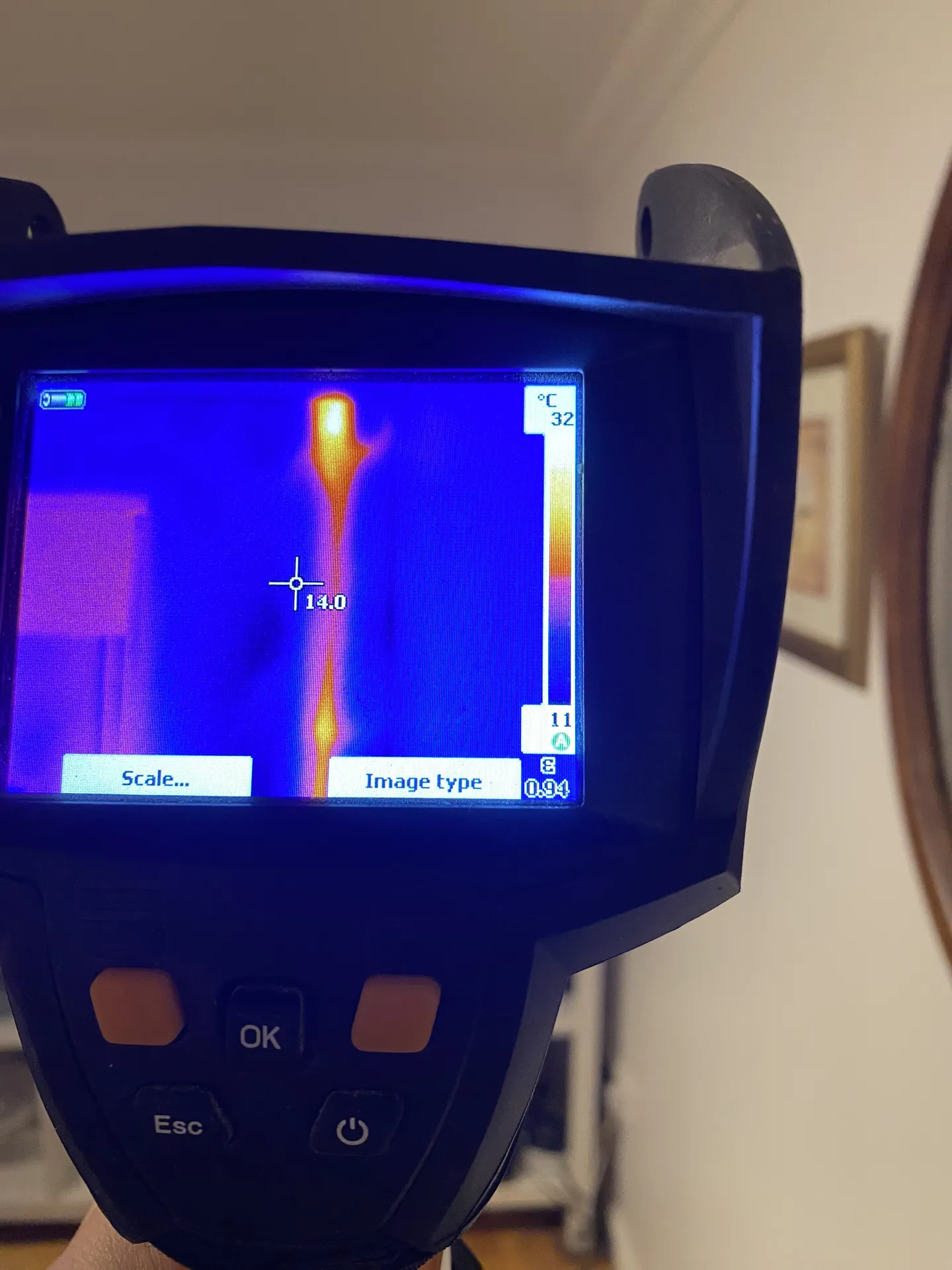
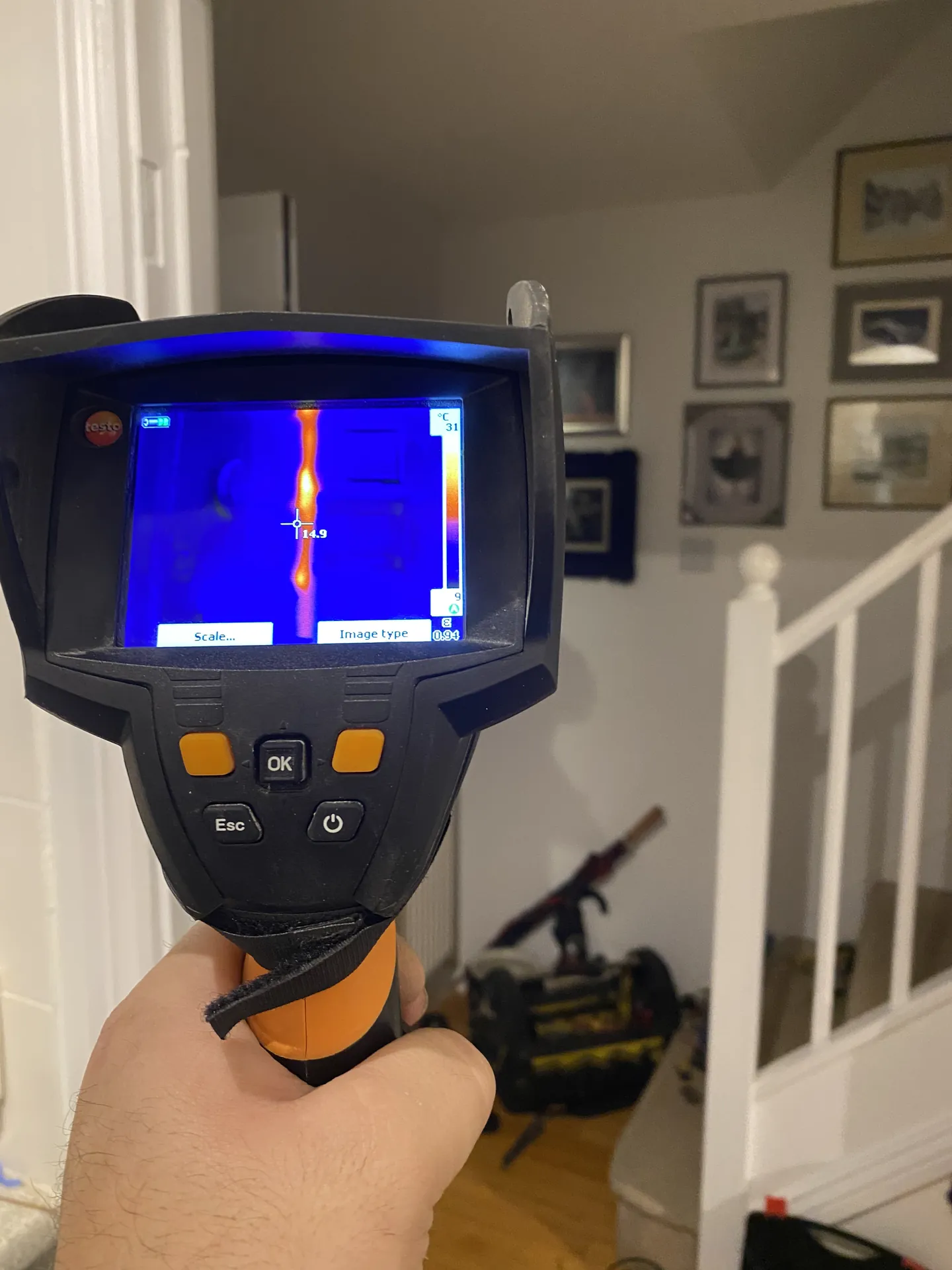
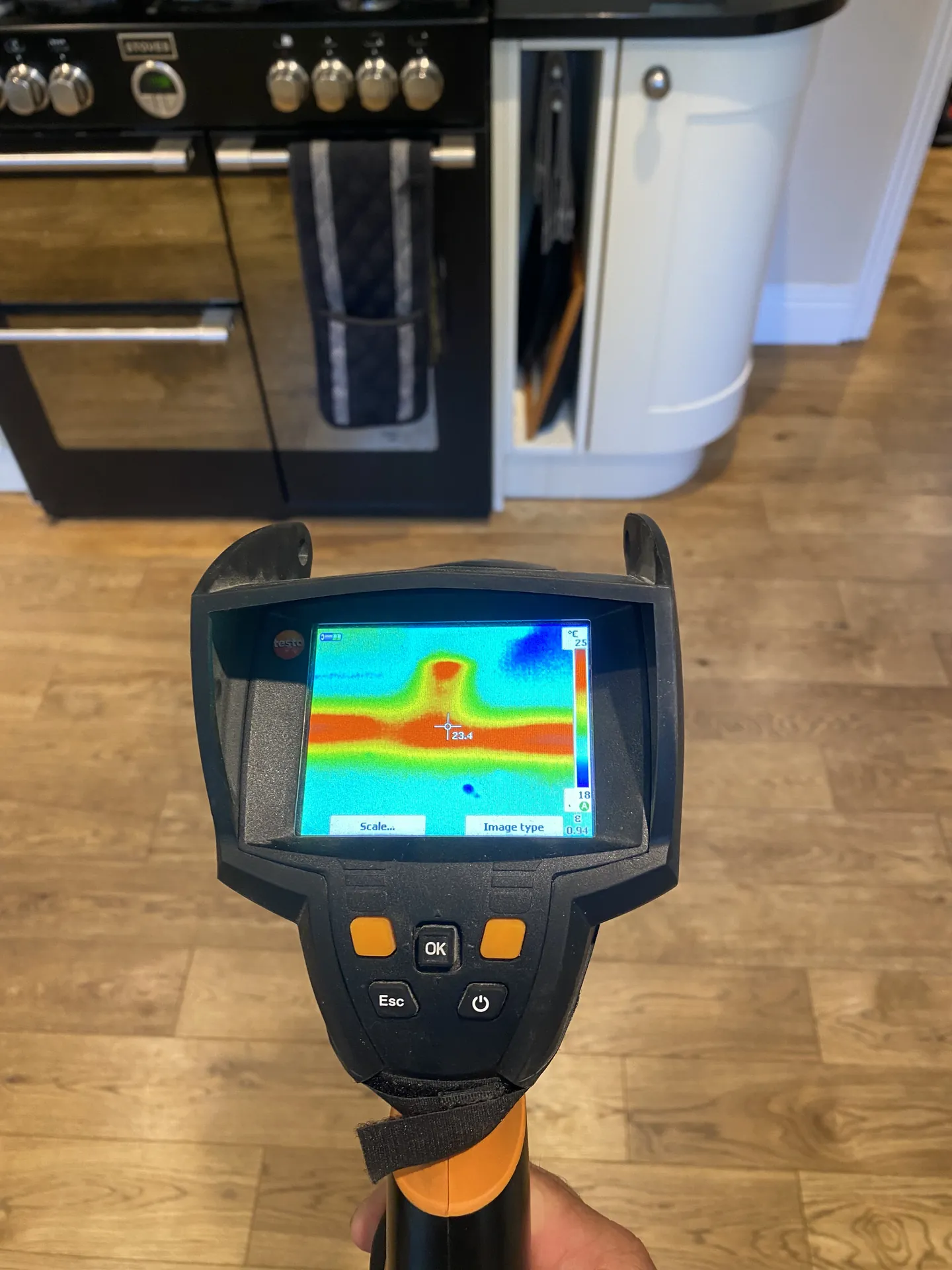
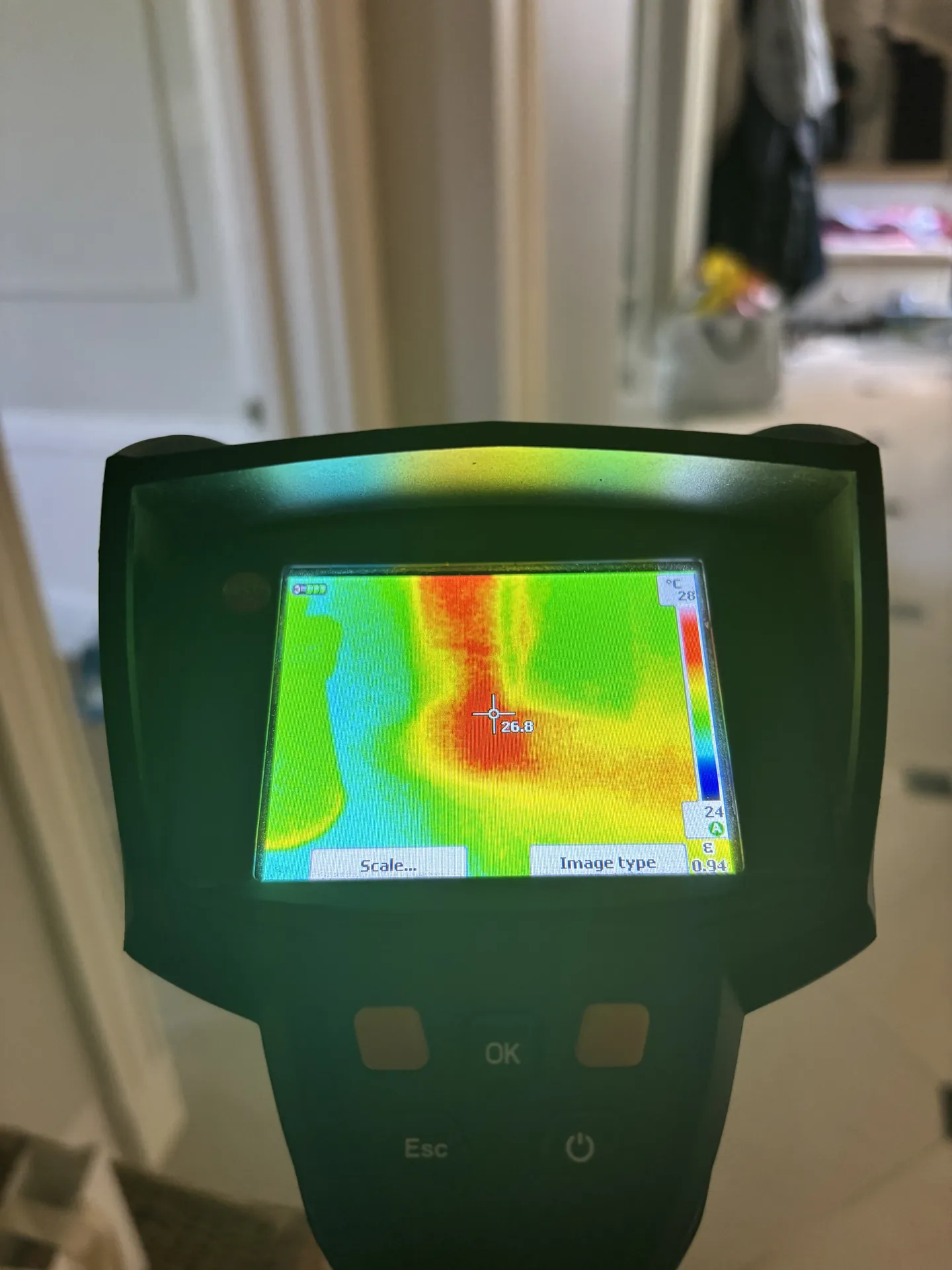
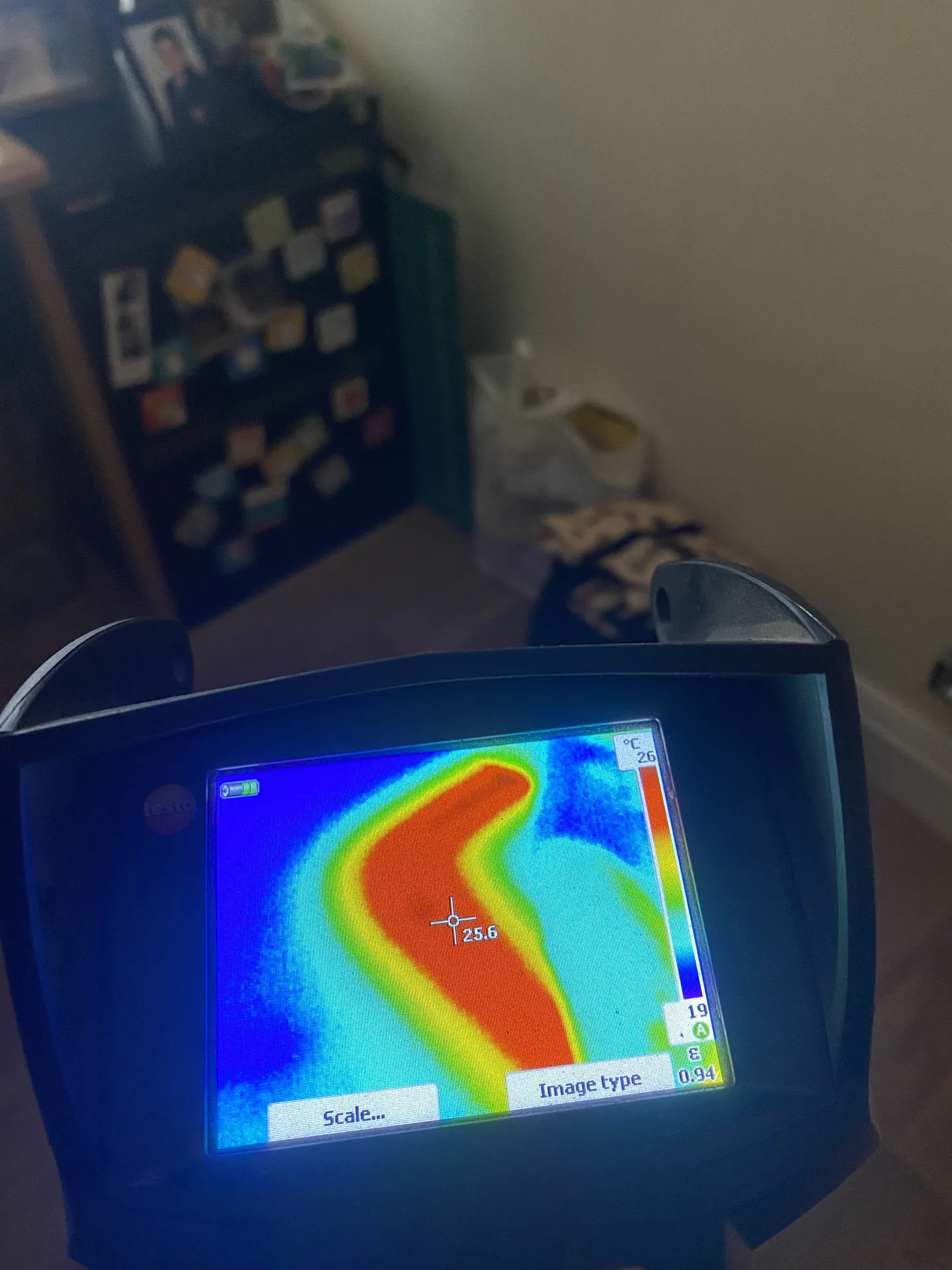
Thermal imaging lets us see what is happening inside a floor or wall from the room. Warm pipes glow, wet areas show cool, and a leak on a heating pipe stands out as a bloom of heat where there should be a clean line.
Thermal imaging leak surveys, step by step
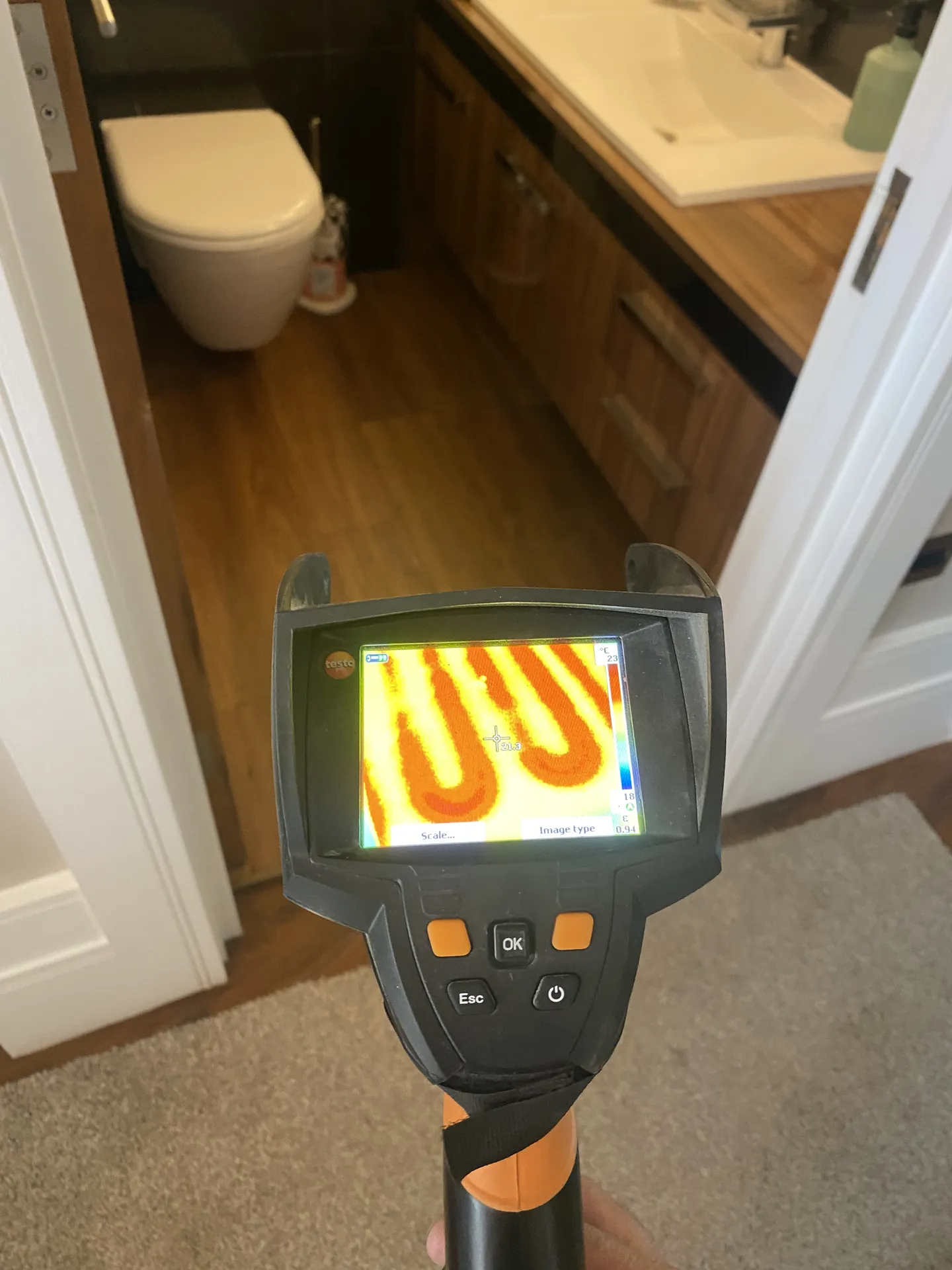
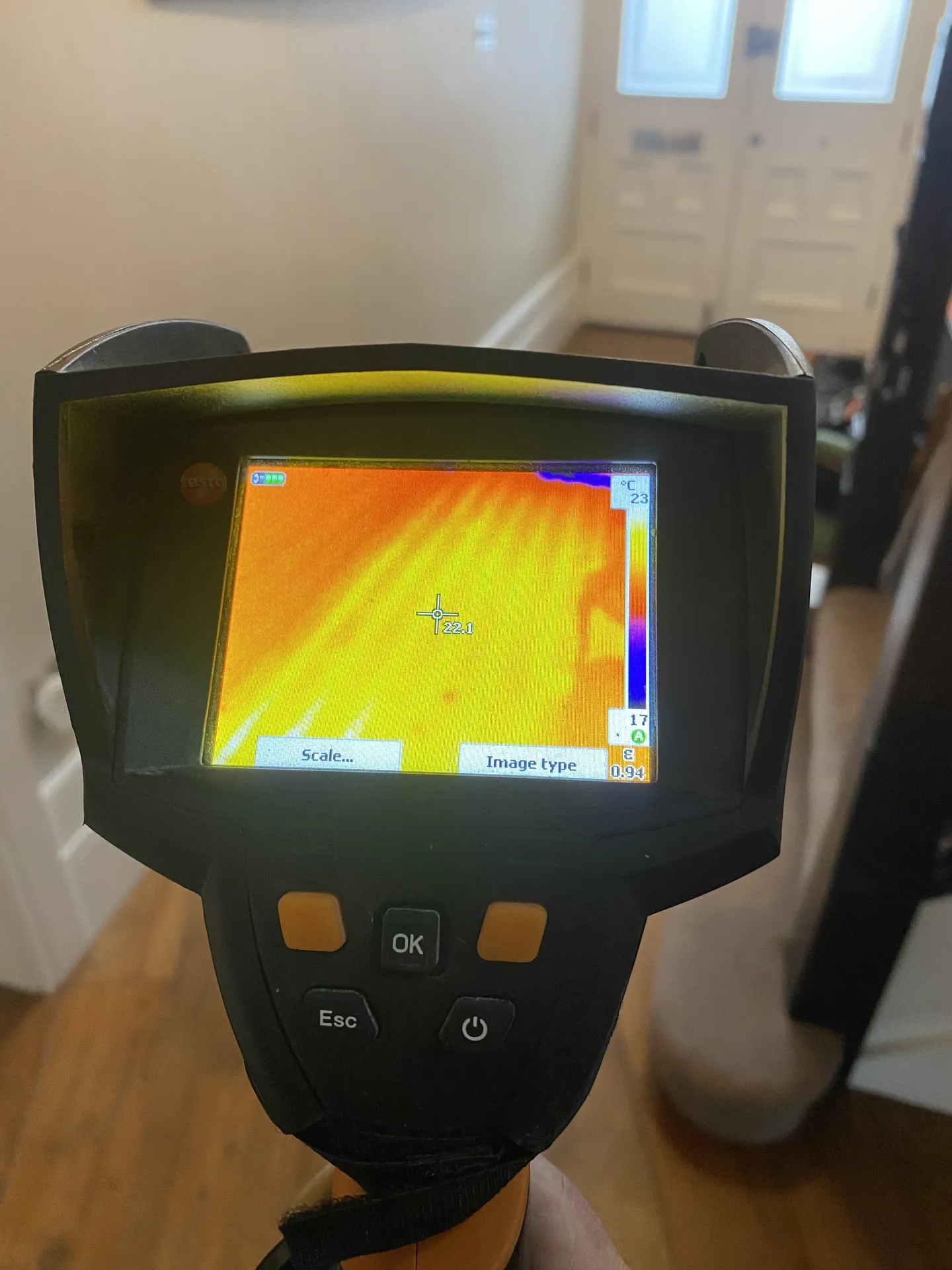
A thermal camera reads the temperature of every surface it is pointed at and turns it into a picture. Because hot water pipes warm the floor or plaster above them, the camera shows the exact route of the pipework through the finished surface. Where a heating pipe is leaking, hot water spreads into the surrounding material and shows as a patch of warmth spreading away from the line.
Cold water leaks show the other way round: evaporation from a wet area cools it, so a damp patch under a floor or inside a wall appears as a cool shape on the image, often well before anything is visible to the eye. This makes thermal imaging the quickest way to survey a whole property and decide where the acoustic or tracer gas kit should be used next.
Thermal imaging is one method, not the whole answer. It needs a temperature difference to work, so we run the heating for warm pipes and use it alongside pressure testing, acoustic and tracer gas to confirm the leak rather than a warm patch caused by something else. The thermal images go into your report with the location marked.
Thermal imaging in our own photos
From your first call to a leak you can see in the report
Call or WhatsApp with a few photos and a line about the symptoms. We ask a handful of questions, agree a fixed price and book the survey, usually for the same or the next day.
On arrival we pressure test the mains, hot water and heating, check the meter and test the escaping water, so we know what we are looking for before the detection starts.
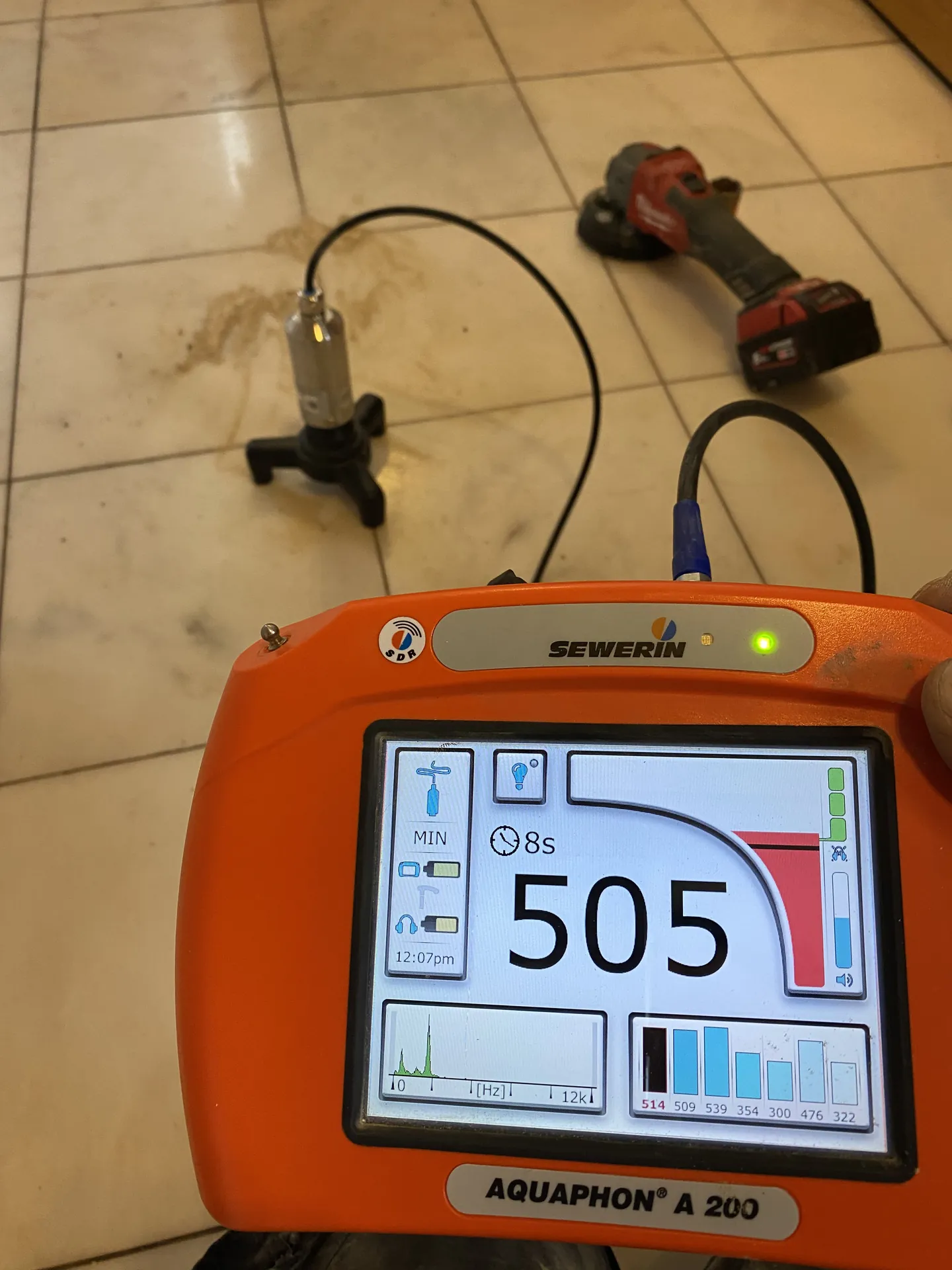
Thermal imaging, the acoustic ground microphone and tracer gas are used as the pipework dictates until the leak is marked on the floor or wall.
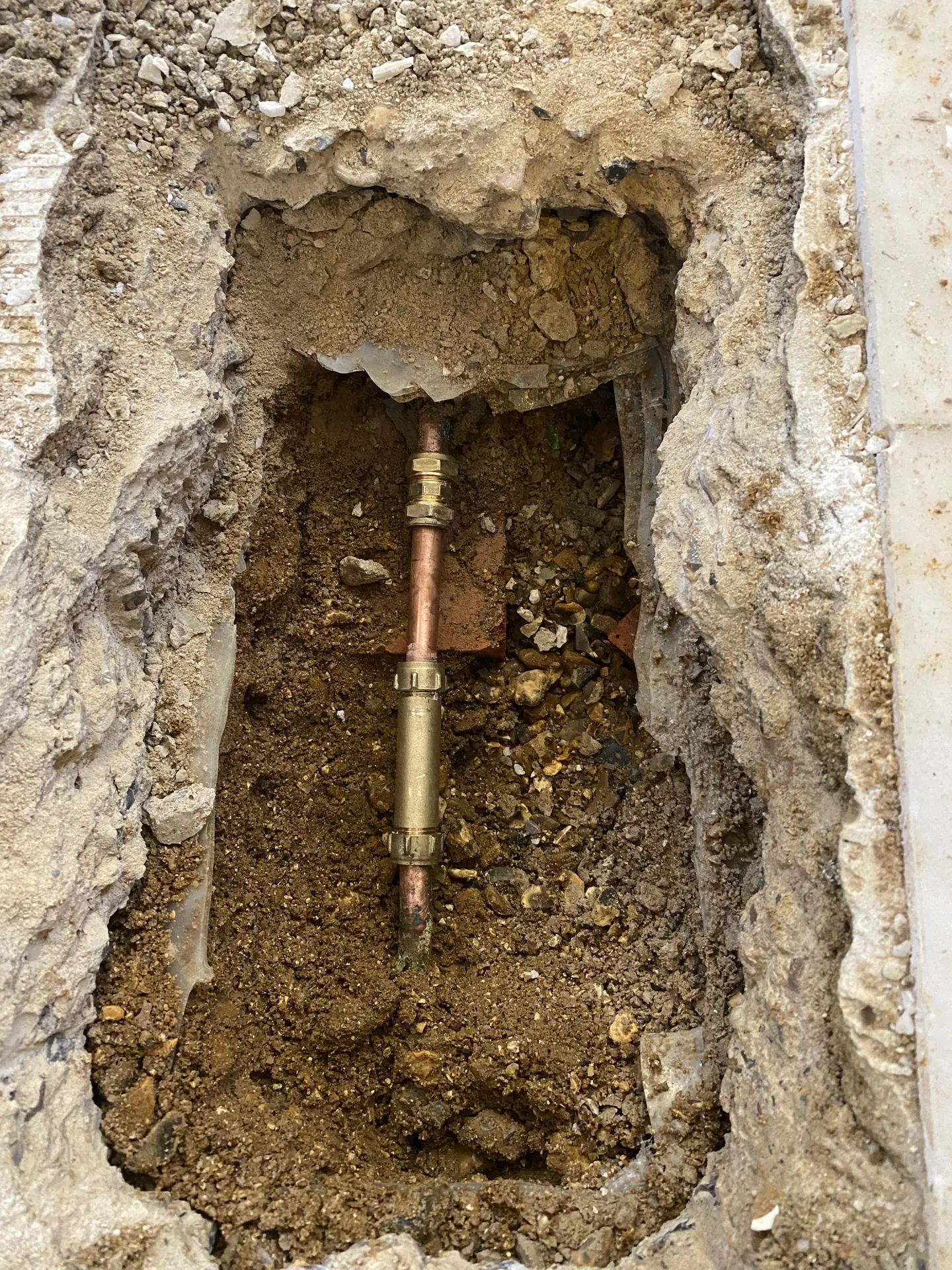
You get a written report with readings, thermal images and photographs, ready for a trace and access claim. If you want the leak fixed, we open that one spot and repair it.
A report your insurer can act on
Most buildings insurance policies include trace and access cover for finding a hidden leak and making good the way in. Our report is written for that claim: what we tested, what we found, where it is, with photographs, thermal images and readings.
- Turn off the stop tap or the heating and stop topping up
- Photograph the damage, the boiler gauge and the meter
- Tell your insurer a leak is suspected and detection is being arranged
- Trace and access pays to find the leak and make good the access
Thermal imaging: questions answered
Can a thermal camera see through walls?
Not exactly. It reads the surface temperature, and pipes running behind the surface warm or cool it enough to show. In practice that means pipe runs and wet patches inside a wall or floor appear clearly on the image.
Does thermal imaging find cold water leaks?
Often, yes. Evaporation cools a wet area, so it shows as a cool patch. For cold water leaks we usually confirm the spot with the acoustic microphone or tracer gas, because a cool patch on its own can have other causes.
Does the heating need to be on for a thermal survey?
For heating and hot water leaks, yes. Warm pipes are what the camera sees. If the system is off when we arrive we run it for a while before scanning.
Can thermal imaging find a leak under tiles?
Yes. Tile and stone conduct heat well, so pipe runs and wet areas under them show clearly. Thick insulation or a very deep screed can reduce the contrast, which is when tracer gas takes over.
Will I get the thermal images?
Yes. The report includes the thermal images with the leak position marked, alongside ordinary photographs of the same area, which is what insurers ask for.
Related services
Think it is a thermal imaging problem?
Call now and we will tell you straight away whether it needs a same-day visit. Or send a photo of the stain, the meter or the boiler gauge on WhatsApp.
07516 755 680