Boiler Keeps Losing Pressure? Here Is Why
A sealed heating system does not use water up. If the gauge keeps dropping and you keep topping it up, water is escaping from a pipe, a radiator, a valve or the boiler, and topping up only feeds the leak.
Boiler losing pressure: what is usually going on
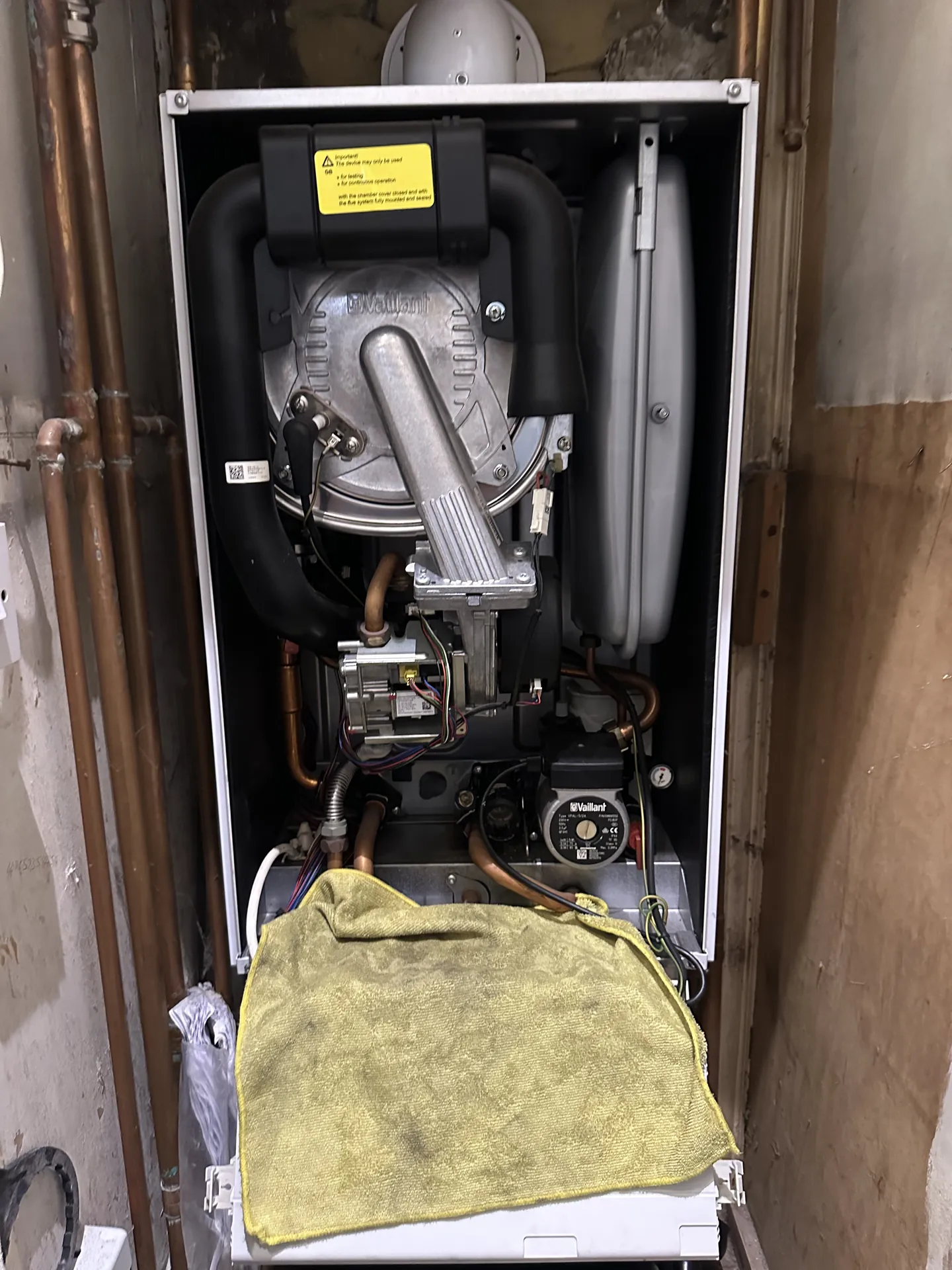
A combi or system boiler runs a sealed circuit filled with water under pressure, typically around one to one and a half bar when cold. That water goes round and round and nothing should leave. When the gauge falls and the boiler locks out on low pressure, the water has gone somewhere: through a pipe joint under a floor, a radiator valve, a pressure relief valve discharging outside, or a component inside the boiler. Because the circuit is topped up from the mains, the leak can run for months with nothing visible inside the house.
The pattern of the loss tells us a lot. Pressure that drops over weeks is often a weeping radiator valve or a pressure relief valve that has started to pass. Pressure that drops in days points to pipework, and in the 1930s semis around Watford and the Victorian terraces of north and west London that usually means copper heating pipes buried in a solid floor screed or running through a timber sub-floor. In newer houses with underfloor heating the leak is often on one loop under the screed, which is why the floor may feel warmer in one spot.
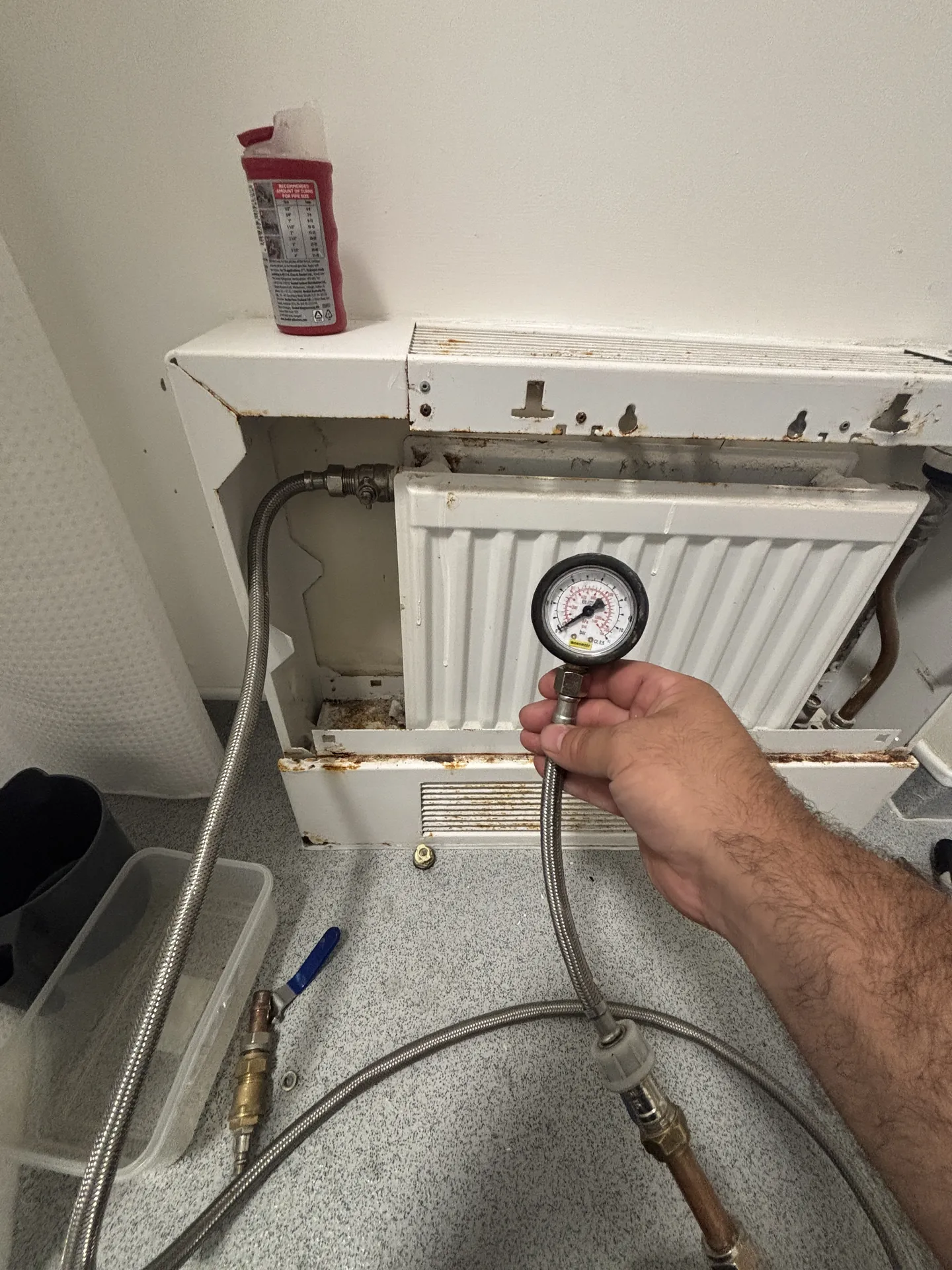
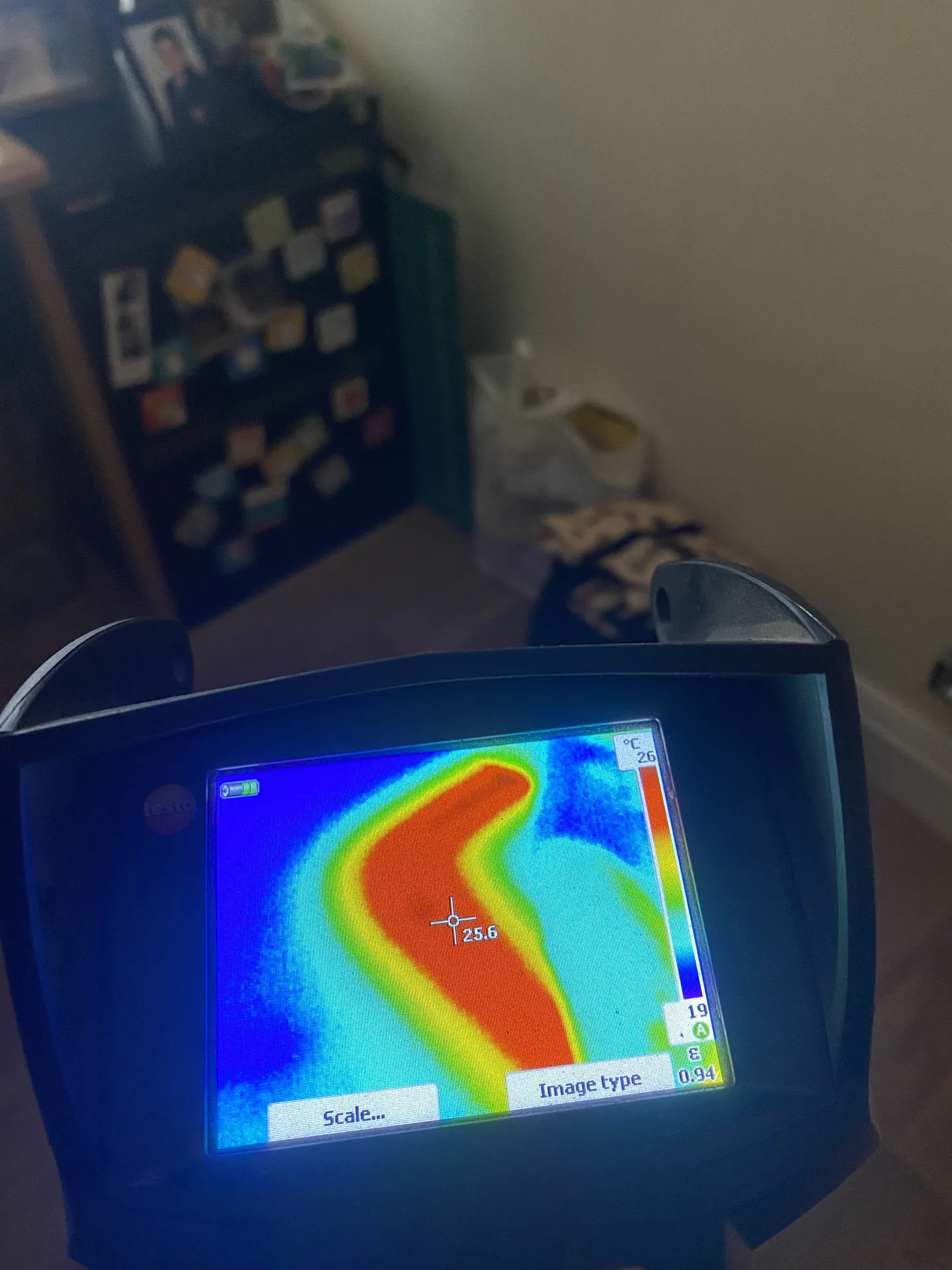
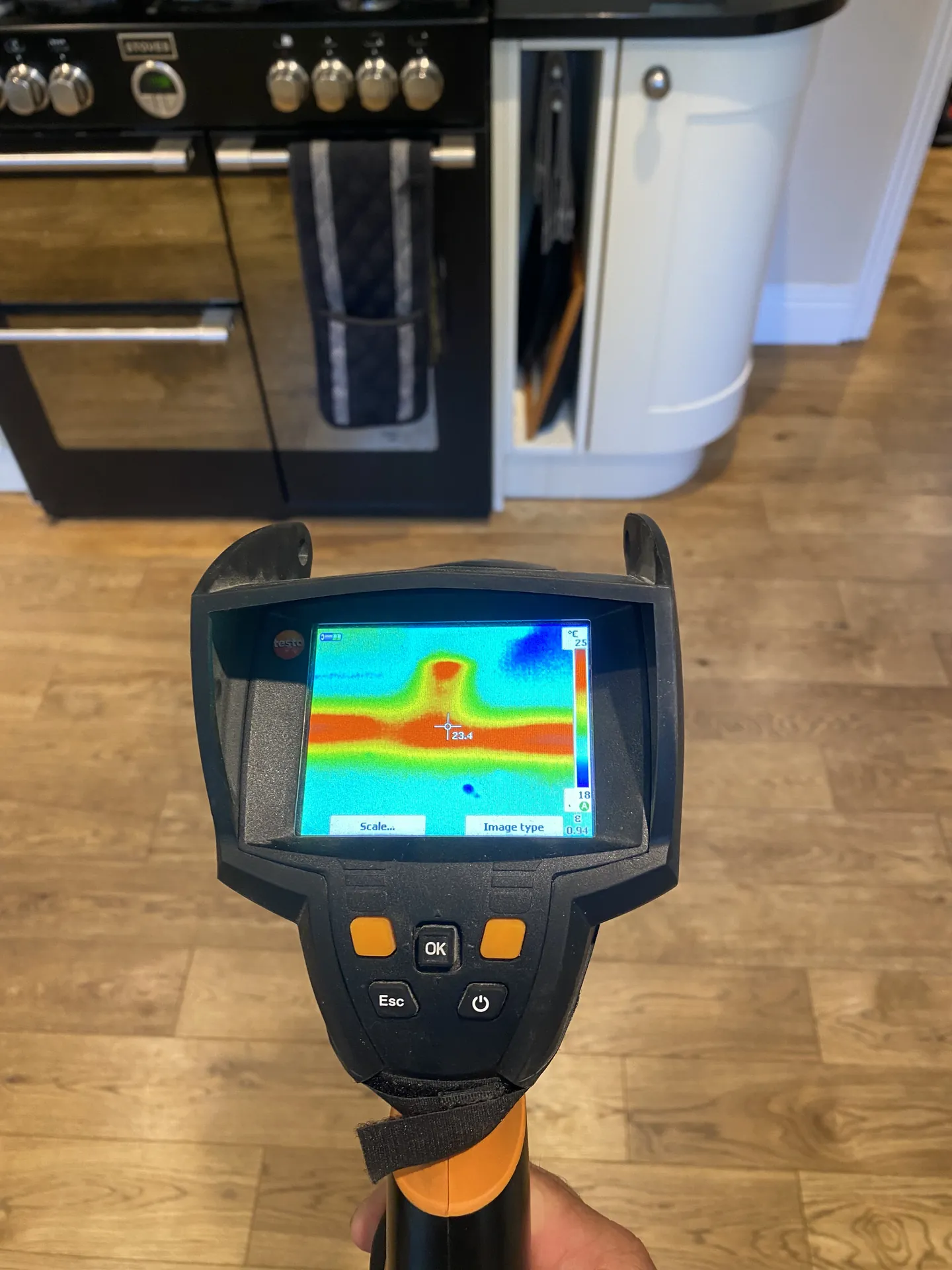
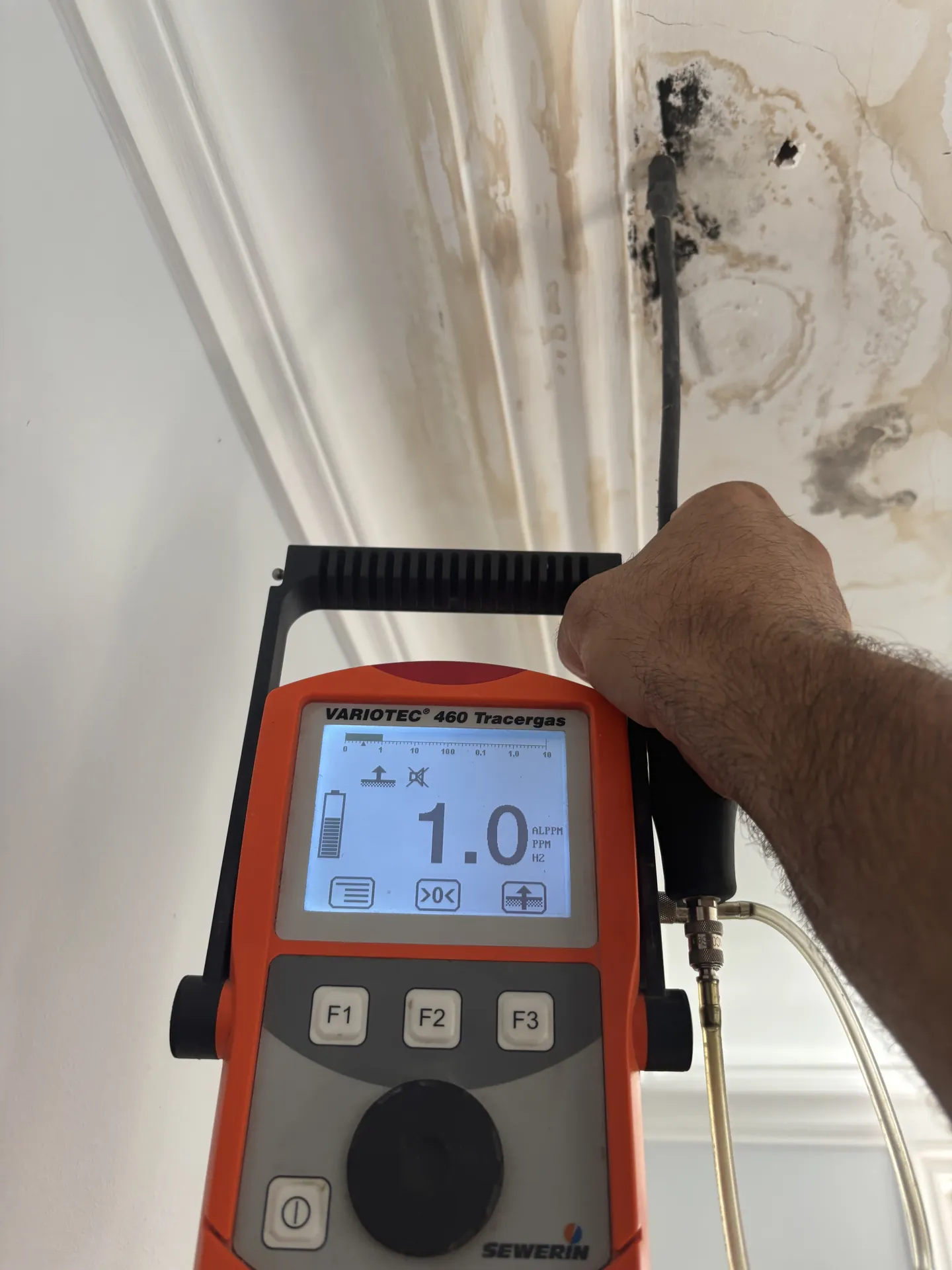
We isolate the boiler from the pipework and pressure test each part separately, which tells us whether the water is going inside the boiler, at the radiators, or under the floor. On the pipework we use a thermal imaging camera to map the pipe runs while the heating is warm, then hydrogen tracer gas in the drained circuit to pinpoint the exact spot where it escapes through the floor. The leak is marked, photographed and, if you want, repaired through a single small opening, with a written report and the thermal images included.
A leak on a heating pipe under a floor is exactly the kind of hidden escape of water that trace and access cover on buildings insurance is designed for. Our report sets out the tests, the readings and the location so your insurer can act on it without a second visit.
Call today if
- The pressure falls to zero within hours of topping up.
- Water is dripping from the boiler casing or the ceiling below it.
- A ceiling or floor has started to bulge, stain or feel soft.
- The boiler locks out repeatedly and you have no heating or hot water in cold weather.
What this looks like on the day
How we would find this leak
Central heating leak detection
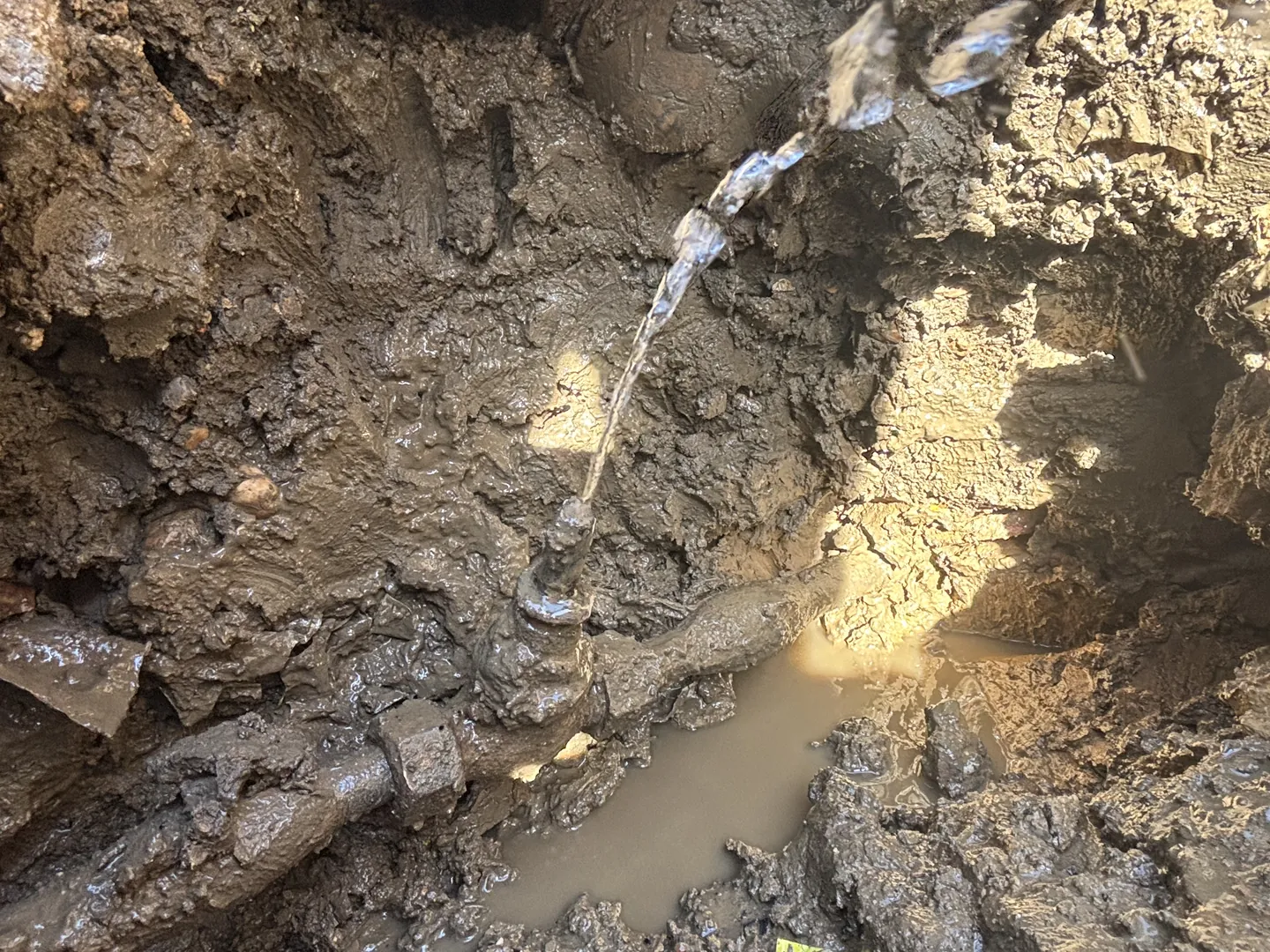
A boiler that keeps dropping pressure means water is escaping somewhere in the heating circuit. We find the pipe or fitting and fix it.
Heating leaks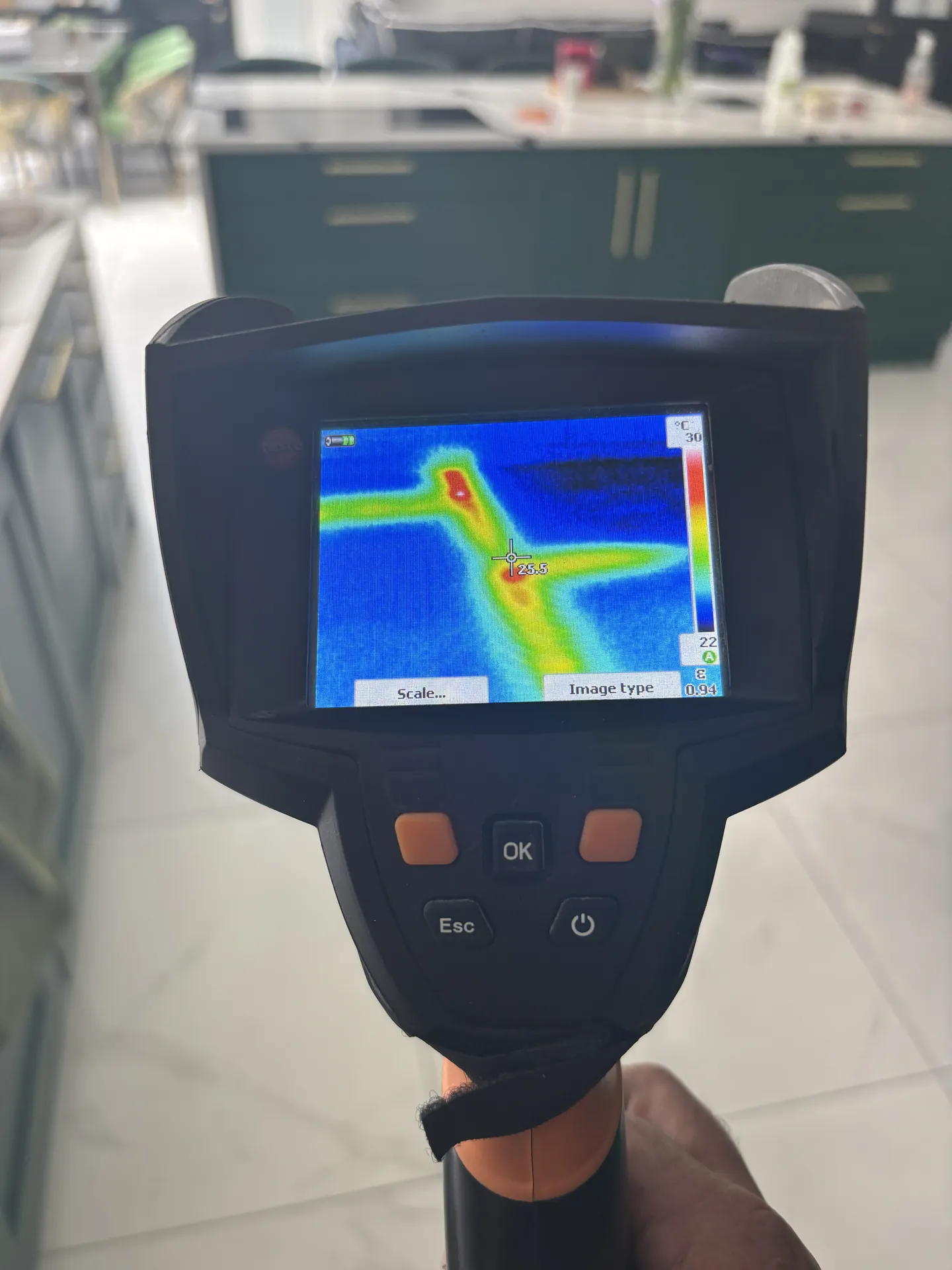
Thermal imaging leak surveys
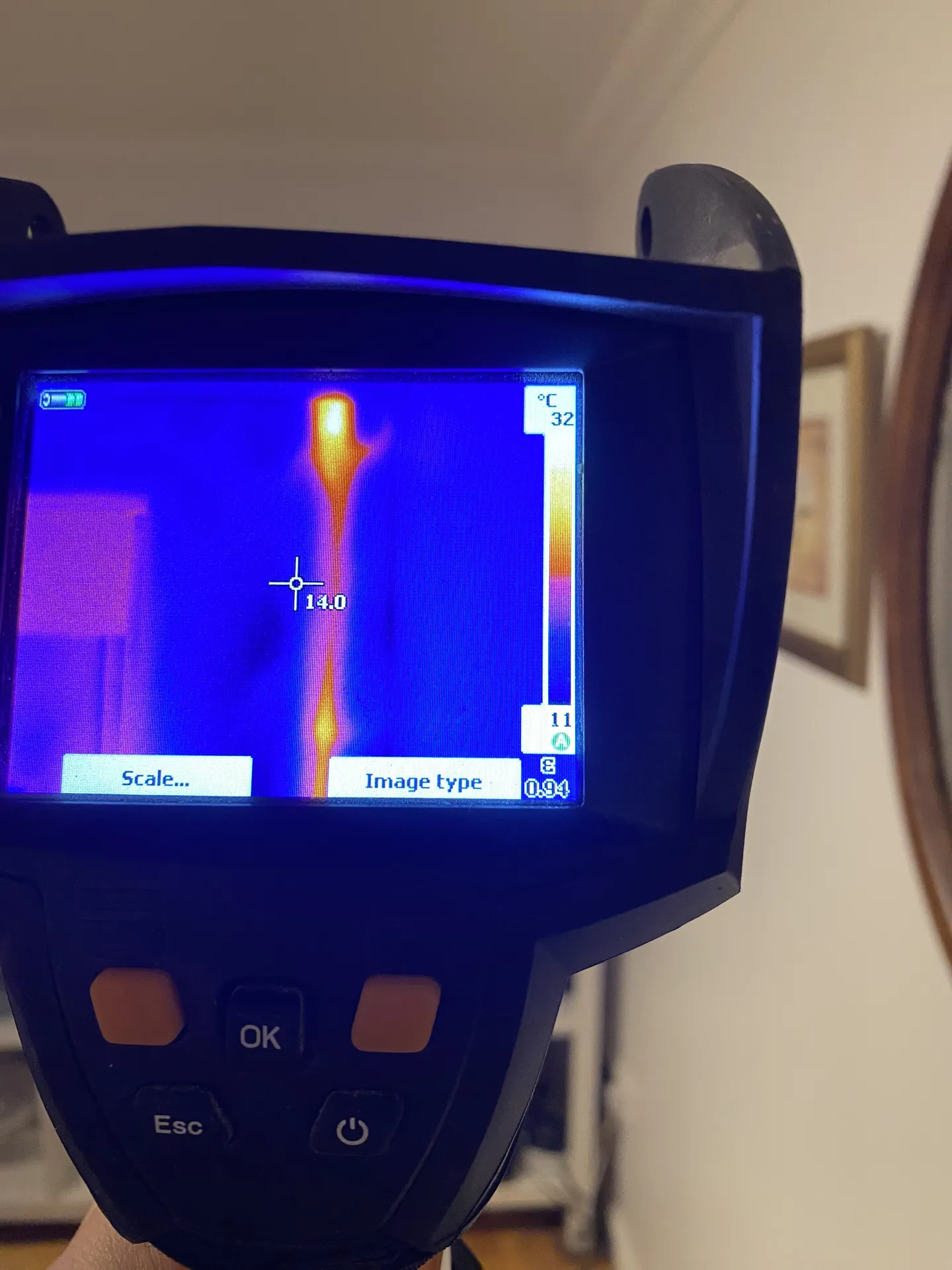
A thermal imaging camera shows warm pipe runs and cool wet patches through floors and walls, so the leak is seen before anything is opened.
Thermal imaging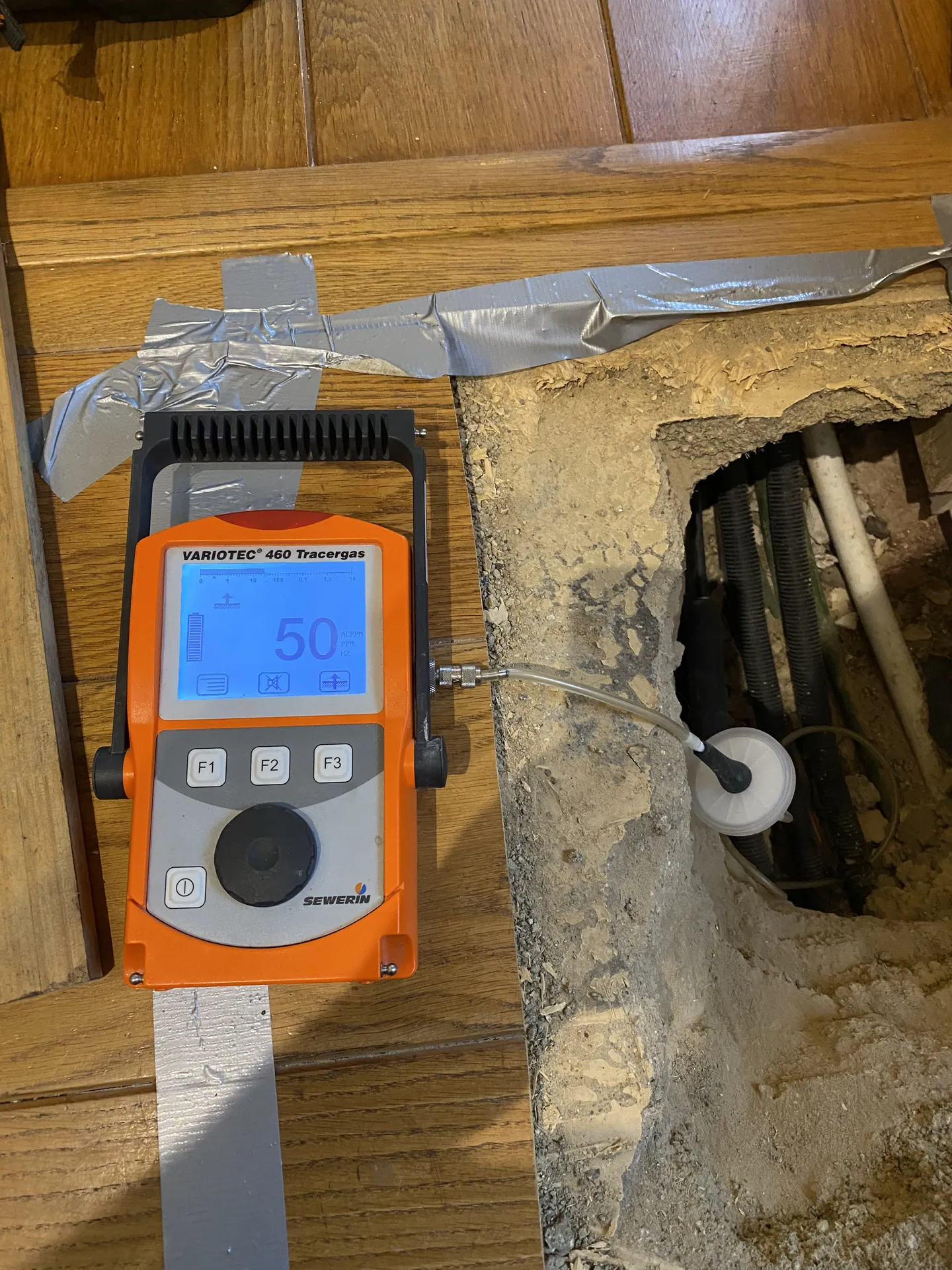
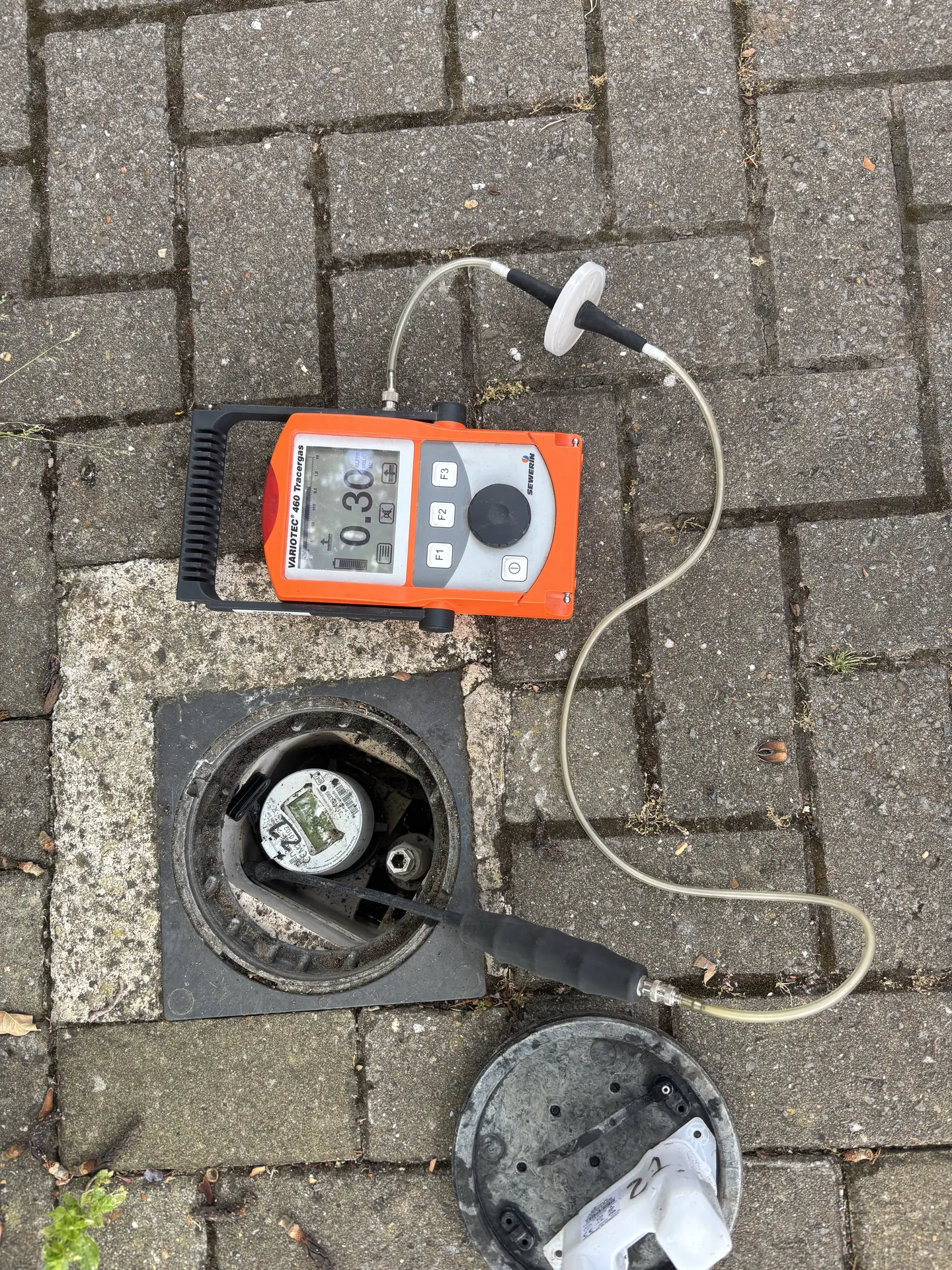
Tracer gas leak detection
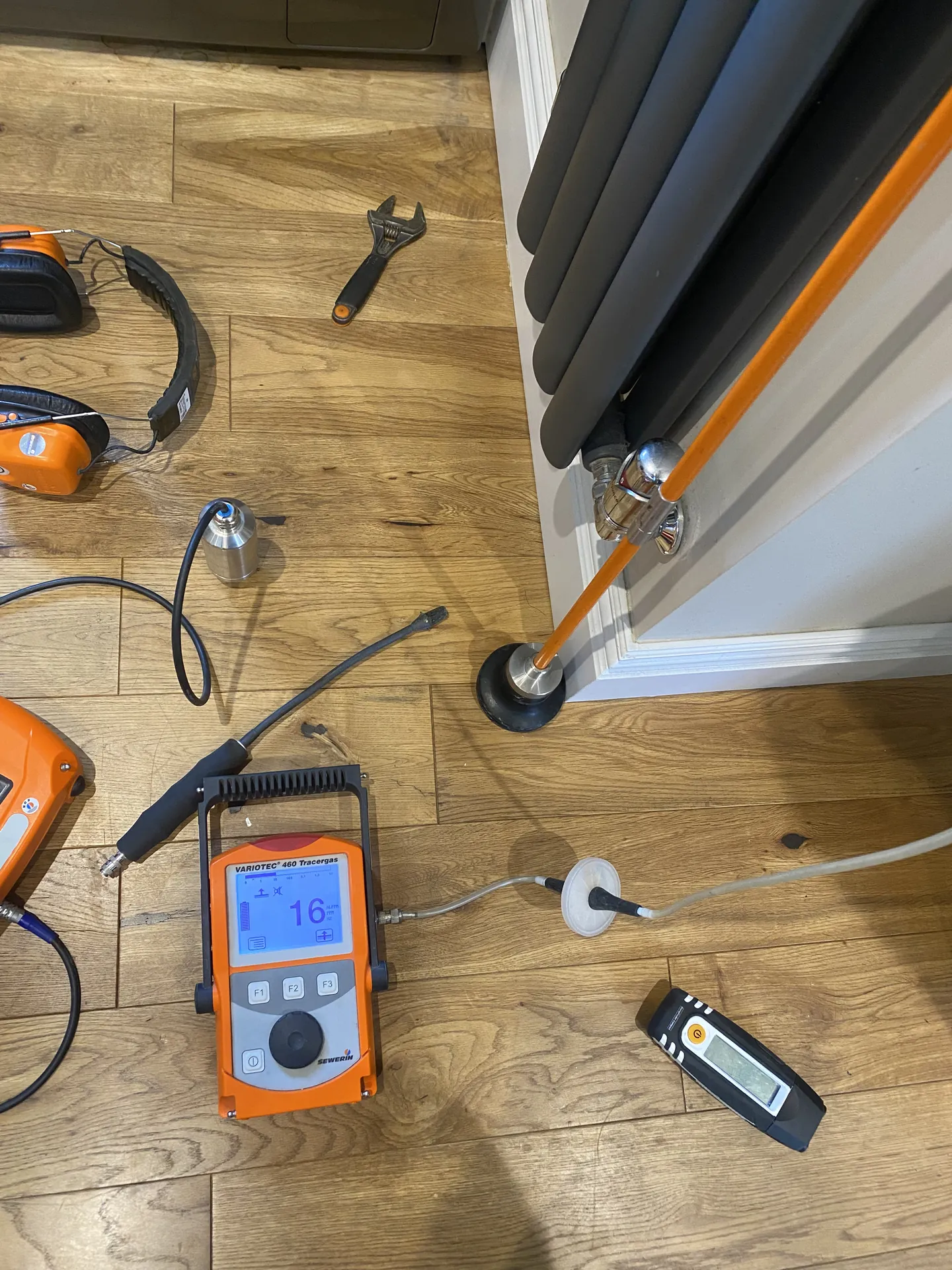
A safe hydrogen and nitrogen mix is put into the drained pipe, rises through the floor or wall and is picked up by the detector directly above the leak.
Tracer gasFrom your first call to a leak you can see in the report
Call or WhatsApp with a few photos and a line about the symptoms. We ask a handful of questions, agree a fixed price and book the survey, usually for the same or the next day.
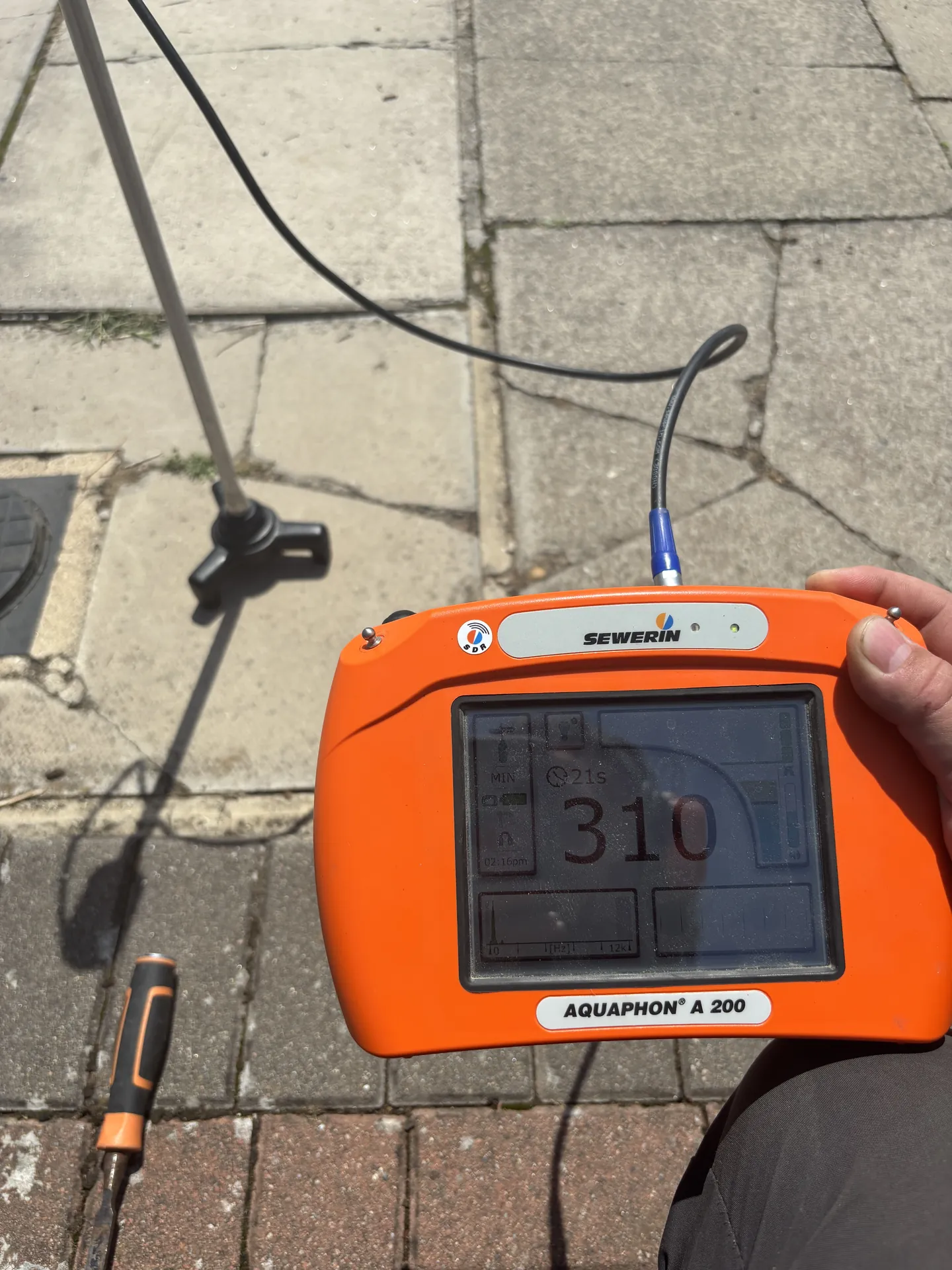
On arrival we pressure test the mains, hot water and heating, check the meter and test the escaping water, so we know what we are looking for before the detection starts.
Thermal imaging, the acoustic ground microphone and tracer gas are used as the pipework dictates until the leak is marked on the floor or wall.
You get a written report with readings, thermal images and photographs, ready for a trace and access claim. If you want the leak fixed, we open that one spot and repair it.
Boiler losing pressure: questions answered
Why does my boiler keep losing pressure with no visible leak?
Because the leak is on part of the circuit you cannot see: a pipe under the floor, inside a wall, or a valve that discharges outside. Water does not evaporate from a sealed system, so a falling gauge always means water is escaping somewhere.
Is it dangerous to keep topping the boiler up?
It is not dangerous in itself, but every top-up adds fresh water and oxygen to the system, which corrodes radiators and pipework, and the escaping water is soaking into your floors or walls the whole time. It is worth finding the leak before it becomes a damage claim.
Could it be the boiler rather than a pipe?
Yes. A failed expansion vessel, a passing pressure relief valve or a leaking heat exchanger will all drop the pressure. We isolate the boiler from the pipework and test each side, so we know which it is before anything is opened up.
How do you find a leak on a heating pipe under a concrete floor?
A thermal imaging camera shows where the pipes run and where heat is escaping into the screed, then hydrogen tracer gas in the drained circuit pinpoints the spot where the gas comes up through the floor. That gives one small opening rather than a trench across the room.
Will my home insurance cover finding the leak?
Most buildings policies include trace and access cover for locating a hidden escape of water and making good the opening. The repair itself is usually separate. Our report is written in the form insurers ask for.
Noticed something else?
Boiler losing pressure? Do not wait for the ceiling to come down.
Call now and we will tell you straight away whether it needs a same-day visit. Or send a photo of the stain, the meter or the boiler gauge on WhatsApp.
07516 755 680