Damp Patch That Keeps Coming Back? Find the Pipe
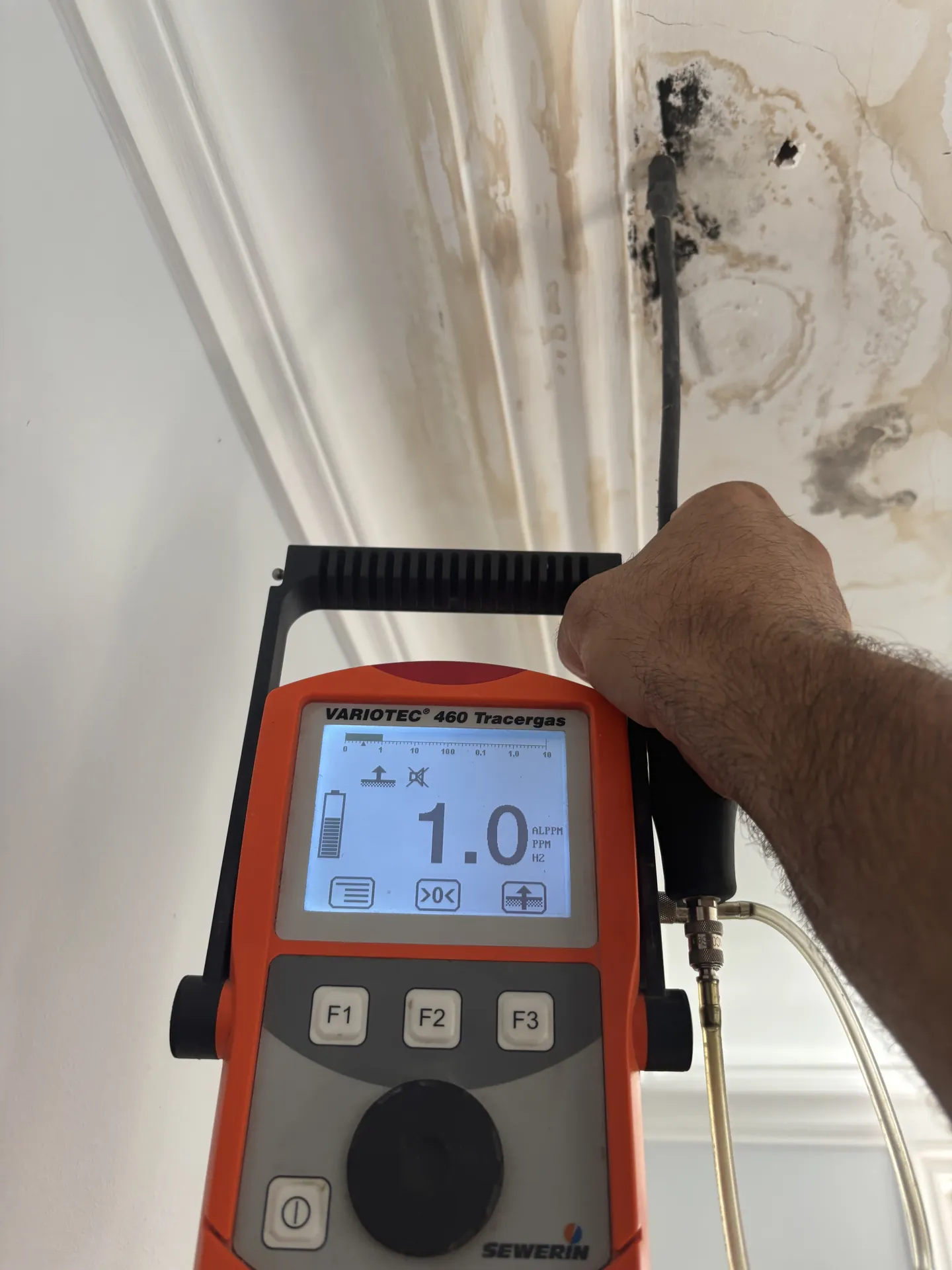
A damp patch that dries out and returns is being fed by a pipe, not by weather or condensation. The pipe is often a metre or more from the stain, which is why painting over it never works.
Damp that comes back: what is usually going on
Water always finds the lowest, easiest route. A leak from a pipe joint in a ceiling void runs along a joist, drops through a gap in the plasterboard and shows as a stain well away from the pipe. A leak in a bathroom above appears on the hall ceiling below rather than under the bath. A stain on a wall at skirting level can be fed by a heating pipe in the floor. The stain marks where the water came out, not where it came from, and that difference is the whole reason leak detection exists as a trade.
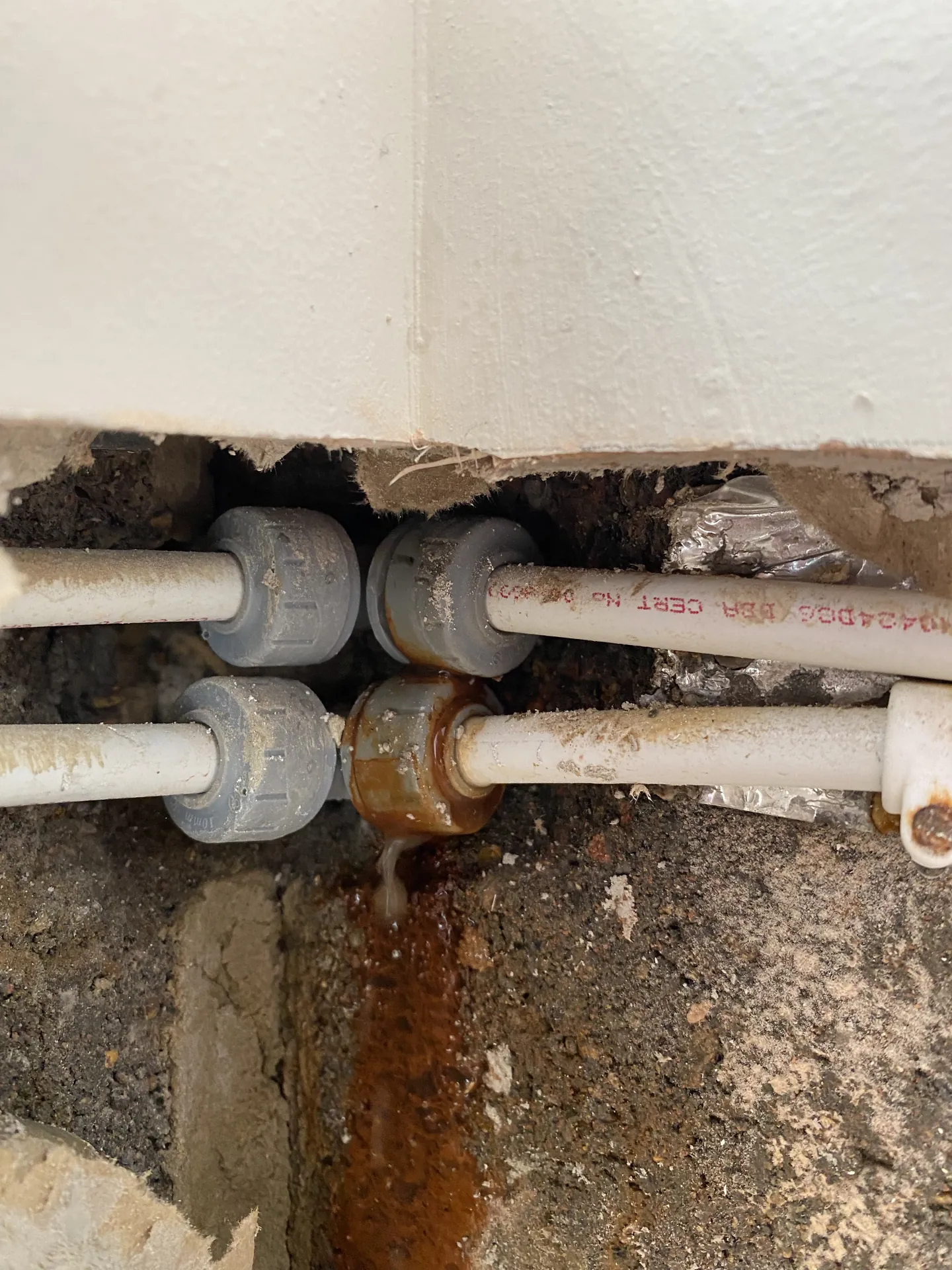
In the houses we work in around Watford, Hertfordshire and London, the usual culprits are a shower tray or bath waste leaking into the floor below, a corroded heating pipe running through a ceiling void, a pipe joint behind a tiled wall, and in flats a leak from the property above or a communal riser in a boxed-in duct. Older properties add lead, iron and the soldered joints of previous repairs; newer ones add push-fit fittings that were never quite pushed home.
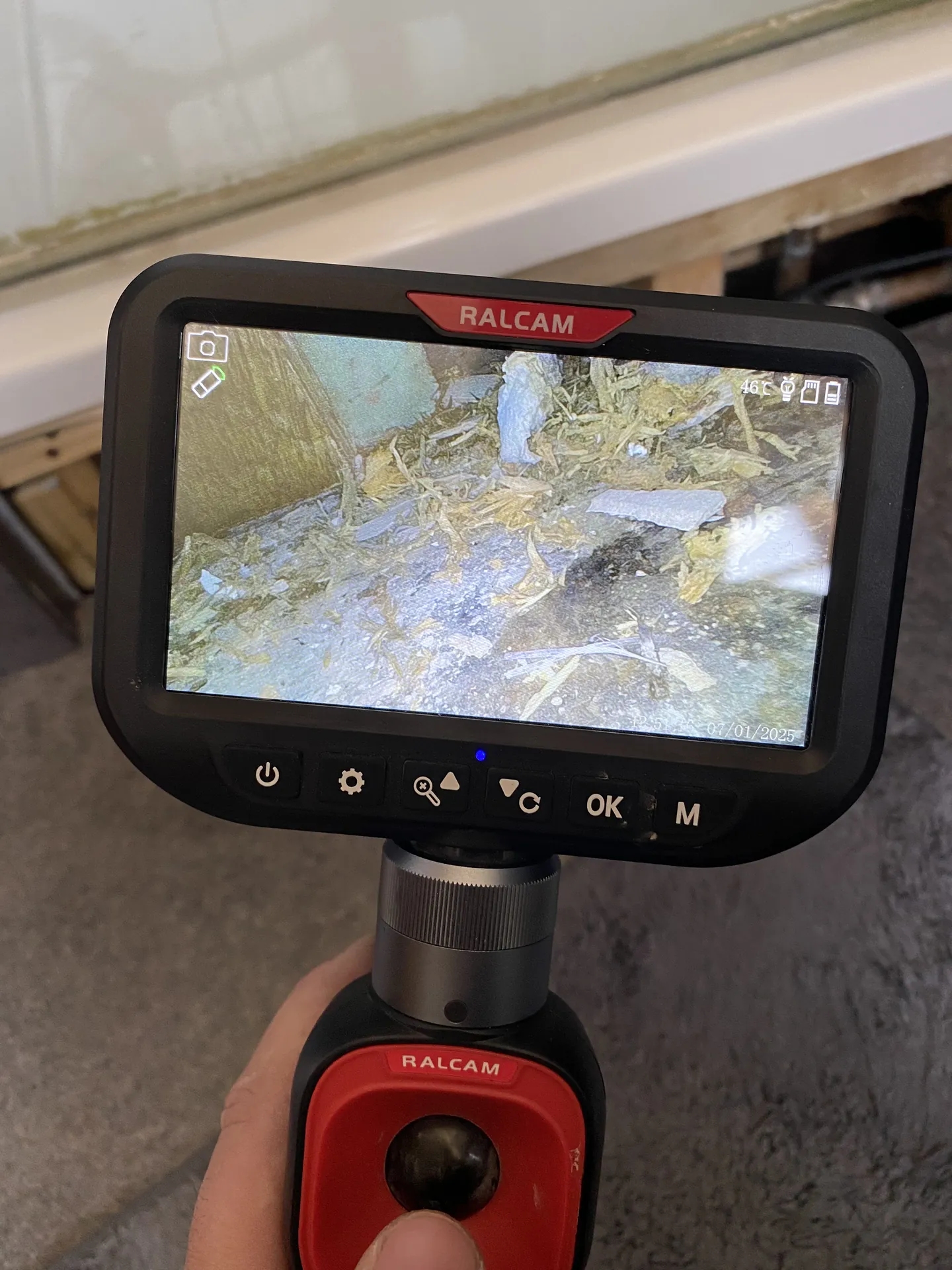
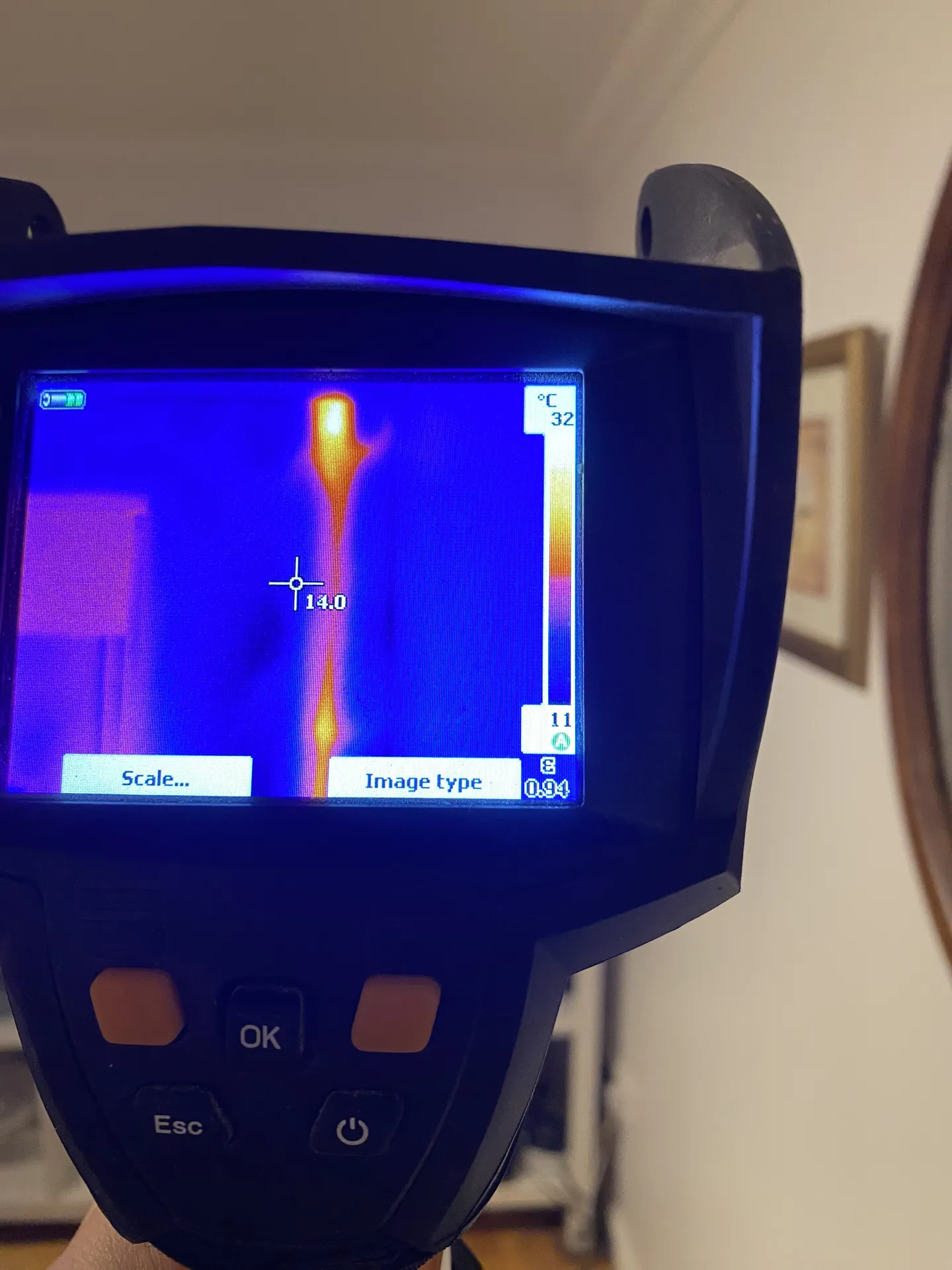
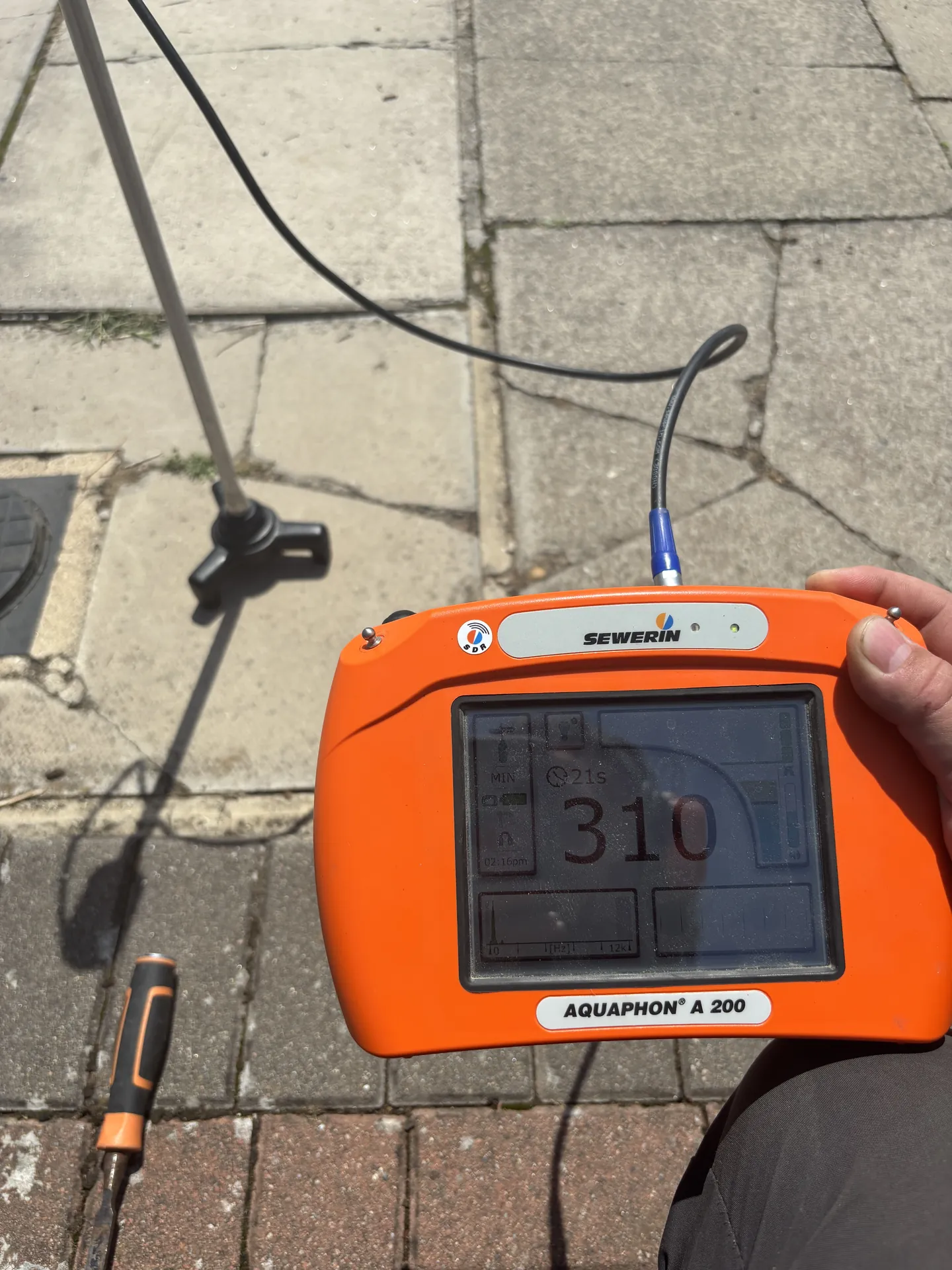
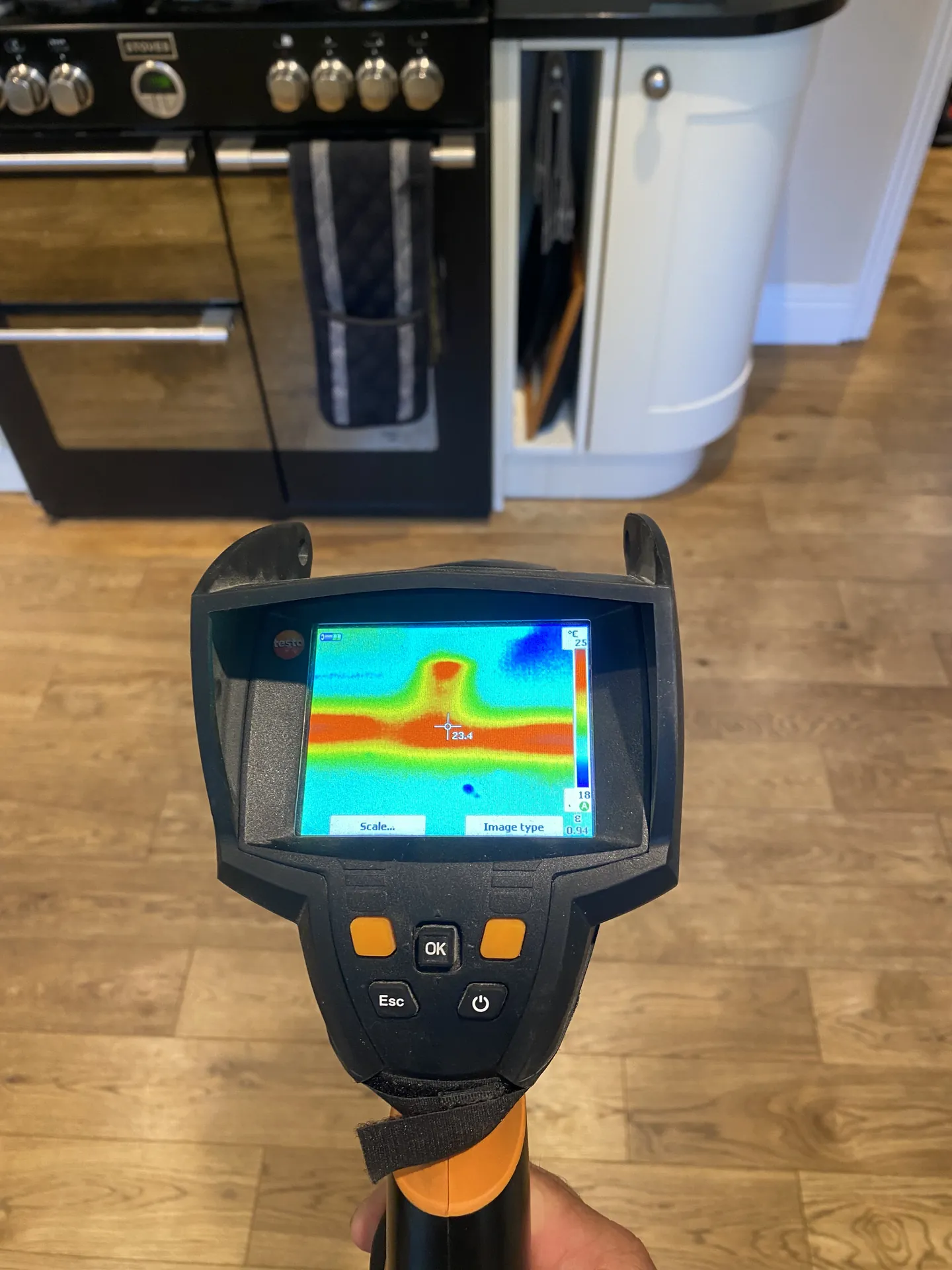
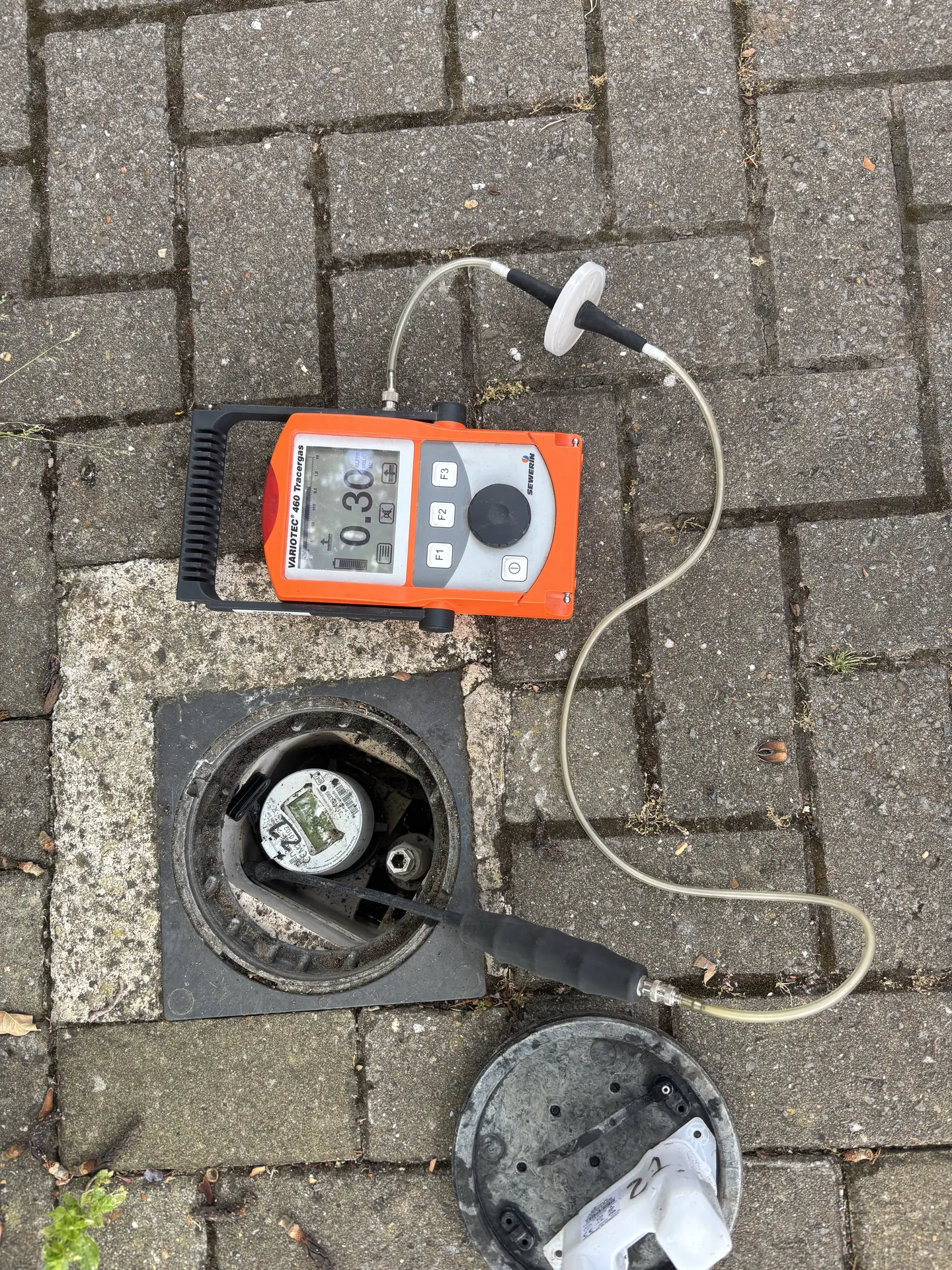
We start by working out what the water is: a test strip and a moisture meter tell us whether it is mains, heating or waste water, which rules out most of the pipework straight away. A thermal camera then shows wet areas as cool patches and warm pipe runs, so we can see the path the water took. A borescope through a small hole lets us look inside the ceiling void or behind a bath panel, and acoustic or tracer gas testing confirms the exact fitting. The result is one small opening at the right place, a repair if you want it, and a report with photographs and thermal images.
Stains that return are the classic trace and access claim. Most buildings policies cover locating the leak and reinstating the ceiling or wall we open to reach it. Our report records the tests, the findings and the location in the form insurers expect, so the claim does not stall on a missing detail.
Call today if
- The ceiling is bulging or sagging, which means water is pooling above it: get everyone out from under it and call today.
- Water is dripping through a light fitting or switch.
- The stain has spread noticeably in a day.
- There is a smell of gas or the boiler has shut down alongside the damp.
What this looks like on the day
How we would find this leak
Water leak detection
Hidden leaks behind walls, under floors and in ceilings, pinpointed with thermal, acoustic and tracer gas kit before anything is opened up.
Water leaks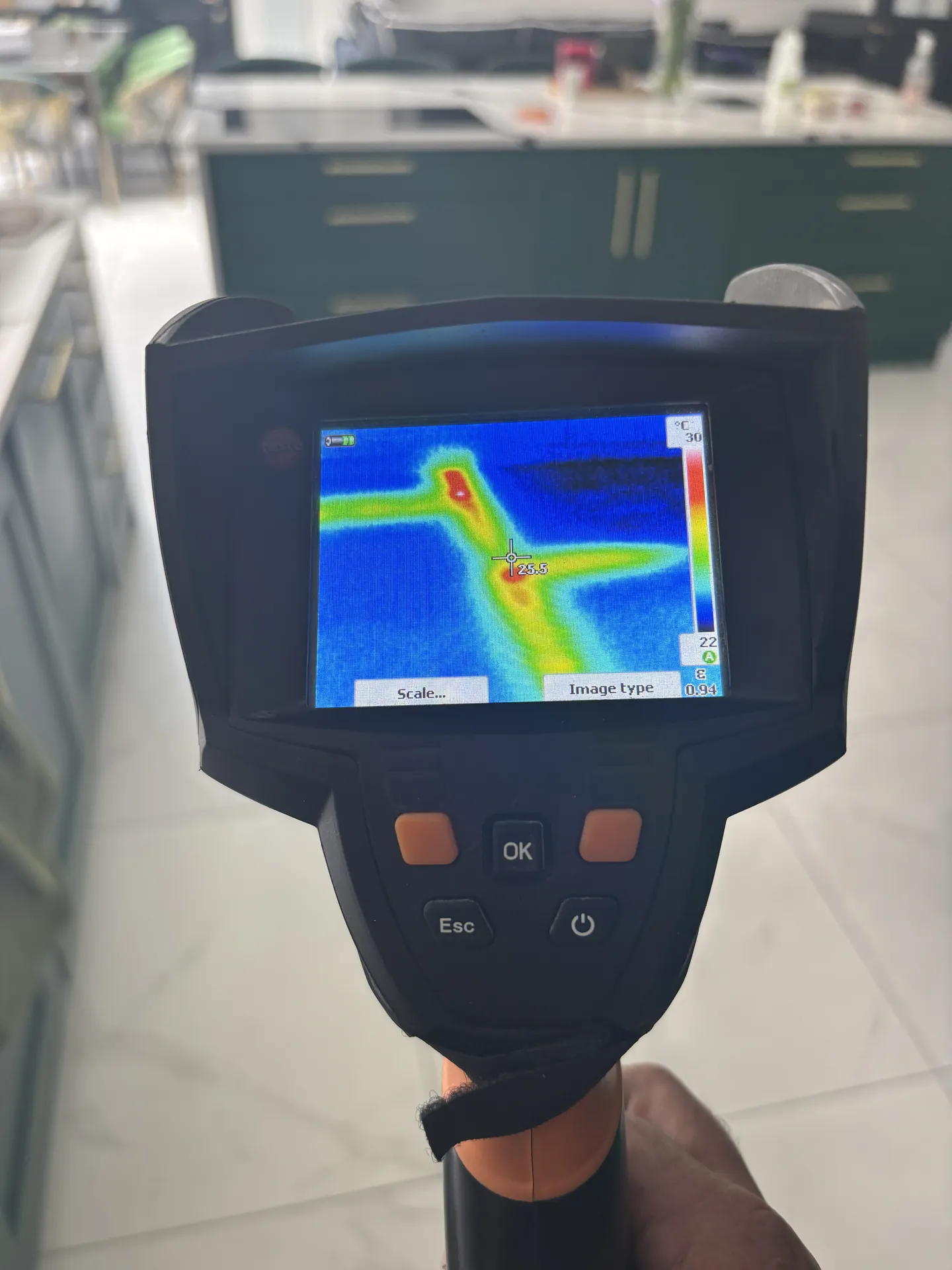
Thermal imaging leak surveys
A thermal imaging camera shows warm pipe runs and cool wet patches through floors and walls, so the leak is seen before anything is opened.
Thermal imagingTrace and access insurance reports
Leak detection carried out and documented the way insurers expect, with a report your claims handler can act on straight away.
Insurance reportsFrom your first call to a leak you can see in the report
Call or WhatsApp with a few photos and a line about the symptoms. We ask a handful of questions, agree a fixed price and book the survey, usually for the same or the next day.
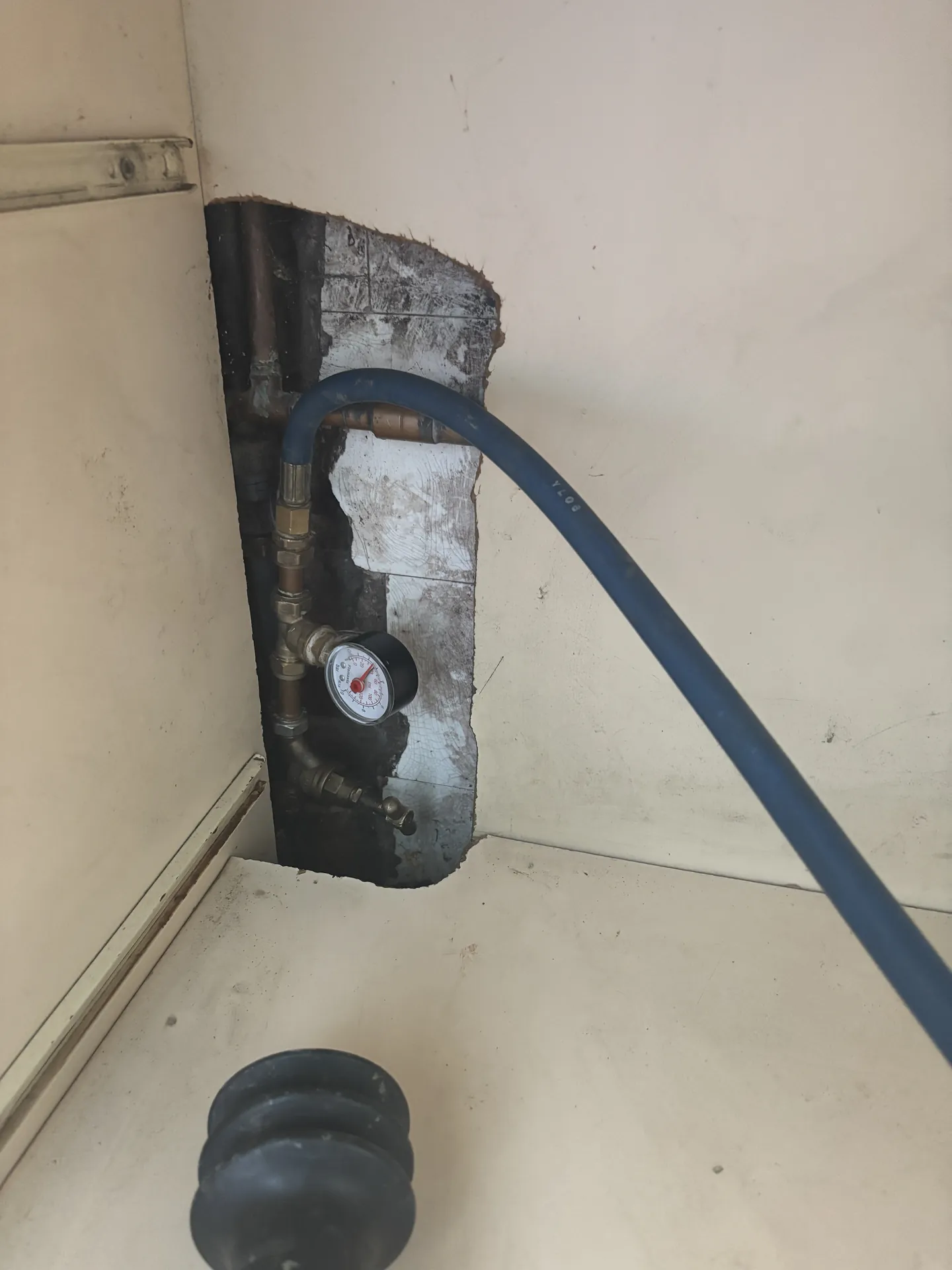
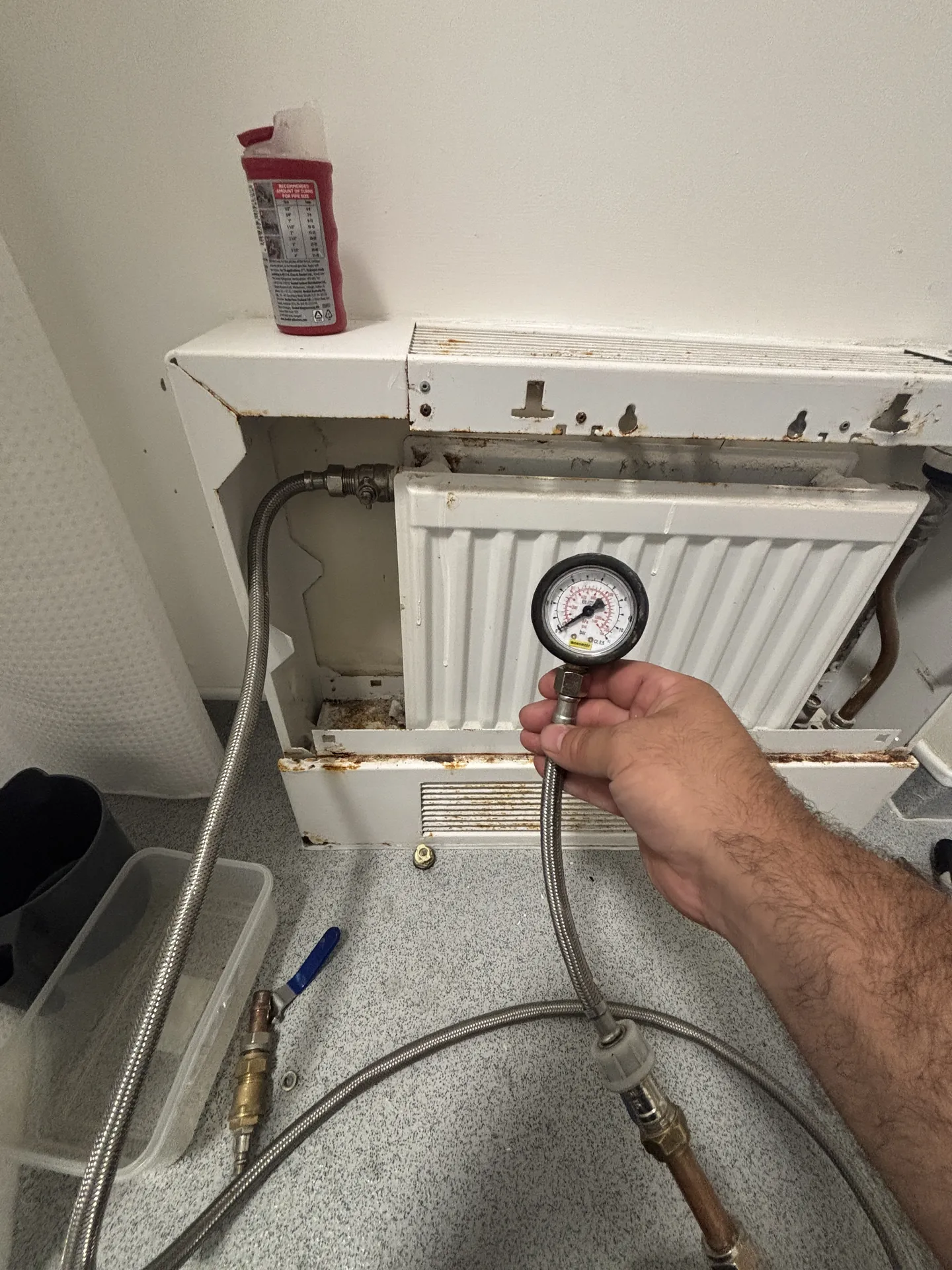
On arrival we pressure test the mains, hot water and heating, check the meter and test the escaping water, so we know what we are looking for before the detection starts.
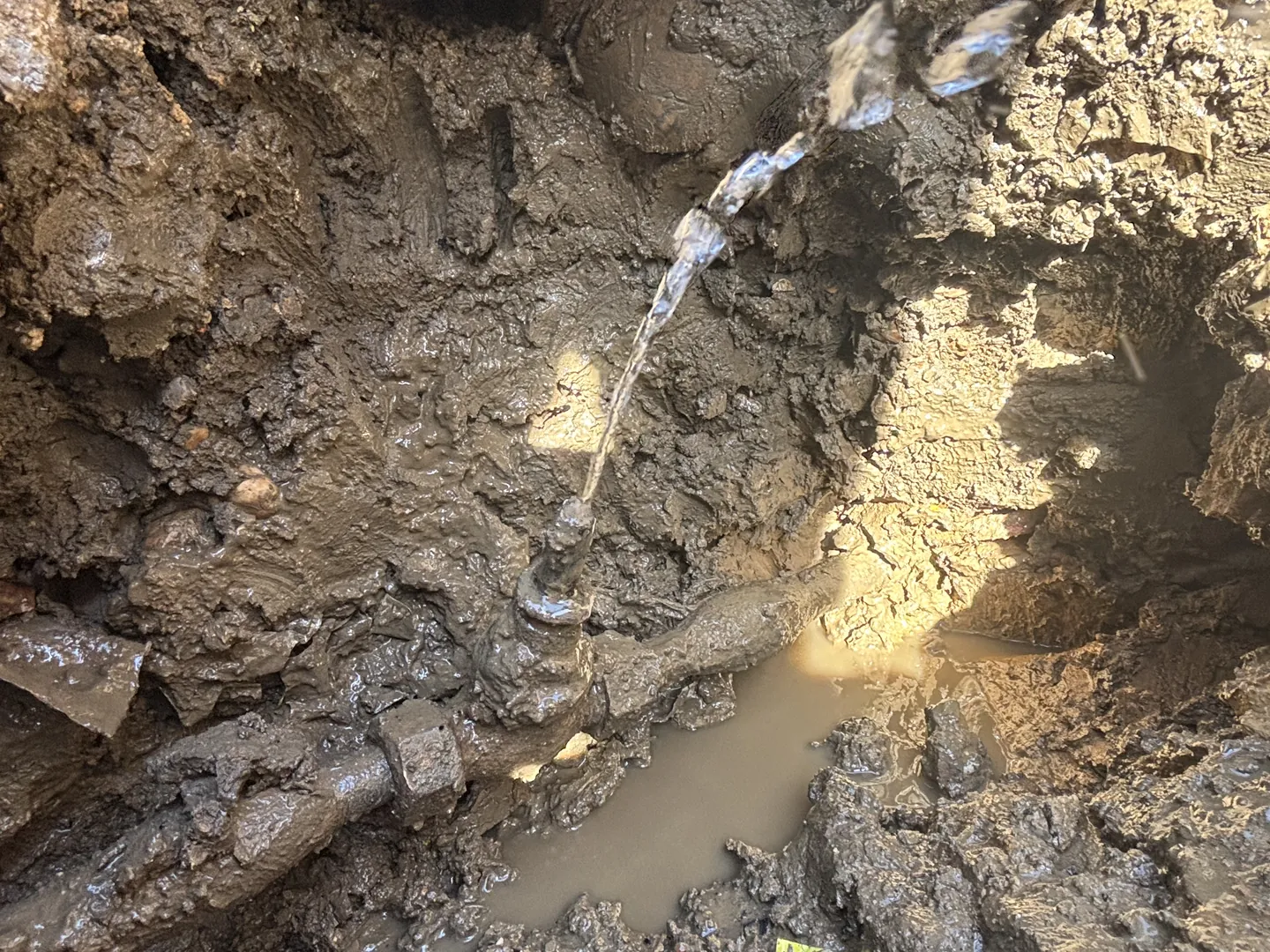
Thermal imaging, the acoustic ground microphone and tracer gas are used as the pipework dictates until the leak is marked on the floor or wall.
You get a written report with readings, thermal images and photographs, ready for a trace and access claim. If you want the leak fixed, we open that one spot and repair it.
Damp that comes back: questions answered
Why does the damp patch come back after I paint over it?
Because the paint hides the stain but the pipe feeding it is still leaking. Until the leak is found and repaired the water keeps coming, and each time it dries out it leaves a bigger mark.
Is the leaking pipe directly behind the stain?
Rarely. Water runs along joists, pipes and the back of plasterboard before it finds a way out, so the source can be a metre or more away. That is why cutting the ceiling at the stain so often finds nothing.
How can you tell if it is a leak or condensation?
Condensation is worst on cold outside walls and in cold weather, and it does not follow a pattern of use. A pipe leak returns whatever the weather, often gets worse when a bath or shower is used or the heating runs, and a moisture meter and test strip confirm it on the day.
Do you have to cut a big hole in the ceiling?
No. We locate the leak first with thermal imaging, a borescope through a small inspection hole and pressure or tracer gas tests, then open only the area over the fitting that needs repairing. Everything is photographed for your report.
My neighbour upstairs says it is not them. What can you do?
We can test the pipework in your property first and, with their agreement, test theirs. Dye tests and pressure tests give a clear answer about which pipe is leaking, which usually settles the conversation and gives both insurers what they need.
Noticed something else?
Damp that comes back? Do not wait for the ceiling to come down.
Call now and we will tell you straight away whether it needs a same-day visit. Or send a photo of the stain, the meter or the boiler gauge on WhatsApp.
07516 755 680