Hissing Noise in a Wall or Floor? It Is Water
Water forced through a tiny split makes a hiss, and in a quiet house at night it carries through a wall or floor. If you can hear it, our microphone can measure it, and the loudest point is the leak.
Hissing in a wall: what is usually going on
Mains water sits at several bar of pressure. When it escapes through a pinhole or a failing joint it does so at speed, and the turbulence makes a steady hiss that travels along the pipe and through the wall or floor it is fixed to. During the day the house masks it; at night, with the boiler off and the traffic gone, it is unmistakable. Sometimes it is described as a tick, a rush or a faint whistle, and sometimes the only clue is that the stop tap or a pipe feels cold and vibrates slightly.
The usual sources are a pipe in a wall chase behind kitchen units or a bathroom wall, a joint in the ceiling void, a pipe in a boxed-in duct, or the incoming supply where it rises through the floor by the stop tap. In the 1930s houses around Watford the mains often runs up inside a solid wall to a loft tank; in London flats it is often a branch off a communal riser. Heating pipes hiss too, but only when the system is running, which is one way we tell the two apart.
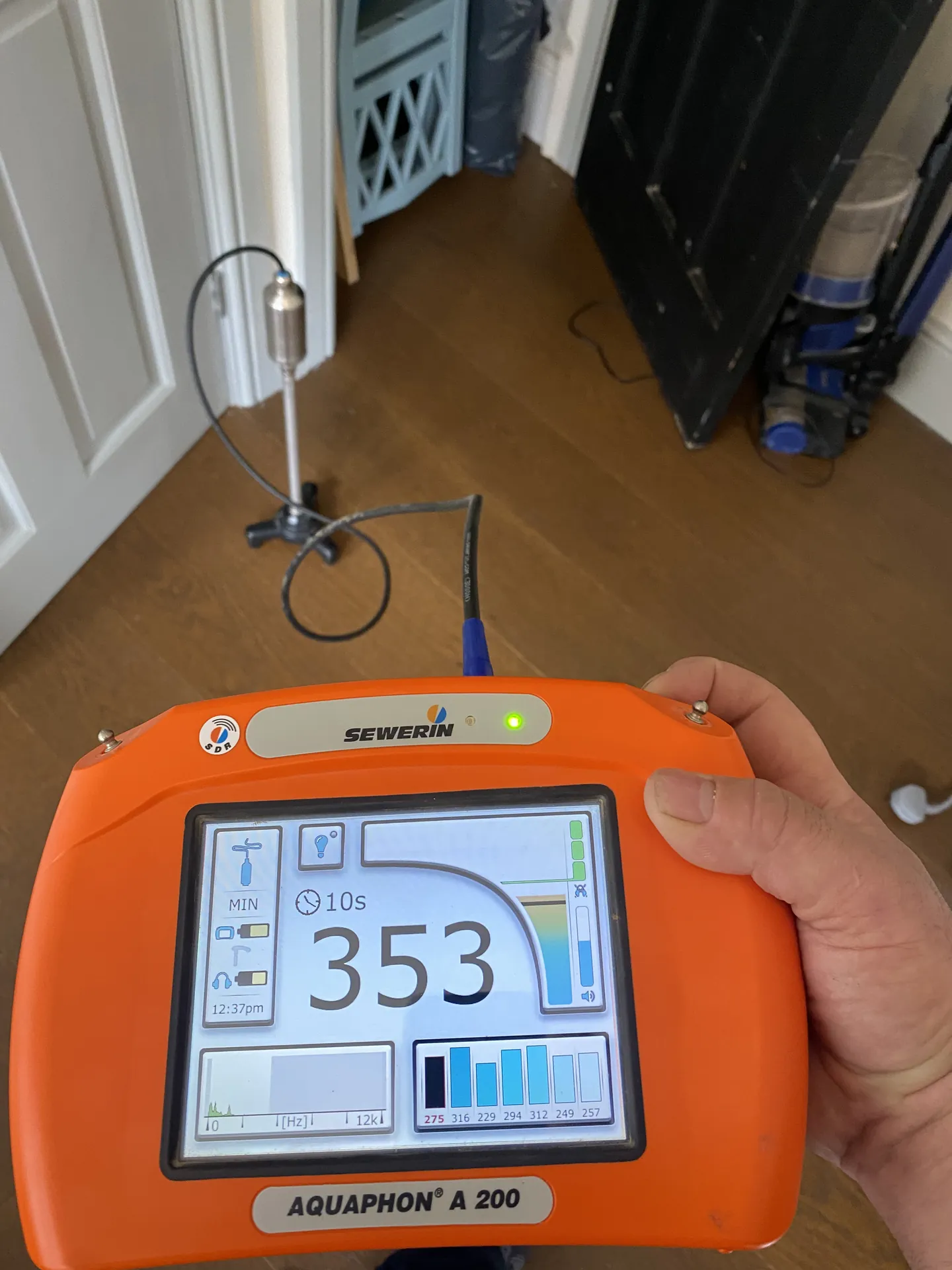
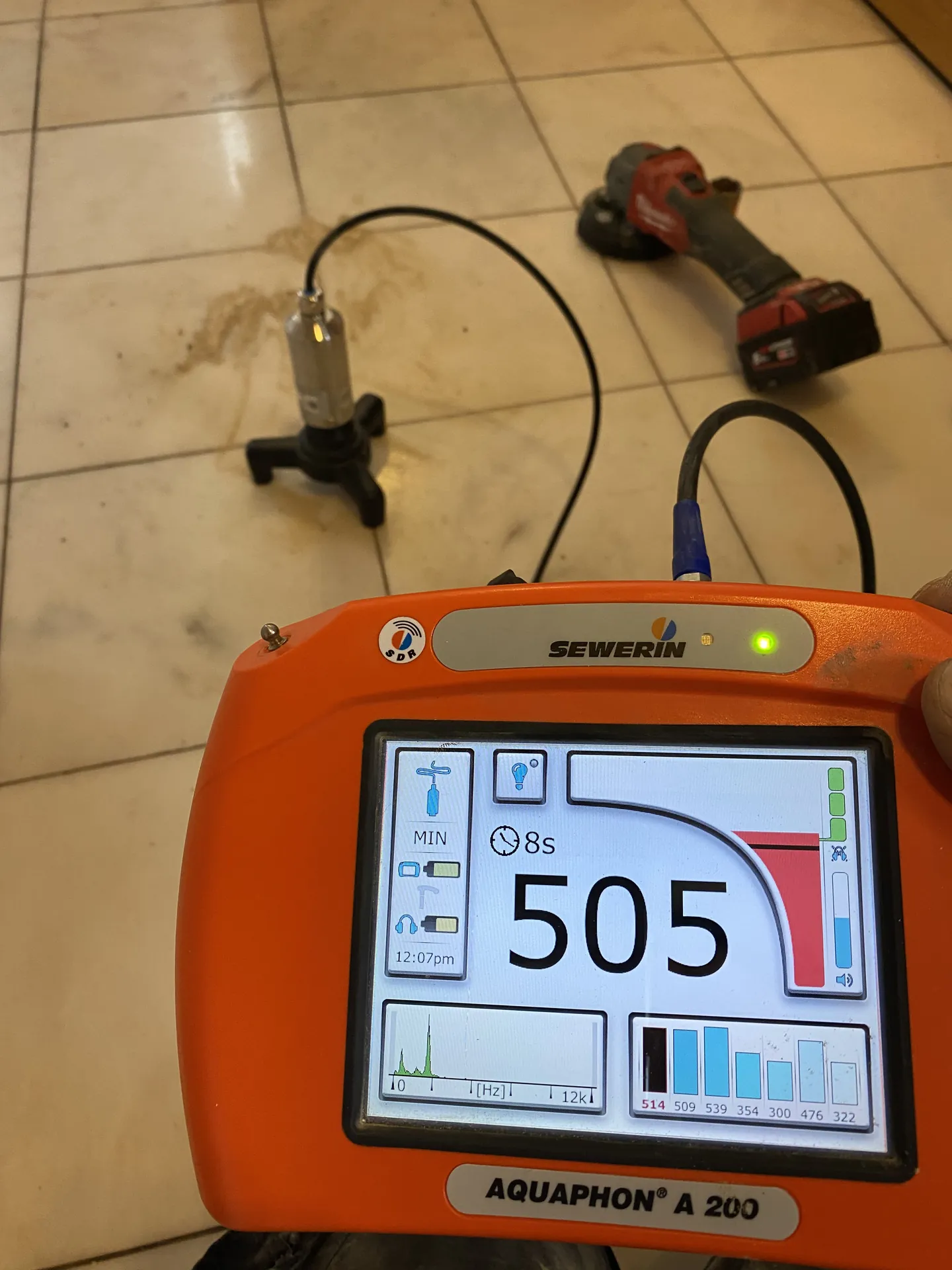
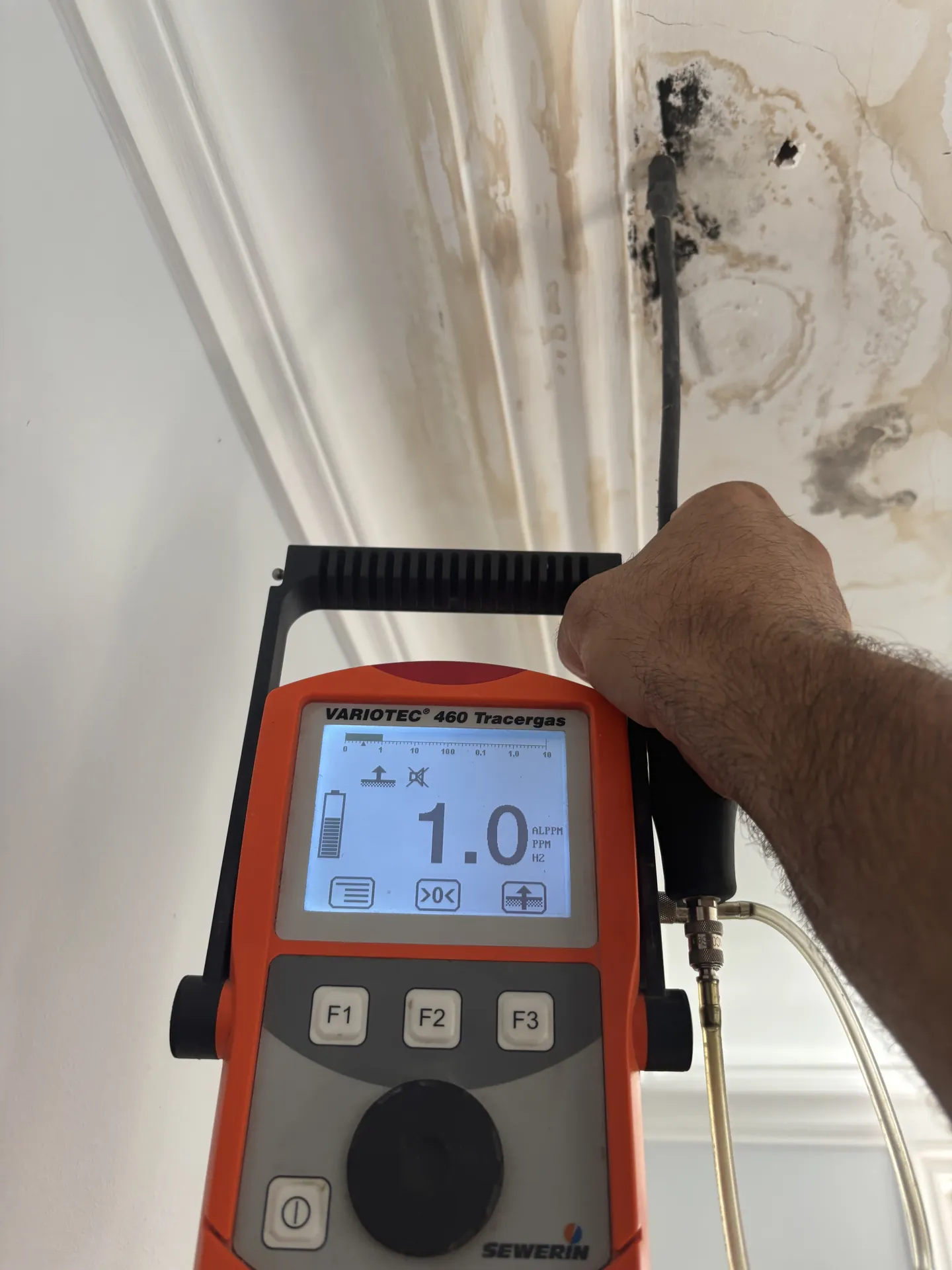
Acoustic leak detection is built for exactly this. The Aquaphon ground microphone amplifies the hiss and gives a number, and as we move it across the wall or floor the number peaks directly over the leak. We confirm with a pressure test, and on a cold mains pipe with hydrogen tracer gas if the wall is thick or tiled. The spot is marked and photographed, and the repair is made through the smallest opening that will take a fitting, with a written report and the readings included.
A hiss usually means a leak that has not yet shown as damage, which is the best time to fix it. If it has already stained a wall or lifted a floor, trace and access cover on your buildings insurance is likely to apply to finding it and making good the opening.
Call today if
- The hiss has become a rush or a running sound.
- Water has appeared at the base of a wall, under a unit or through a floor.
- The meter is spinning rather than creeping.
- A wall or floor has started to feel damp or cold in a patch.
What this looks like on the day
How we would find this leak
Acoustic leak detection
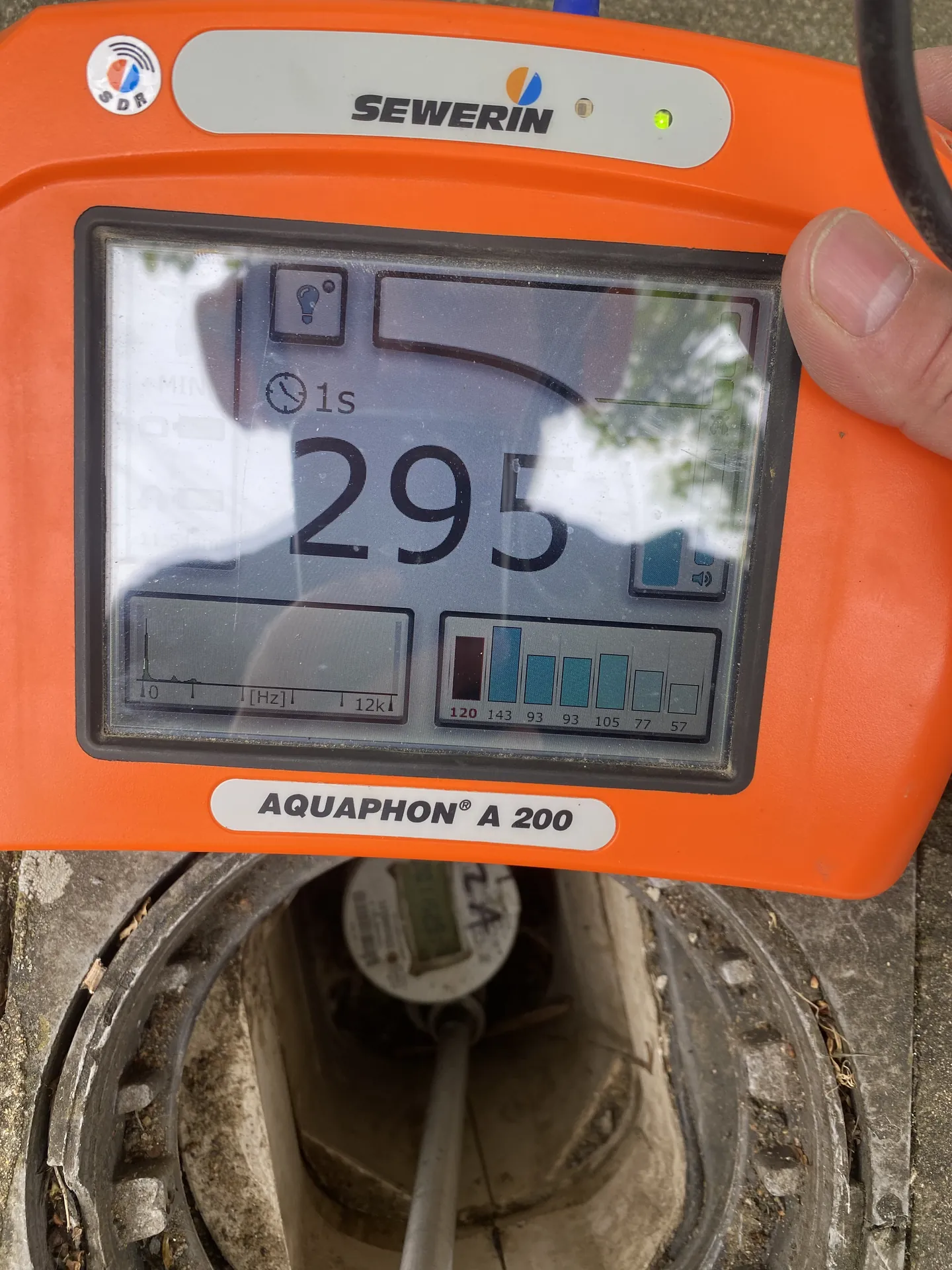
A ground microphone listens for the sound of water escaping under pressure through floors, concrete and paving, and the reading peaks directly over the leak.
Acoustic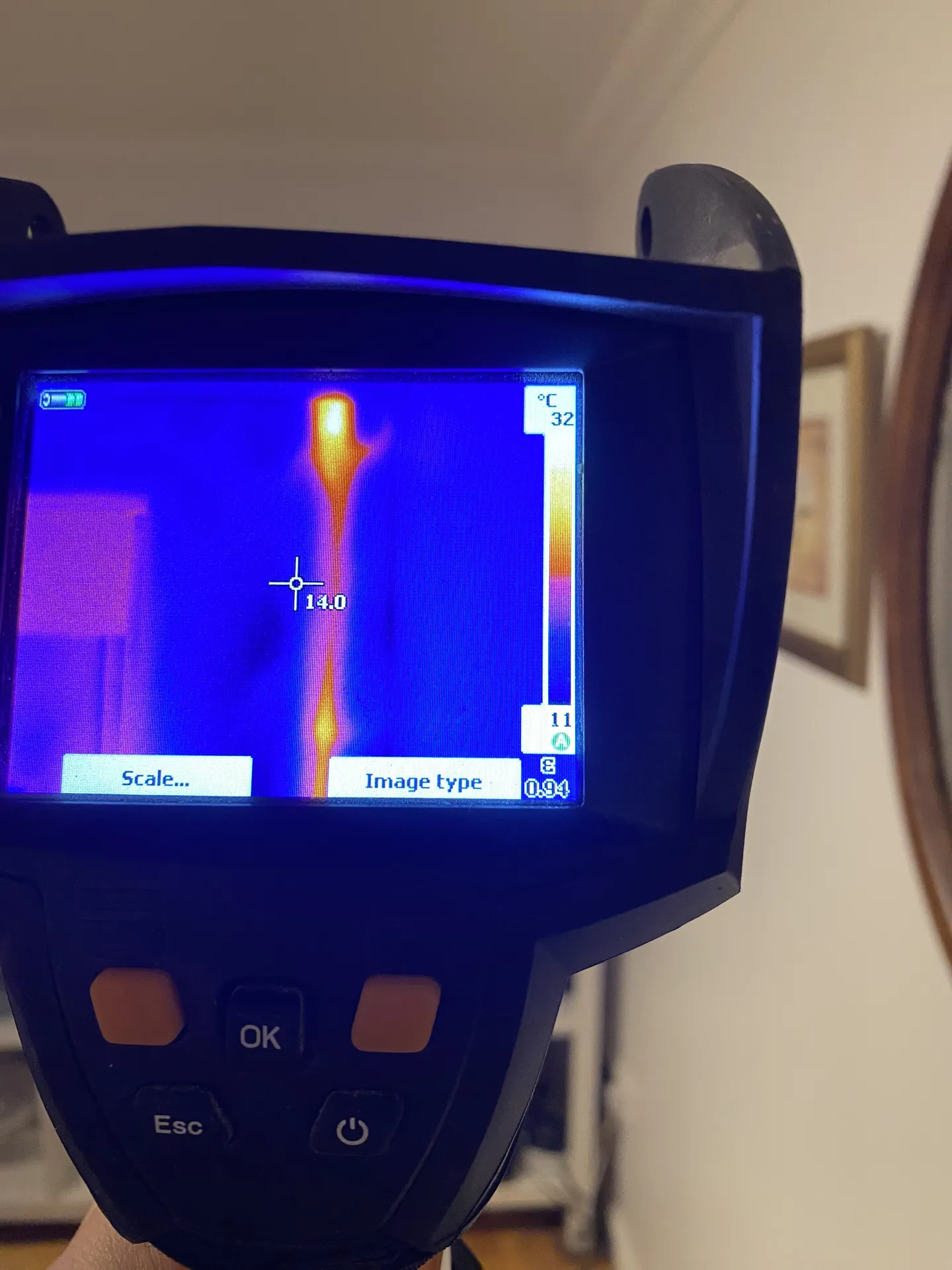
Water leak detection
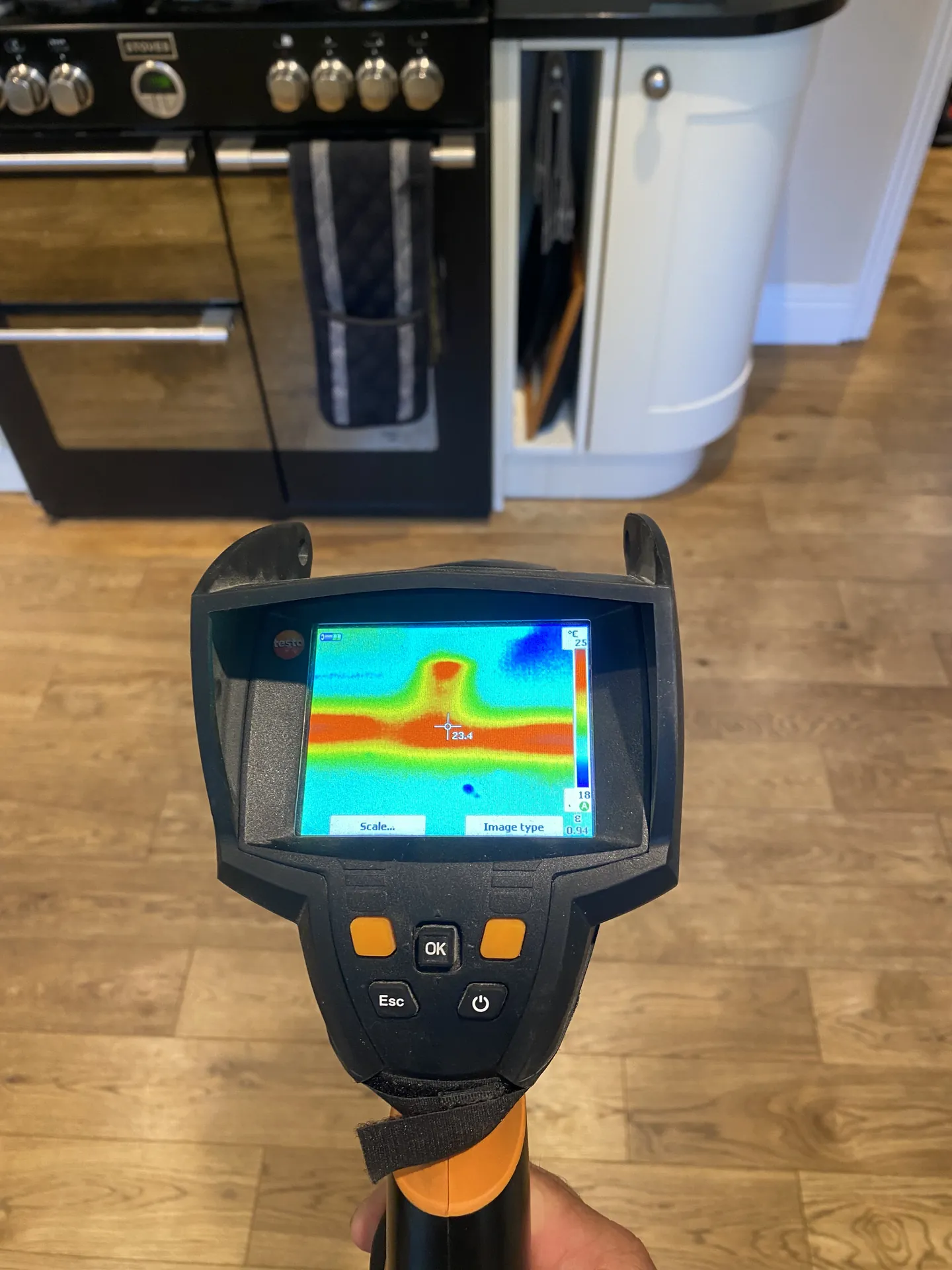
Hidden leaks behind walls, under floors and in ceilings, pinpointed with thermal, acoustic and tracer gas kit before anything is opened up.
Water leaks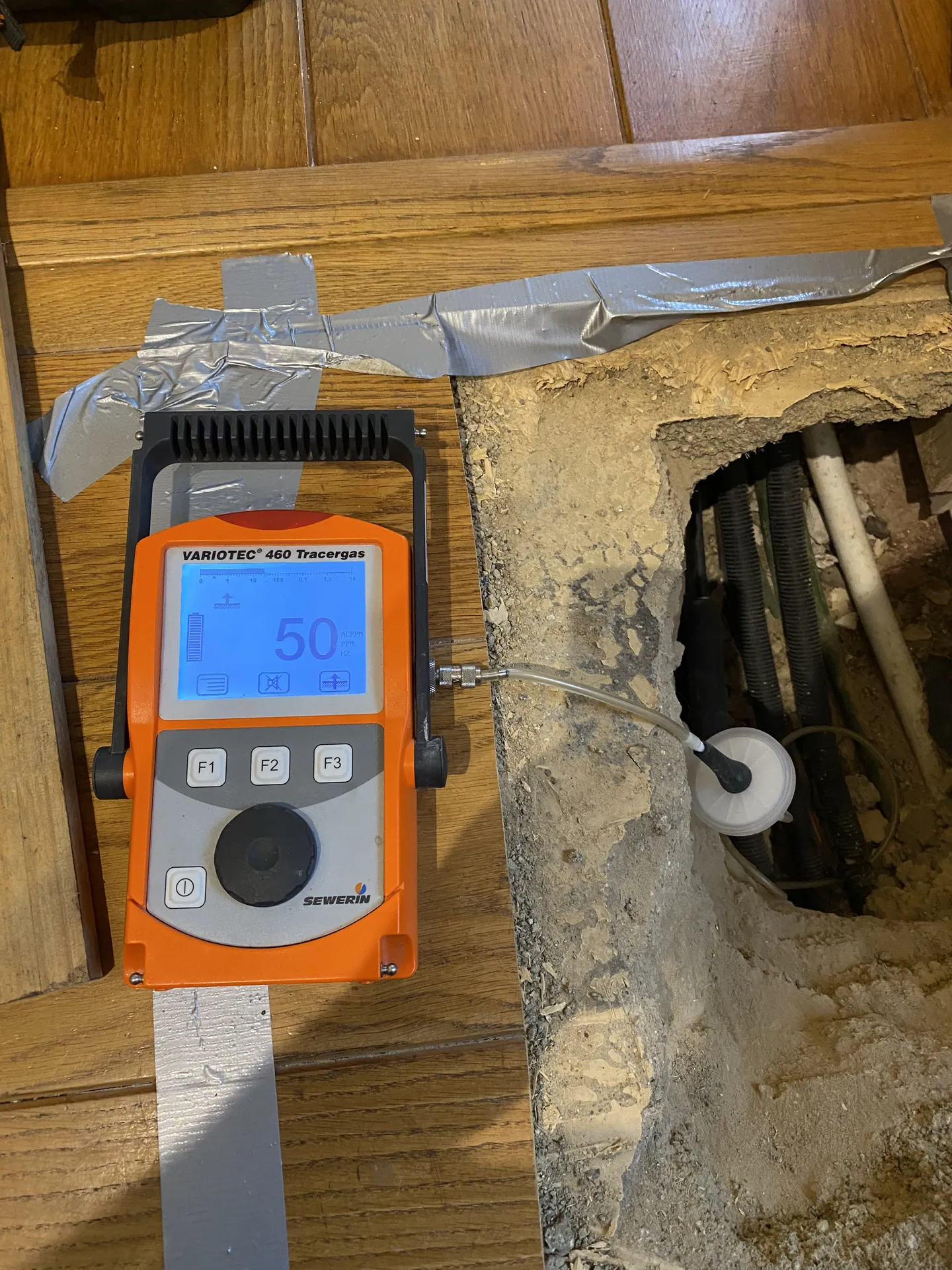
Tracer gas leak detection
A safe hydrogen and nitrogen mix is put into the drained pipe, rises through the floor or wall and is picked up by the detector directly above the leak.
Tracer gasFrom your first call to a leak you can see in the report
Call or WhatsApp with a few photos and a line about the symptoms. We ask a handful of questions, agree a fixed price and book the survey, usually for the same or the next day.
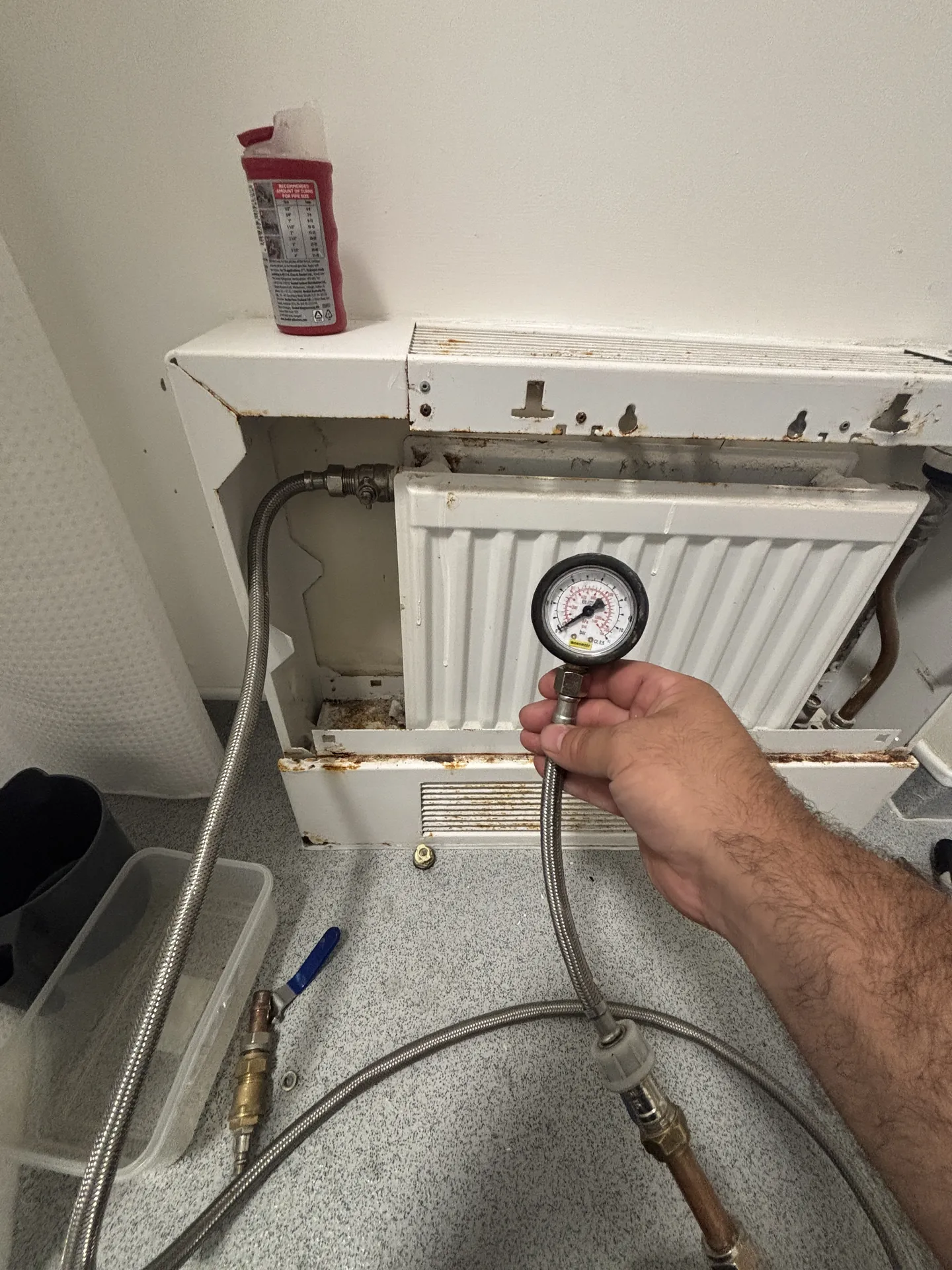
On arrival we pressure test the mains, hot water and heating, check the meter and test the escaping water, so we know what we are looking for before the detection starts.
Thermal imaging, the acoustic ground microphone and tracer gas are used as the pipework dictates until the leak is marked on the floor or wall.
You get a written report with readings, thermal images and photographs, ready for a trace and access claim. If you want the leak fixed, we open that one spot and repair it.
Hissing in a wall: questions answered
What does a water leak in a wall sound like?
A steady faint hiss, sometimes a tick or a rush, that does not change when you turn taps on or off and is clearest at night with the boiler off. If the noise stops when the heating goes off, it is on the heating circuit.
Could the hissing be something other than water?
Occasionally it is a gas pipe or air in a radiator, but a hiss you can hear with the heating off that comes with a moving water meter is water. If you smell gas at any time, leave the property and call the gas emergency number before anything else.
How does an acoustic leak detector work?
A sensitive microphone on the wall or floor picks up the noise of water escaping under pressure and shows it as a number. As the microphone moves closer to the leak the number rises, and the peak is the spot we mark and open.
Do you need to turn the water off to find it?
No. Acoustic detection works with the water on, because the hiss is the leak. We may turn it off briefly for a pressure test to confirm which pipe is involved.
Can you fix it on the same visit?
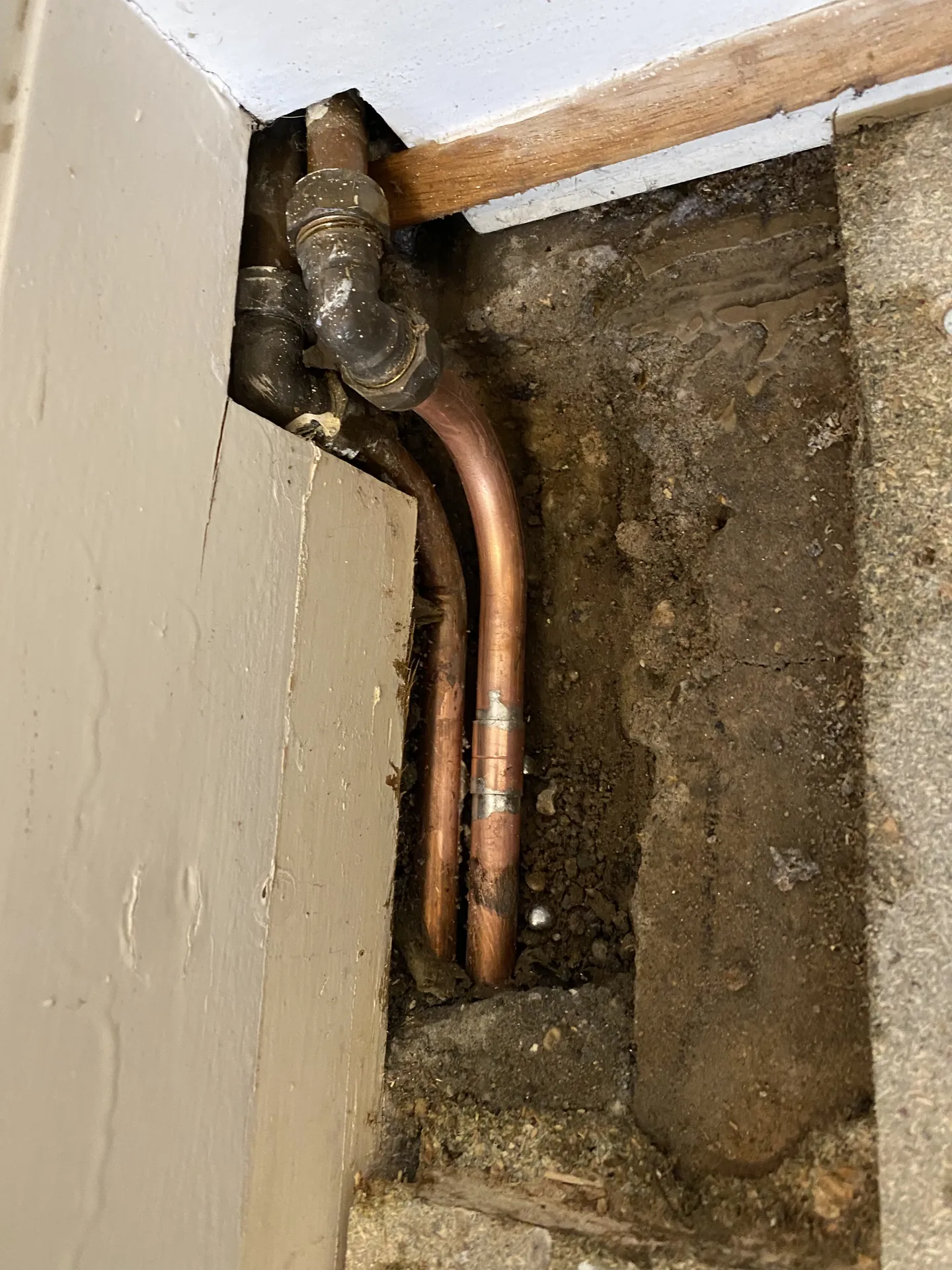
Usually, yes. Once the leak is located we open the smallest area that will take a repair, replace the joint or section of pipe, and photograph it before and after for your report.
Noticed something else?
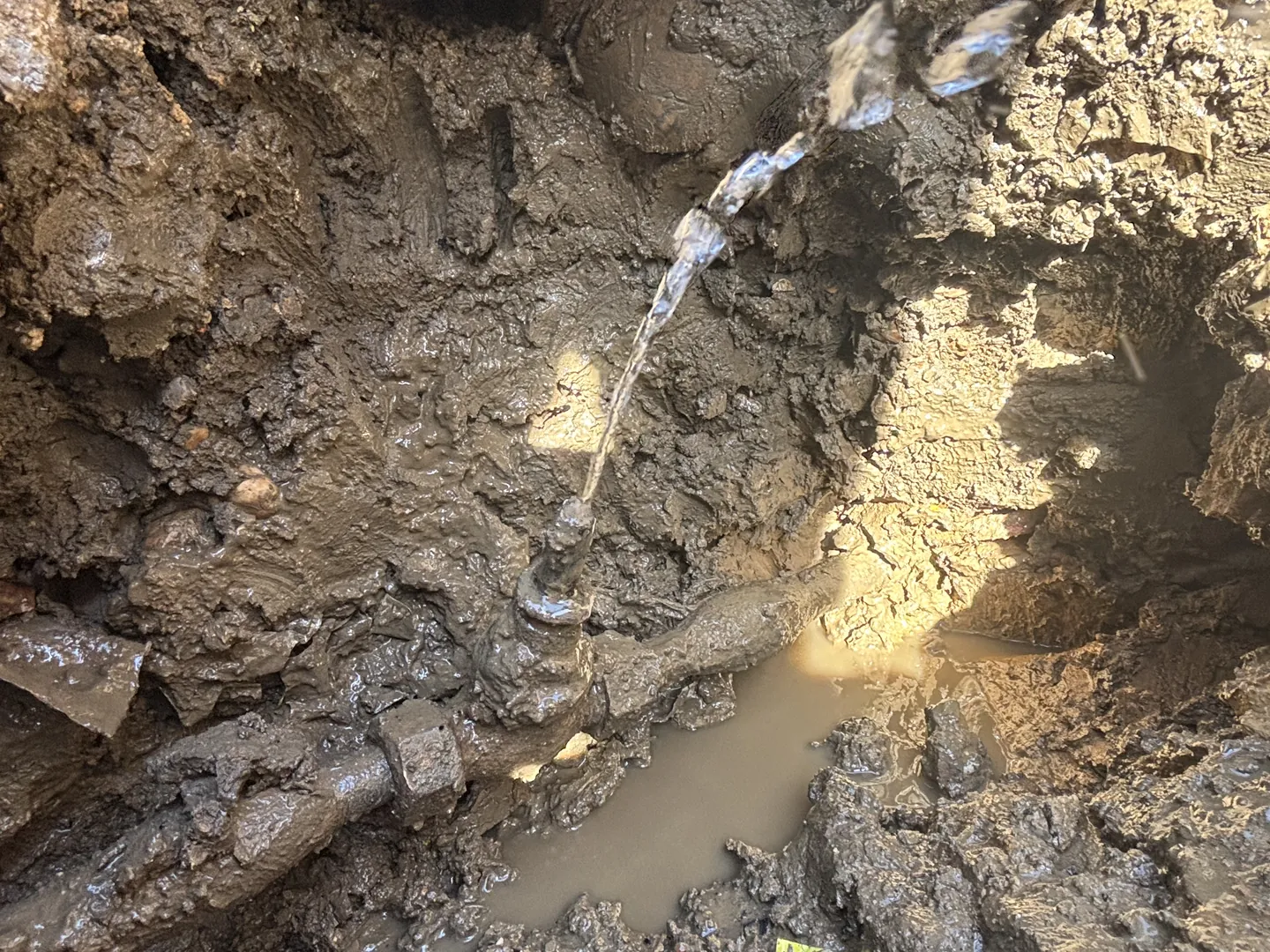
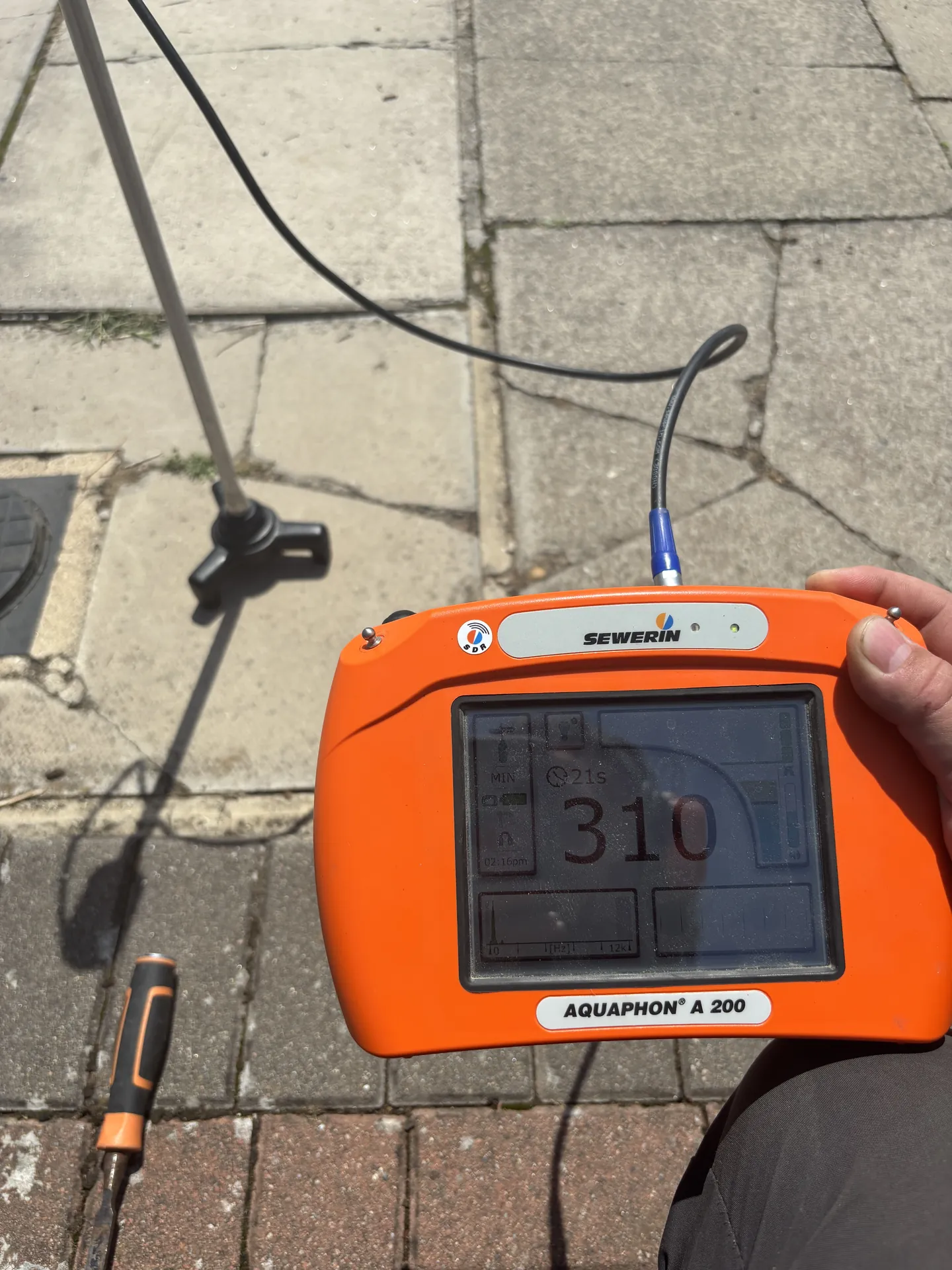
Hissing in a wall? Do not wait for the ceiling to come down.
Call now and we will tell you straight away whether it needs a same-day visit. Or send a photo of the stain, the meter or the boiler gauge on WhatsApp.
07516 755 680