Musty Smell or Mould? Water Under the Floor
A musty smell that airing never shifts, black mould at skirting level or flooring that has started to lift usually means water has been sitting under the floor for some time. The leak is often small, slow and hidden.
Musty smell or mould: what is usually going on
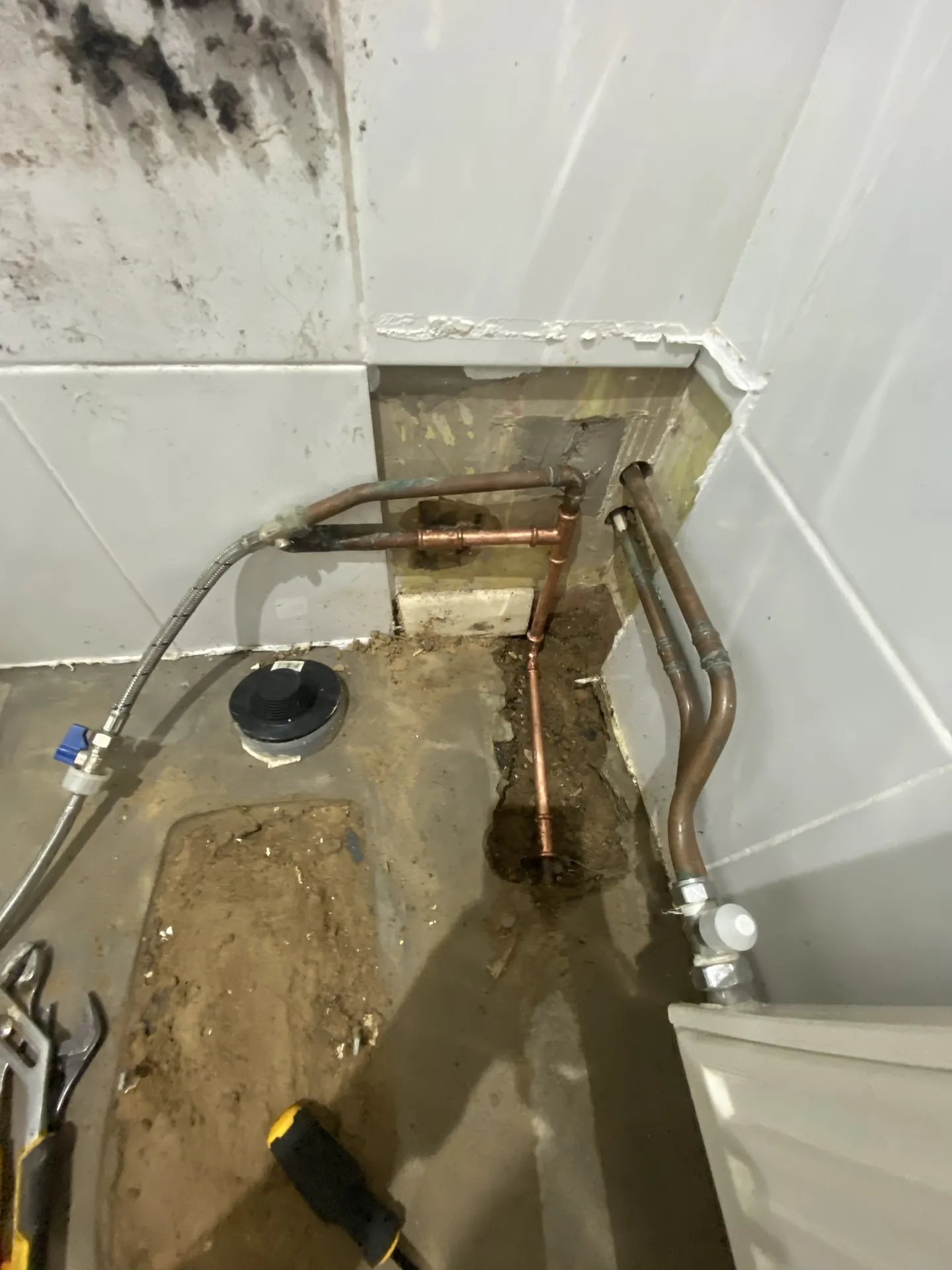
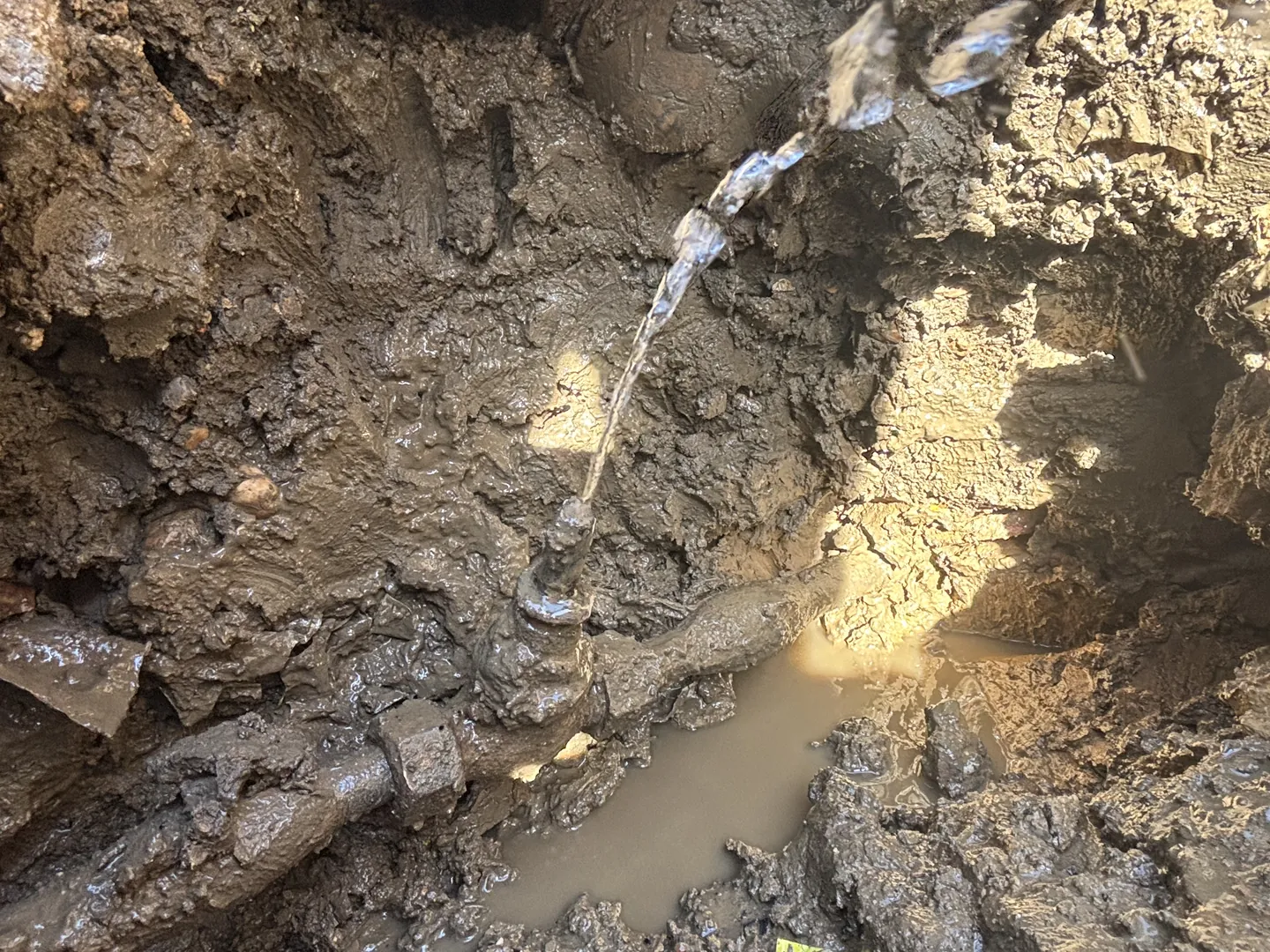
Mould needs moisture, and a persistent musty smell in one room is the smell of a wet floor void or a soaked screed. A slow leak from a pipe under the floor does not make a puddle you can see; it soaks the concrete or the earth beneath the boards, and the moisture rises into the room as damp air, mould on cold surfaces and, eventually, swollen or lifting flooring. By the time the smell is obvious the leak has usually been running for months.
Suspended timber floors in the Victorian and Edwardian houses across London are the classic case: a leaking pipe under the boards keeps the void wet, mould grows on the joists and skirting, and the boards cup and lift. In the solid-floor houses around Watford, Bushey and Harrow, a leak in the screed shows as a smell, dark grout, lifting laminate and a skirting board that feels damp. Kitchens and bathrooms add waste pipes and appliance connections to the list, and ground-floor flats add the possibility of a leak from a communal pipe beneath.
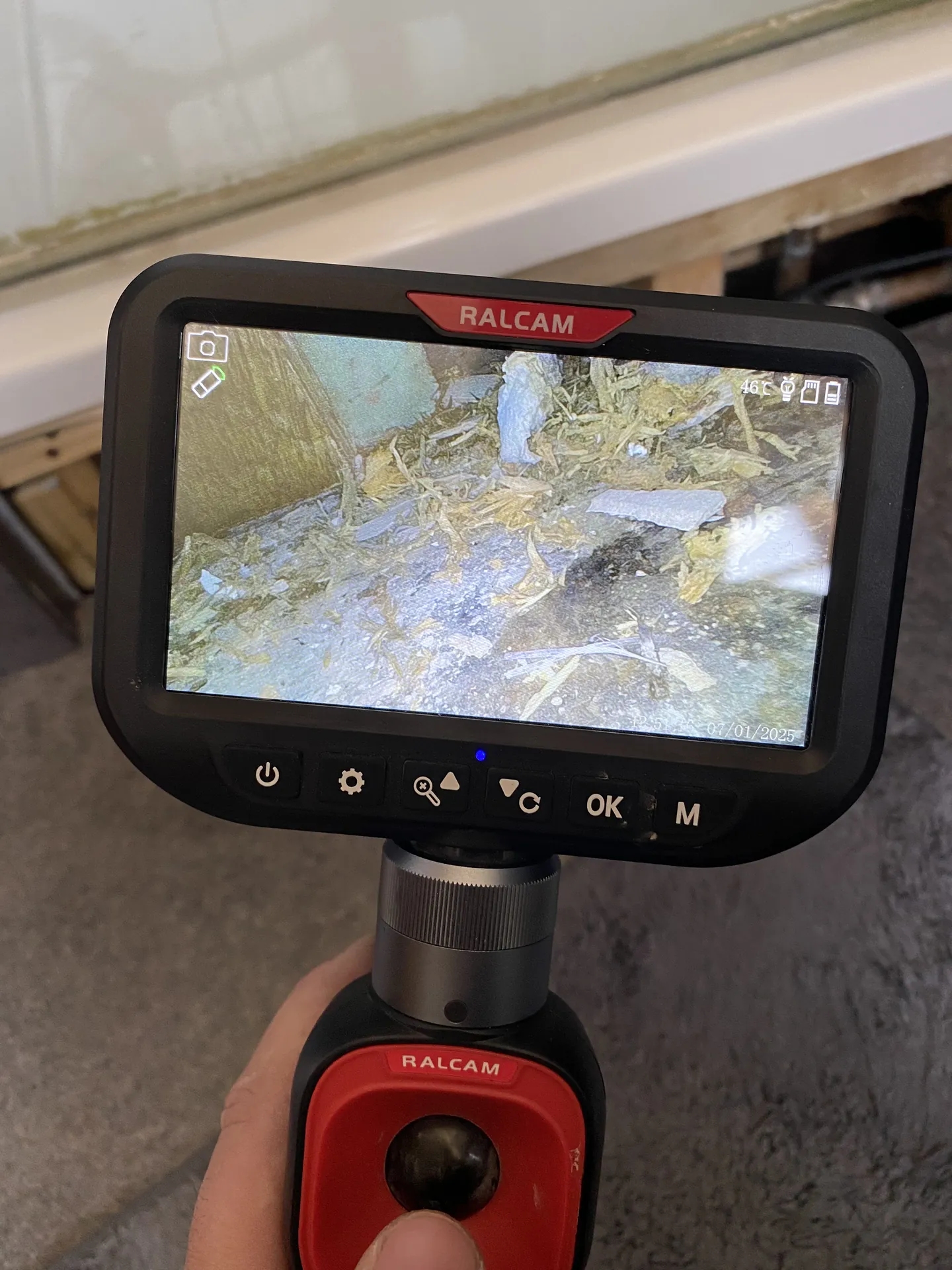
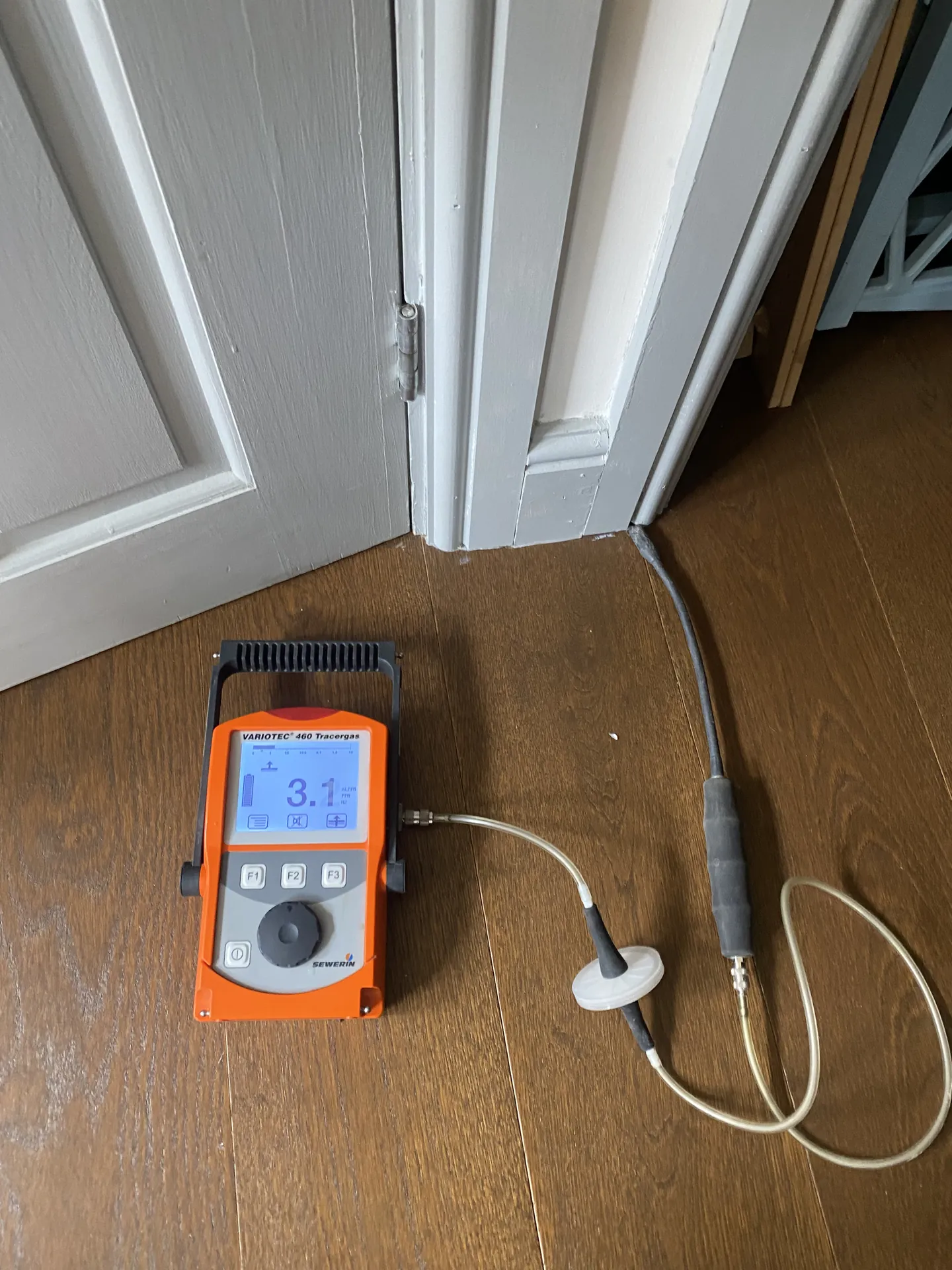
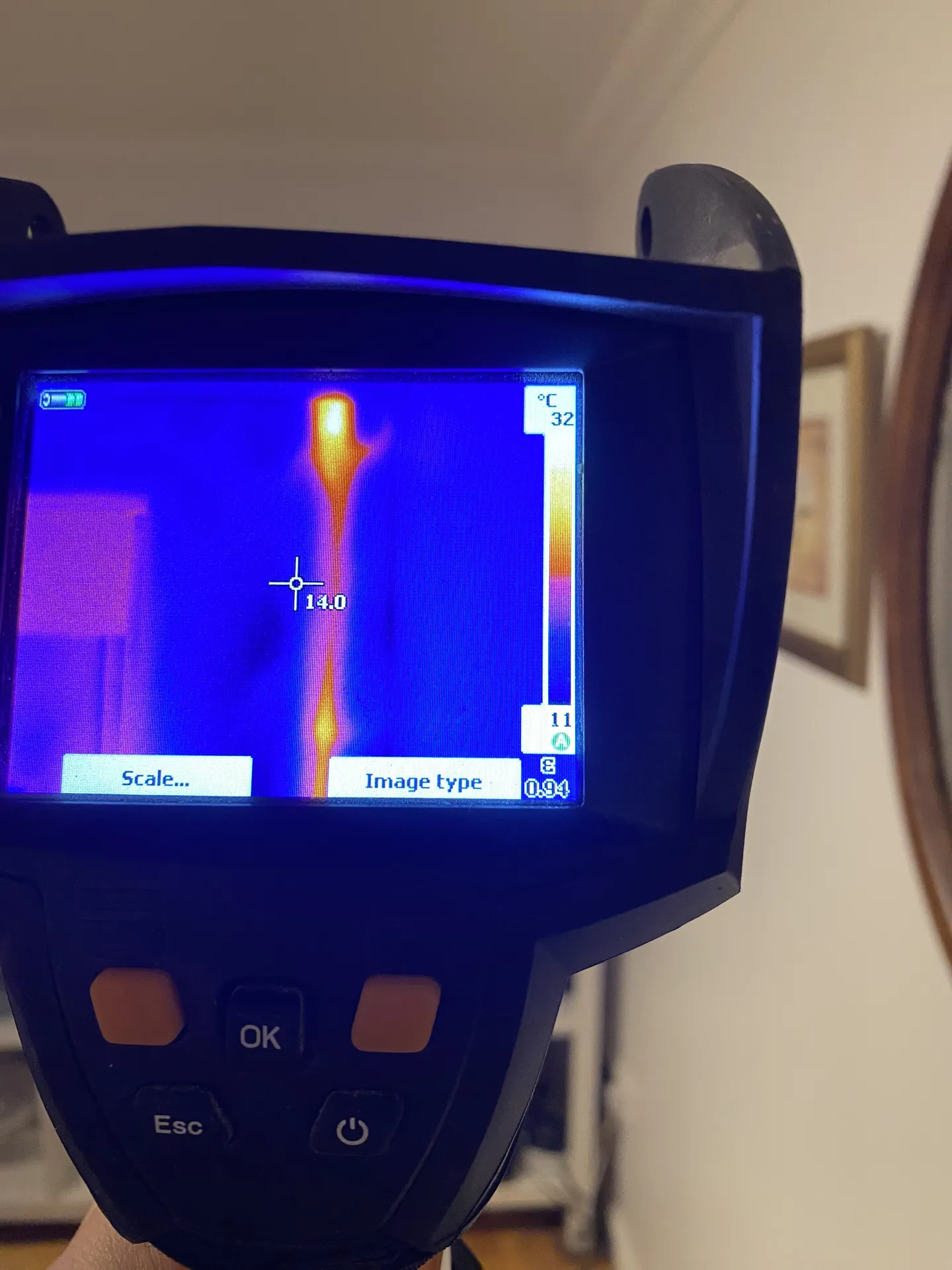
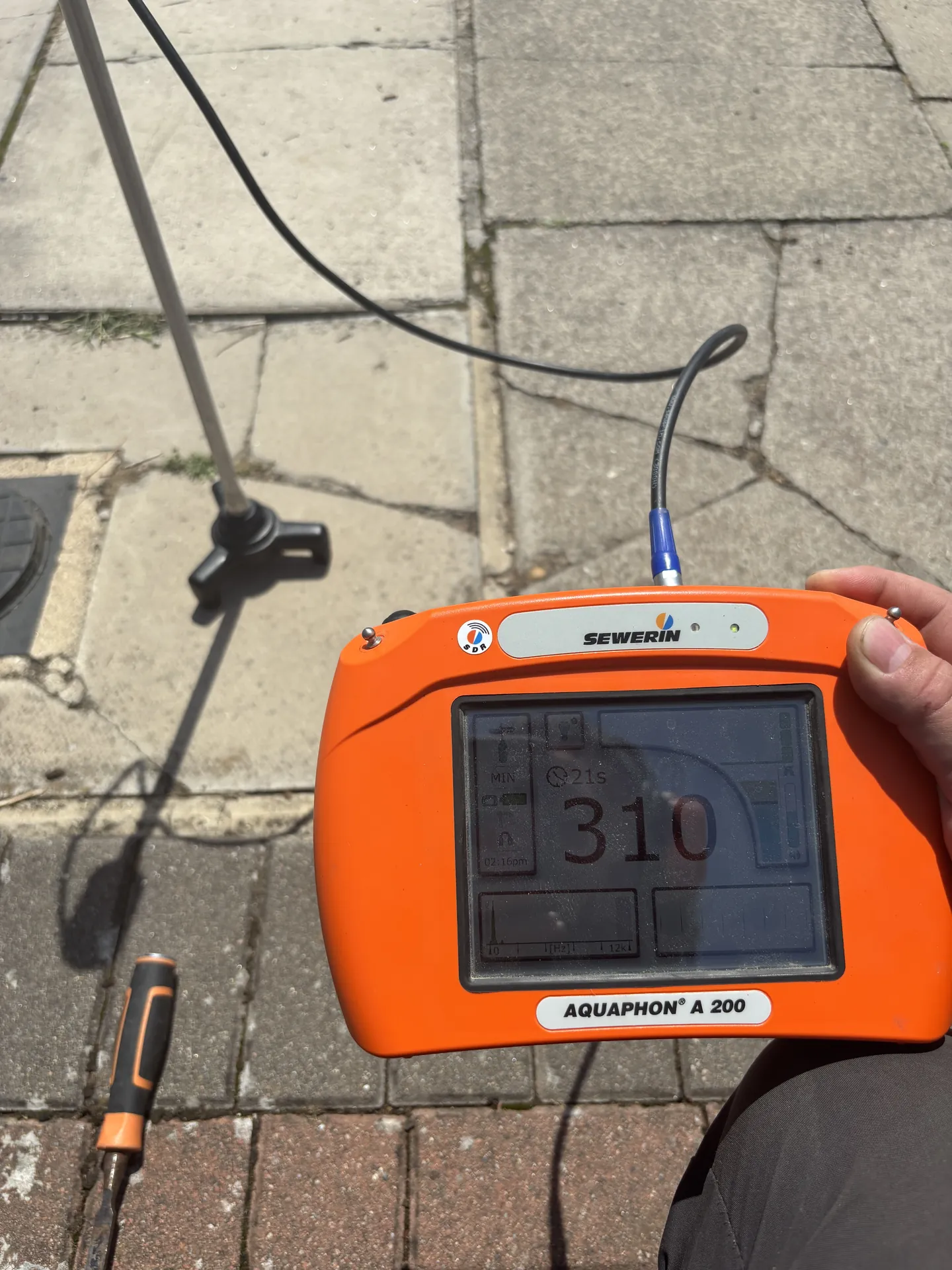
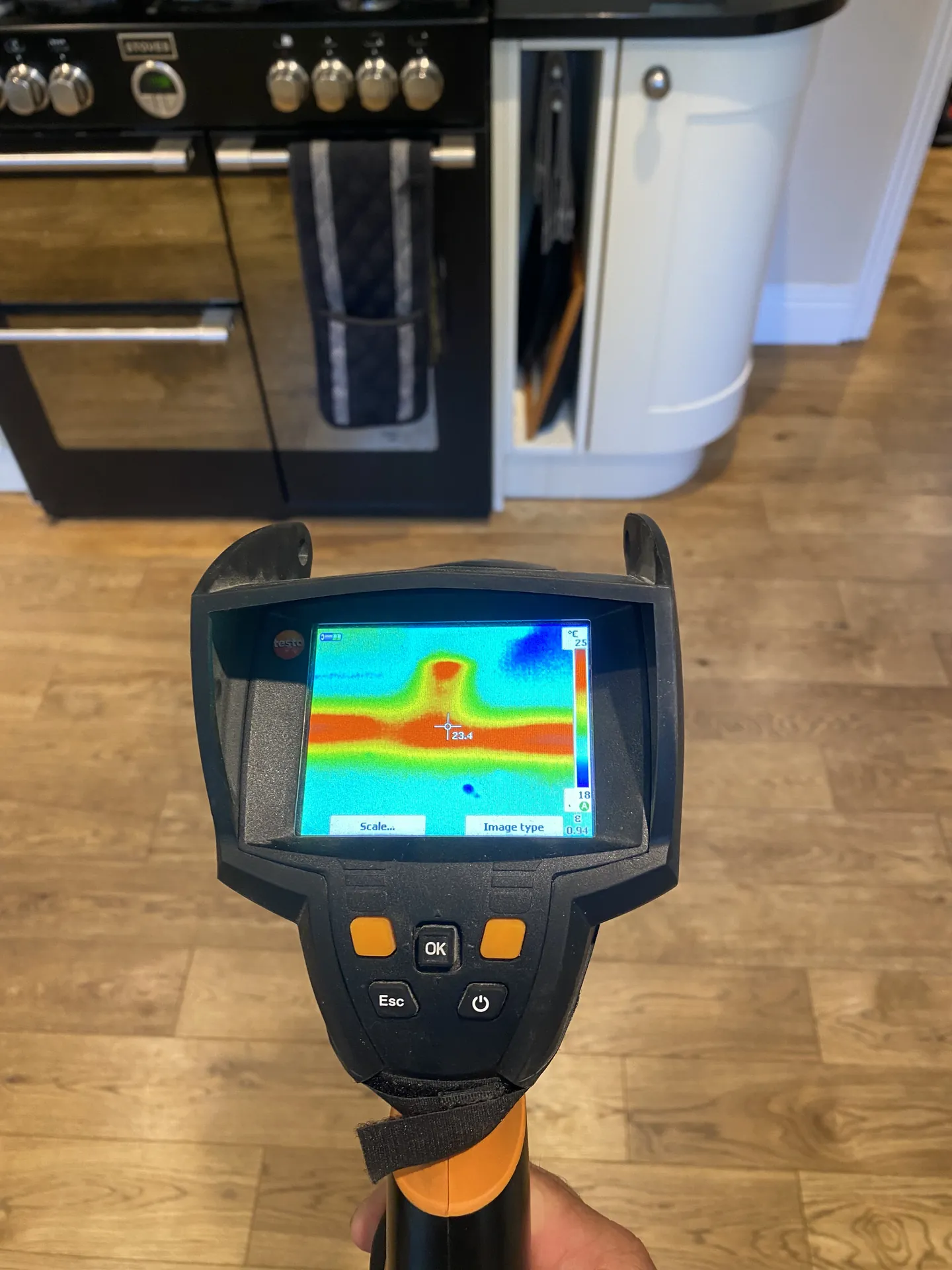
We identify the water first, because mains, heating and waste water each point to different pipework. A moisture meter maps how far the damp has spread; a thermal camera shows cool wet areas and warm heating runs; a borescope through a small hole lets us look into the void without lifting the floor. Acoustic listening and tracer gas then pinpoint the leak so only one section of floor comes up. You get a written report with the moisture readings, thermal images and photographs.
Where the leak has damaged the floor or the finishes, trace and access cover on most buildings policies is the route to finding it and reinstating what we open. Our report sets out the source and the extent of the damp so the claim can move. If the damp is rising or from outside rather than a pipe, we will tell you that straight away rather than sell you a repair you do not need.
Call today if
- Floorboards or laminate have lifted or feel soft underfoot.
- Mould is spreading across a wall rather than staying at the skirting.
- There is water visible in an air brick or under the floor through a hatch.
- Someone in the house has breathing problems made worse in that room.
What this looks like on the day

How we would find this leak
Water leak detection
Hidden leaks behind walls, under floors and in ceilings, pinpointed with thermal, acoustic and tracer gas kit before anything is opened up.
Water leaks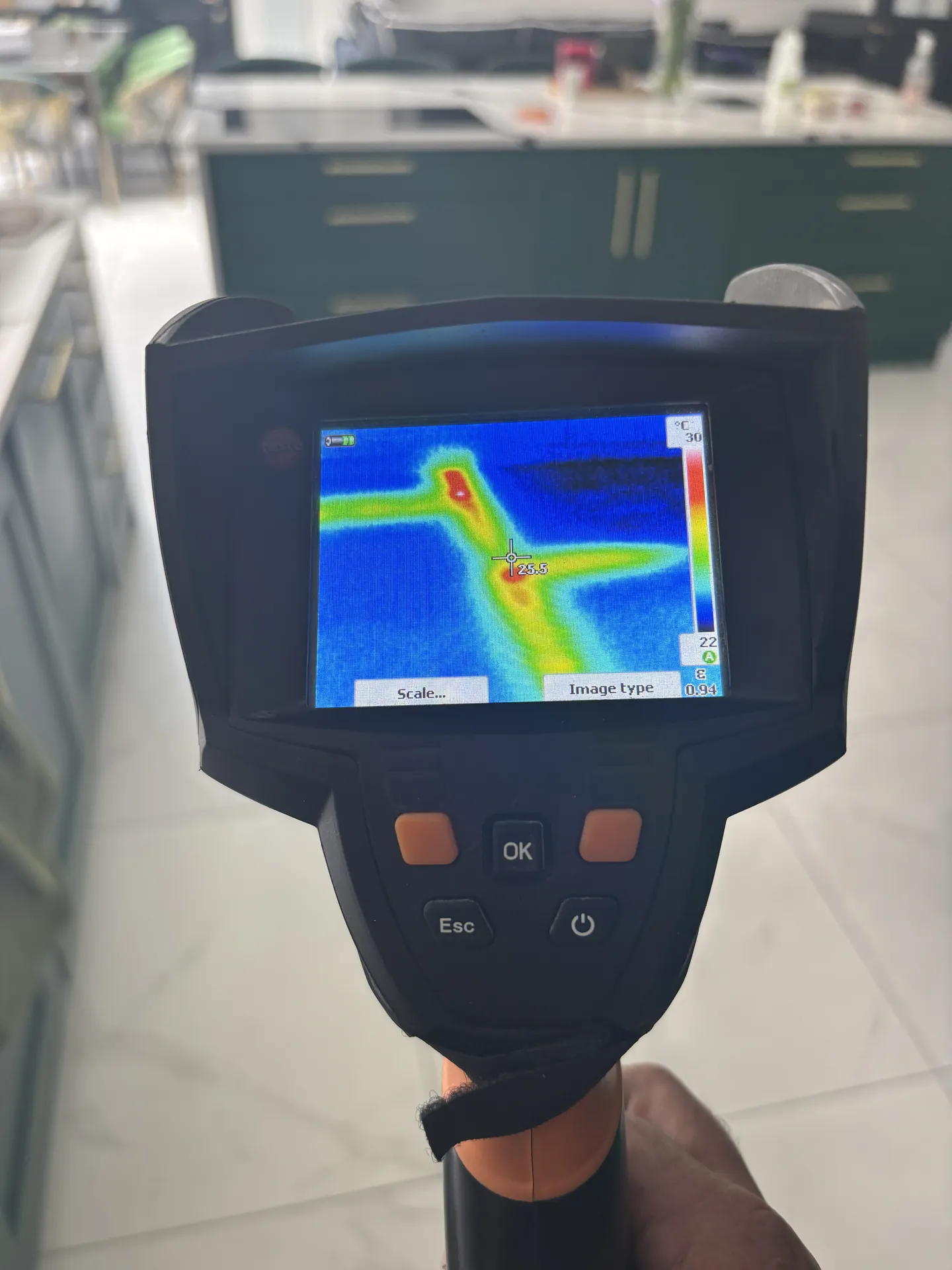
Thermal imaging leak surveys
A thermal imaging camera shows warm pipe runs and cool wet patches through floors and walls, so the leak is seen before anything is opened.
Thermal imaging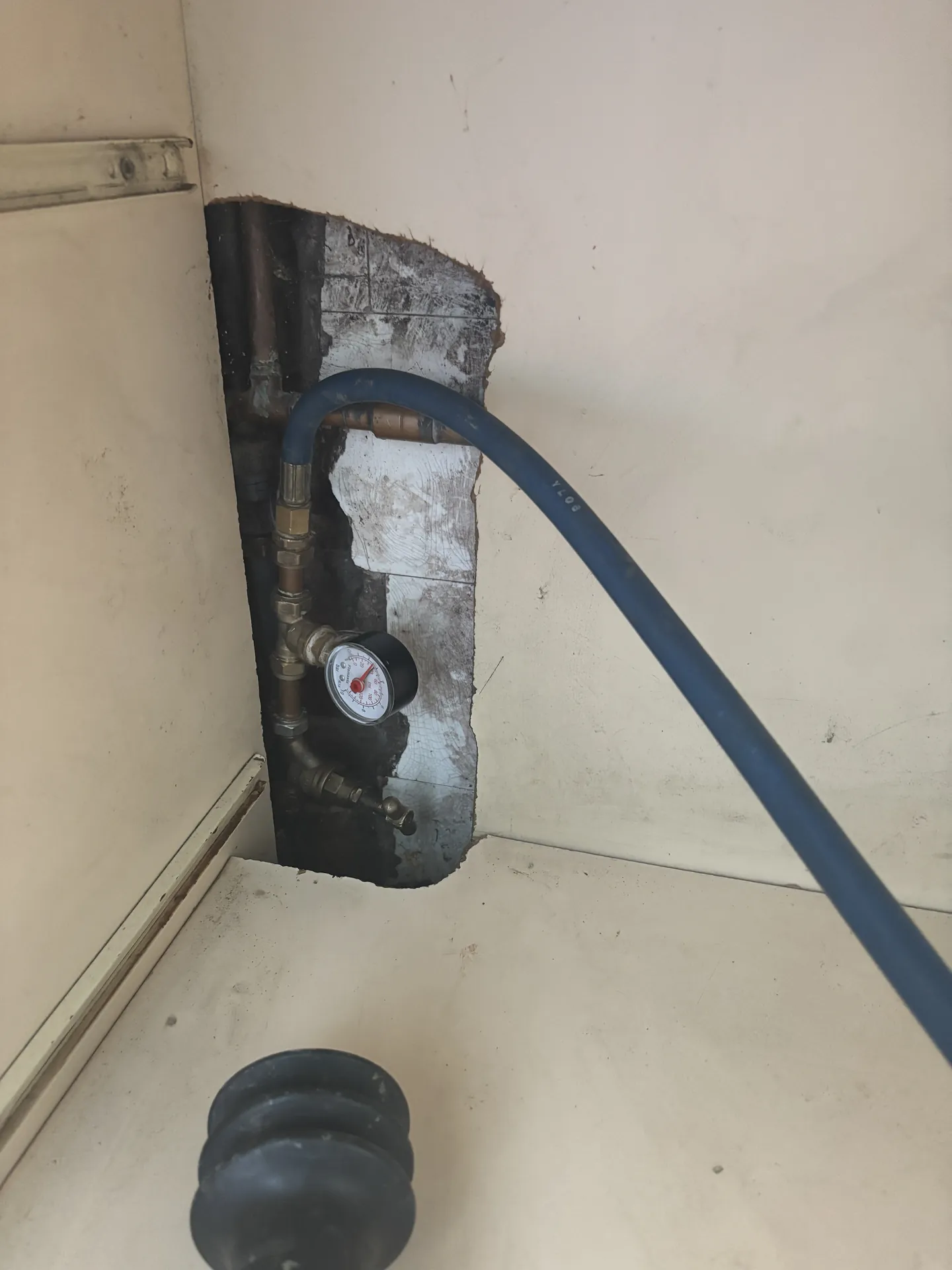
Trace and access insurance reports
Leak detection carried out and documented the way insurers expect, with a report your claims handler can act on straight away.
Insurance reportsFrom your first call to a leak you can see in the report
Call or WhatsApp with a few photos and a line about the symptoms. We ask a handful of questions, agree a fixed price and book the survey, usually for the same or the next day.
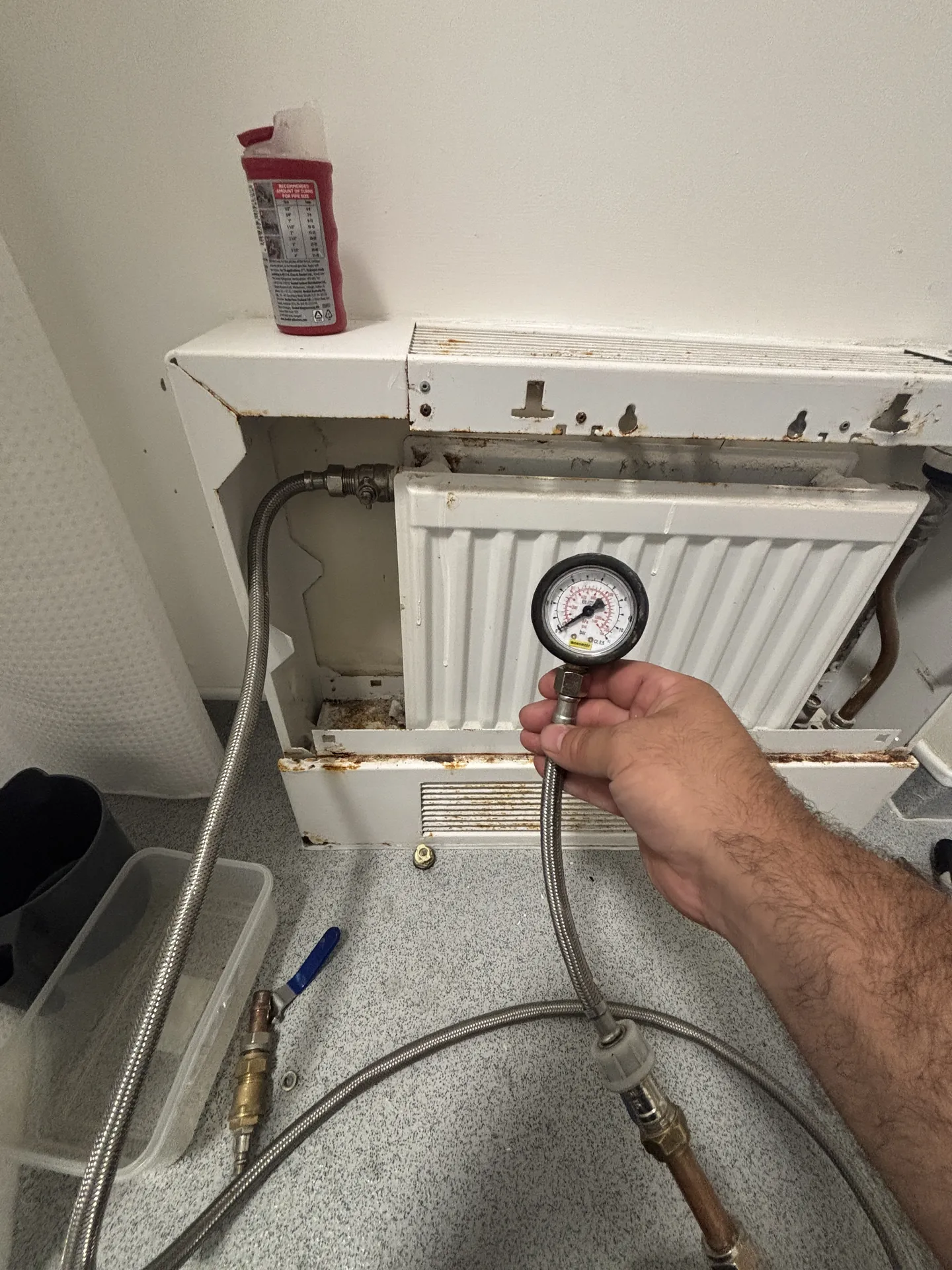
On arrival we pressure test the mains, hot water and heating, check the meter and test the escaping water, so we know what we are looking for before the detection starts.
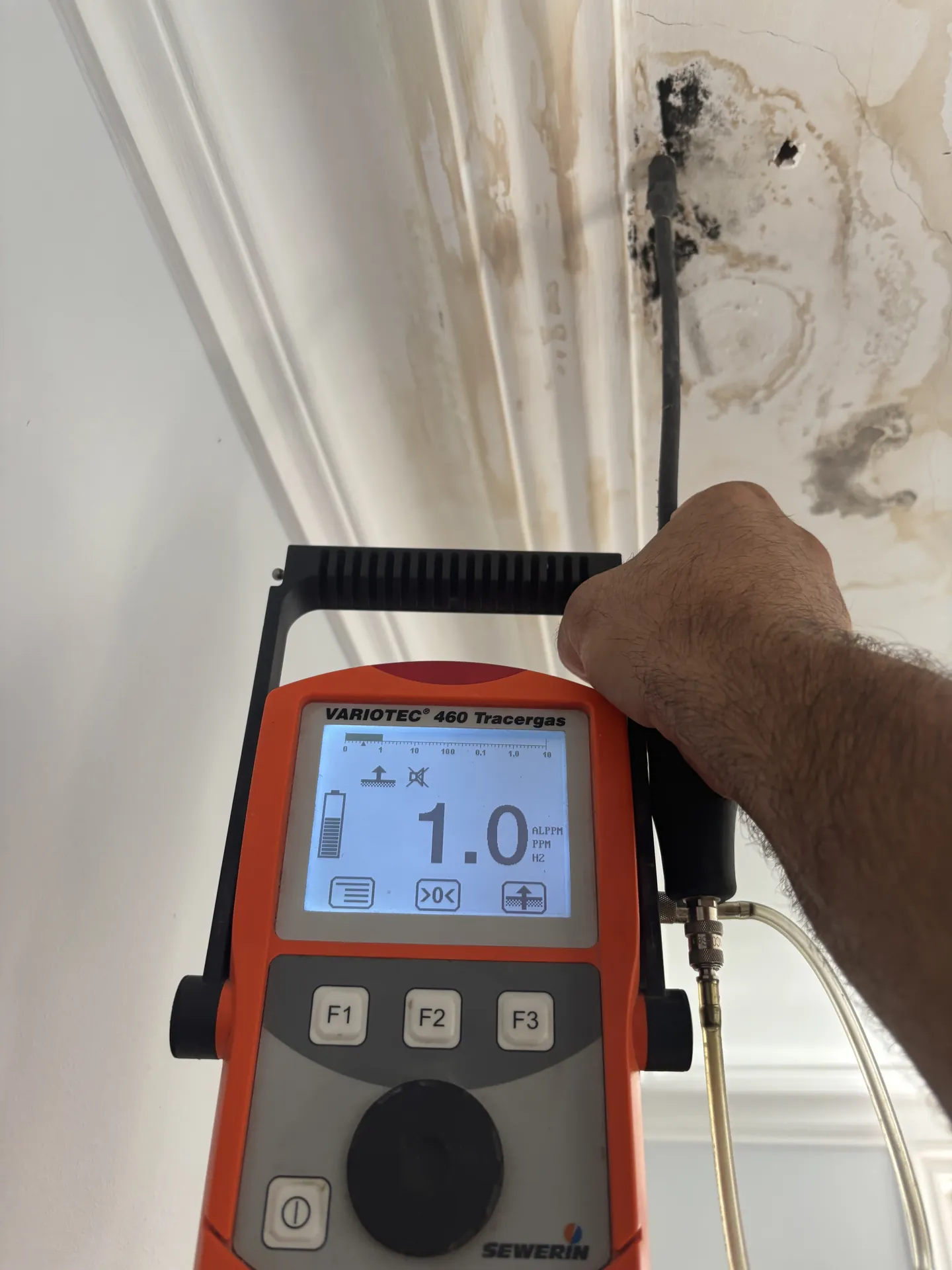
Thermal imaging, the acoustic ground microphone and tracer gas are used as the pipework dictates until the leak is marked on the floor or wall.
You get a written report with readings, thermal images and photographs, ready for a trace and access claim. If you want the leak fixed, we open that one spot and repair it.
Musty smell or mould: questions answered
Is a musty smell always a leak?
Not always. Condensation, rising damp and blocked air bricks can all cause it. A moisture map, a look into the floor void and a check of the meter and boiler tell us within the visit whether a pipe is responsible, and we say so honestly either way.
Why is there mould on the skirting boards?
Skirting sits at the junction of a wet floor and a cold wall, which is where moisture from below condenses first. Mould there, especially in one room, points to water under the floor rather than a general damp problem.
How do you look under the floor without lifting it?
A borescope camera goes through a small hole or an existing gap and shows the void, the pipes and any standing water. Combined with thermal imaging from above, it usually tells us where to lift a single board or open a small area of screed.
Will the smell go once the leak is fixed?
Yes, once the floor void or screed has dried out, which can take weeks for a solid floor. Keeping air bricks clear and heating the room helps. If the void is very wet we will say so in the report so a drying company can be brought in under the claim.
Can I claim on my insurance for this?
If a pipe is leaking, most buildings policies cover finding it and reinstating the floor we open under trace and access cover, and the resulting damage under escape of water. Gradual damp with no leak is usually not covered, which is why the report matters.
Noticed something else?
Musty smell or mould? Do not wait for the ceiling to come down.
Call now and we will tell you straight away whether it needs a same-day visit. Or send a photo of the stain, the meter or the boiler gauge on WhatsApp.
07516 755 680